
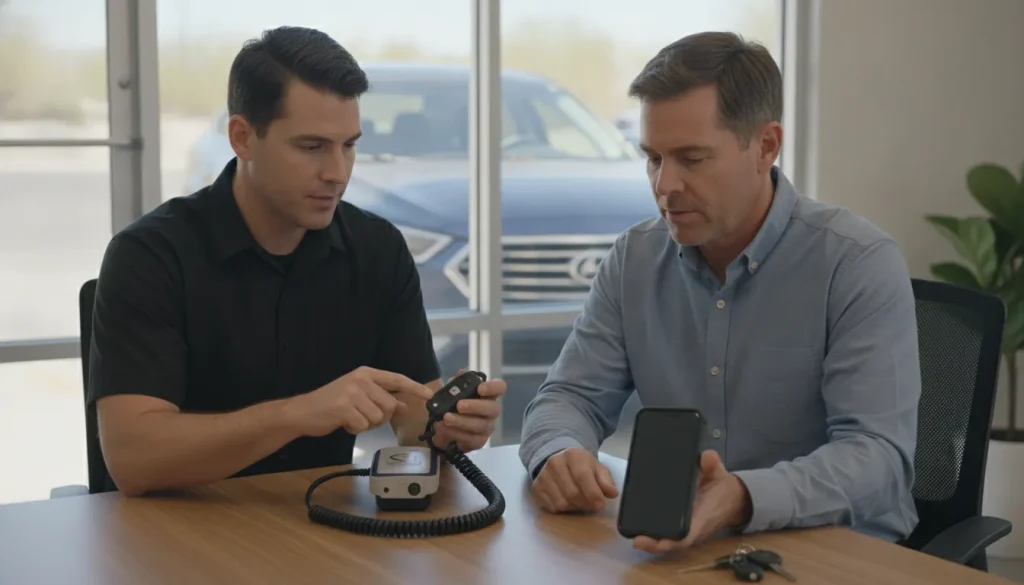
If you need to get a quote for an ignition interlock device in Arizona, you can make the conversation easier by gathering a few details first. A provider will usually need to understand your vehicle, where it is located, the compliance instructions you have received, and how soon installation may be needed.
You do not need to solve every legal or scheduling question before reaching out. The goal is to bring enough information for a useful first conversation. Have your vehicle year, make, model, current location, court or MVD paperwork, installation deadline, and preferred service option available if you have them. Then ask what is included in installation, monitoring, calibration, reporting, removal, and ongoing support.
This preparation guide explains what to collect, which details can affect the installation plan, and how to compare quote information without relying on an incomplete daily-rate advertisement. Requirements can vary by case, so use your court or MVD instructions as the controlling source for your situation.
Contact Budget IID to discuss your Arizona ignition interlock needs
Start with the information below, then use it as a checklist when you request your quote.
How to Get a Quote for an Ignition Interlock Device
To get a quote for an ignition interlock device, share your vehicle details, current location, compliance paperwork, installation deadline, and preferred service option. Then ask the provider to explain installation, calibration, reporting, support, removal, and other possible quote categories.
What Information Should You Gather Before You Request a Quote?
A quote conversation is more useful when the provider can see the full picture. Before contacting an ignition interlock company, collect the basic facts you already know. If you do not have every item, do not wait indefinitely. Share what you have and ask what needs to be confirmed.
Vehicle details
- Year, make, and model.
- Whether the vehicle is owned, financed, leased, or borrowed.
- Whether another person owns the vehicle and must approve installation.
- Whether it is a hybrid or electric vehicle.
- Any known electrical or starting problems.
Location and timing
- The city where the vehicle is normally kept.
- Whether you prefer a service center or may need Arizona mobile installation.
- The date by which the device must be installed, if one is listed in your paperwork.
- Dates or times when the vehicle can be available.
Compliance information
- Court, MVD, or other official instructions.
- Any authorization, case, or license information you have been told to provide.
- Instructions about reporting, calibration, or the required length of the program.
These items are preparation prompts, not a universal legal checklist. Your court order and Arizona requirements control what applies to your case. A provider can explain which service details need confirmation, but a quote conversation does not replace legal advice.
It can also help to write down your questions before you contact a provider. Ask how the installation process works, what services are included, how calibration appointments are handled. What reporting is sent to the appropriate authority, and what happens when the program is complete. Asking these questions early helps you compare the full service experience rather than focusing on one number in an advertisement.
For a more detailed appointment checklist, review what to bring to an ignition interlock installation before your scheduled visit.
How Does Your Vehicle Affect an Ignition Interlock Quote?
The vehicle is one of the most important parts of the quote conversation because the installation must be matched to the vehicle’s electrical system and configuration. Start with the year, make, and model. If you know the trim, engine type, or whether the vehicle has been modified, include that information too.
Tell the provider where the vehicle is located and whether it starts and operates normally. Existing electrical or starting issues may need to be identified before installation. A pre-installation review can include vehicle compatibility verification and an electrical-system evaluation. Sharing known problems early gives the provider a better opportunity to explain the next step.
Do not assume that a hybrid or electric vehicle automatically rules out service. Budget IID’s documented service information says it supports all vehicle makes and models, including hybrids and electric vehicles. The right approach is to provide the exact vehicle information so compatibility can be confirmed for your specific vehicle.
Ownership also matters. If you drive a family member’s, employer’s, or other person’s vehicle, tell the provider before scheduling. The registered owner may need to give consent, and the installation plan may depend on who can authorize work on the vehicle. A leased or financed vehicle may also require you to follow the applicable agreement.
Location affects the practical side of the quote. An Arizona driver may be choosing between a service center appointment and mobile installation where that service is available. Free mobile installation is limited to some Arizona markets, including areas around Phoenix, Mesa, Tucson, Goodyear, and Avondale. It is not a universal offer and should be confirmed for the vehicle’s current location.
Budget IID states that installation generally takes about one to two hours, depending on the vehicle make and model. That is a planning estimate, not a promise for every vehicle. Ask whether you should bring the vehicle with a certain fuel level, working battery, or other preparation completed. Confirm where the device will be mounted, how the vehicle will be returned, and what training is provided before you leave.
Learn more about how ignition interlock installation works so you can ask focused questions during the quote conversation.
What Arizona Compliance Details Should You Have Ready?
Arizona drivers often request an ignition interlock quote while managing court, MVD, license, or transportation deadlines. Having your official paperwork nearby can help the provider understand what service conversation you need. Gather the documents you have been given, and ask which details the provider needs to confirm before installation.
Start with the written instructions from the court or Arizona MVD. Look for the required installation date, program duration, reporting instructions, calibration expectations, and any language about an approved or certified provider. If the paperwork refers to a hearing, reinstatement condition, or other administrative step, keep those instructions together rather than relying on memory.
Arizona IID requirements can include technical and service standards. The customer information used for this article identifies a 0.020 BAC set point, fuel-cell sensor technology. Anti-circumvention features, real-time reporting, certified technician installation, standardized violation reporting, and a maximum 90-day calibration interval. Your individual court order may require a different timing or additional action, so confirm your case-specific instructions with the appropriate authority.
Ask how compliance documentation will be handled. After installation, customers receive a compliance certificate for MVD or court submission. Before scheduling, ask when that certificate is provided, whether you need to submit it yourself, and whether any other documents are needed. Clear answers can help prevent a paperwork delay after the installation is complete.
It is also useful to tell the provider about timing pressure without overstating what the deadline means. For example, explain whether you need the device installed before a court date, a license step, work travel, or another transportation need. The provider can discuss appointment availability and service steps, while the court or MVD remains the source for legal and administrative requirements.
Keep the distinction between device-level service and program-level compliance in mind. The device handles breath samples, rolling retests, and event reporting. The court or MVD determines the conditions that apply to your driving privilege. Understanding that difference helps you ask the right person the right question and avoid treating a provider quote as a legal determination.
For broader questions about Arizona IID requirements, visit Budget IID’s ignition interlock questions and requirements resource.
What Should You Ask About Installation and Service?
A useful quote should help you understand the service relationship, not only the initial appointment. Ask the provider to explain the steps from installation through calibration, reporting, support, and eventual removal. This is especially important when you are comparing providers or working under a compliance deadline.
Installation and training
Ask who performs the installation, how the device is integrated into the vehicle. How long the appointment is expected to take, and what happens if the vehicle needs additional evaluation. Budget IID’s service information describes certified technicians performing wiring integration, device mounting, calibration, functionality testing, and customer training.
Training should cover how to provide a breath sample, how rolling retests work, how to avoid common violations, and who to contact for emergency support. Ask whether the provider gives written instructions or a support route you can use after leaving the appointment. You should feel comfortable with the device before you drive away.
Calibration and monitoring
Ask when the first calibration is due and how future appointments are scheduled. Budget IID’s information says Arizona calibration commonly begins with an initial 30-day calibration. Followed by service every 60 to 90 days, while court orders can require more frequent service. Confirm the schedule that applies to your case and ask what happens if you need to reschedule.
Ask how results are reported, what events may be reported, and how you can document a service visit. Reports may include failed breath tests, missed or refused rolling retests, tampering or circumvention, missed calibration appointments, and unauthorized removal under applicable requirements. Understanding the process can help you avoid preventable compliance problems.
Location and support
Confirm whether service is available at a shop, through mobile service in your area, or both. Ask about appointment availability, after-hours support, device questions, and the process for addressing a warning or lockout. Mobile service availability varies by area, so do not treat it as a guarantee.
Finally, ask how removal is handled when you receive official authorization. The provider should explain what documentation is needed and how the vehicle is returned to its normal configuration. A complete quote conversation gives you a clearer view of the service journey from installation to completion.
Review Arizona ignition interlock installation locations to see where Budget IID provides service, then confirm the best option for your situation.
How Can You Compare Quote Details Without Focusing Only on Price?
When you get a quote for an ignition interlock device, the lowest-looking number may not describe the complete service commitment. Daily-rate advertising can leave out installation, monitoring, calibration, reporting, removal, government, or conditional charges. Instead of comparing one figure, ask each provider to explain the categories that may apply to your situation.
| Quote detail | Question to ask | Why it matters |
|---|---|---|
| Installation | What does the initial appointment include? | Clarifies technician work, vehicle evaluation, calibration, testing, and training. |
| Monitoring and reporting | How are results and required events reported? | Shows how the service supports the compliance process. |
| Calibration | When is the first calibration due, and how are later visits scheduled? | Helps you plan appointments and avoid missed service. |
| Support | Who can help with device questions, warnings, or a lockout? | Sets expectations after installation. |
| Removal | What authorization and appointment are required at program completion? | Explains the final step without assuming when removal is allowed. |
| Other charges | Which one-time, recurring, government, or conditional items could apply? | Helps you understand total cost of ownership without relying on an incomplete rate. |
This approach is not about making a provider promise a single universal total. Your vehicle, location, compliance instructions, service frequency, and program length can affect the conversation. A clear provider should explain which items are confirmed, which depend on your case, and which questions still need an answer.
Budget IID’s existing ignition interlock costs and fees guide can help you recognize common quote categories. Use it as background, not as a substitute for a current quote based on your vehicle and requirements. Do not assume a figure from another driver or another state applies to you.
Also compare non-price details that affect the experience: whether technicians are certified, whether the device is court-approved for your requirements. How training is delivered, whether service is available near you, and how quickly support responds. The best quote is one you can understand and use to plan compliant service.
What Happens After You Request the Quote?
After you submit a request, the next step is usually a clarification conversation. Keep your vehicle details, paperwork, location, and deadline nearby so you can correct missing information quickly. If a provider asks for a document or detail you do not have, ask where to obtain it and whether the quote can be updated later.
- Confirm your information. Review the vehicle year, make, model, ownership status, location, and any hybrid or electric configuration.
- Review the compliance instructions. Discuss the court or MVD paperwork, installation deadline, reporting expectations, and any case-specific conditions.
- Choose a service path. Compare a service-center appointment with mobile installation where it is available in your Arizona area.
- Ask for the service scope. Confirm installation, calibration, monitoring, reporting, training, support, removal, and other possible quote categories.
- Schedule and prepare. Verify the appointment time, what to bring, vehicle condition expectations, and how long the installation may take.
- Keep your documents. After installation, retain your instructions and compliance certificate, then track calibration appointments and any reporting requirements.
The quote stage is also a good time to ask what happens if your deadline changes or the vehicle becomes unavailable. A provider may be able to explain scheduling options, but the court or MVD controls the legal requirements for your case.
Once the device is installed, certified technicians should explain how to use it, including breath samples and rolling retests. Ask questions before leaving. Knowing how to operate the device and when to return for calibration can make the ongoing process more predictable.
If you are ready to organize your information, use Budget IID’s contact form to start the conversation. You can also review the available Arizona service locations before requesting an appointment.
Frequently Asked Questions About Getting an IID Quote
What information do I need to get an ignition interlock quote?
Start with your vehicle year, make, model, location, ownership status, court or MVD paperwork, installation deadline, and preferred service option. You can ask the provider which documents or details still need to be confirmed.
How long does ignition interlock installation take?
Budget IID states that installation generally takes one to two hours, depending on the vehicle make and model. Confirm the expected timing for your vehicle when scheduling, and ask what preparation or training is included.
Can an ignition interlock be installed in a hybrid or electric vehicle?
Budget IID’s service information says it supports all vehicle makes and models, including hybrids and electric vehicles. Provide the exact year, make, and model so compatibility and the installation plan can be reviewed.
What should I ask about an ignition interlock quote?
Ask what the quote includes for installation, monitoring, calibration, reporting, training, support, removal, and other possible charges. Also ask about appointment timing, service locations, mobile availability in your area, and the documents you will receive after installation.
Does a provider quote tell me what my court or MVD requires?
No. A provider can explain its equipment and service process, but your court order and Arizona MVD instructions control the legal and administrative requirements for your case. Keep those instructions available and ask the appropriate authority when a requirement is unclear.
Contact Budget IID for help preparing your Arizona IID quote request
Ready to Request Your Arizona IID Quote?
Gather your vehicle details, location, compliance paperwork, timing needs, and questions about installation and ongoing service. Budget IID can help you understand the next steps for an ignition interlock device in its Arizona service areas. Mobile installation is available only in some locations, so confirm what applies to you.
Contact Budget IID to start your quote conversation
Use the contact form to share the information you have, ask what still needs to be confirmed. And plan a service path that fits your vehicle and compliance instructions.