
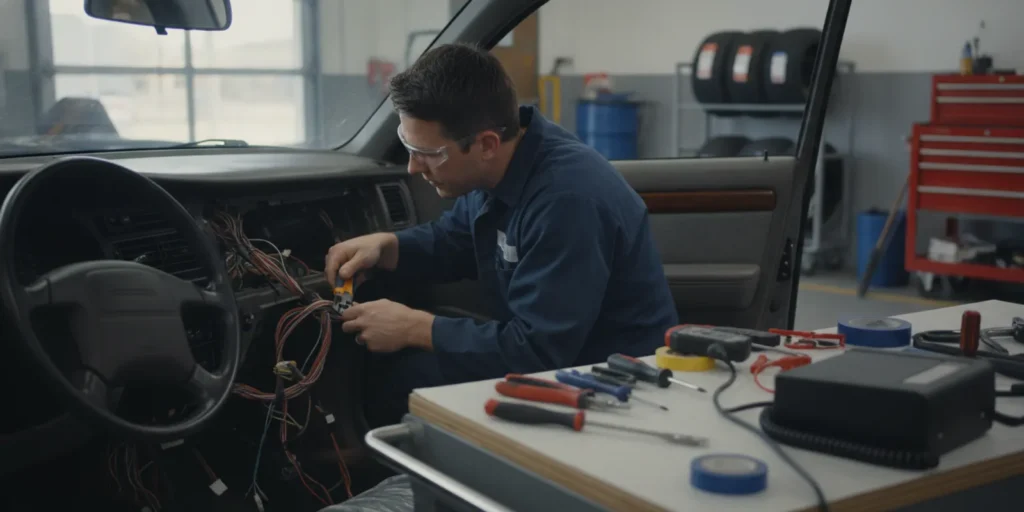
Can ignition interlock be installed on older cars? In many cases, yes. The model year alone does not settle the question: the vehicle’s condition, wiring, starting system, and the applicable program requirements all matter. If you need car interlock installation, have a provider check your specific vehicle before scheduling so you can avoid preventable delays.
Can an ignition interlock work in an older car?
An older car may be compatible with an ignition interlock device (IID), but there is no universal cutoff year that can safely answer every case. Two vehicles of the same age can differ in electrical condition, modifications, and ignition configuration. A qualified installer needs the vehicle details and may need to inspect it to determine the right approach.
Budget IID states it supports vehicles including hybrids and electric vehicles, but that does not mean every car is automatically eligible or ready for installation. The device must be installed correctly, and the car’s relevant systems must function well enough for the work and required testing. For a basic overview, see what an IID is and how it is used.
Also confirm the rules that apply to your case. Arizona-licensed drivers must satisfy Arizona IID requirements with an installation that meets Arizona requirements; an out-of-state installation does not satisfy those requirements. Ask the appropriate motor vehicle agency or your attorney if you are unsure which order or program rules govern you.
What should you check before booking installation?
Gather a few details before calling. This helps the provider identify questions early and tell you what to do next. Write down the exact vehicle information rather than relying on memory. A vehicle identification number can also help a provider distinguish similar trims or model configurations if requested, but do not send sensitive information through an unverified channel.
- Year, make, and model: Include trim if known. If you are unsure which model year is listed, check the registration or vehicle paperwork.
- Starting system: Explain whether it uses a standard key, push-button start, or another configuration.
- Electrical condition: Mention a weak battery, recurring electrical faults, warning lights, or recent jump starts.
- Modifications: Describe aftermarket alarms, remote starters, audio equipment, or wiring changes.
- Vehicle access: Say whether the car is currently available, drivable, and at the location where installation is planned.
- Program jurisdiction: Identify the state and the agency or court requiring the IID, if known.
Be specific rather than assuming a problem is unimportant. An intermittent start issue or a non-factory electrical component can affect scheduling or require further review. If the car is in a shop or has been modified, coordinate access and disclose that before the appointment. If you do not know the technical name of a component, describe what it does and when it was installed.
How can vehicle condition affect the installation?
Installation involves connecting the device to the vehicle’s starting system. The installer needs a safe, workable vehicle and must follow the applicable device and program requirements. A car that starts inconsistently, has damaged wiring, or has unresolved electrical issues may need attention before the appointment can proceed smoothly.
This is not a reason to diagnose the vehicle yourself. Do not alter wiring or attempt to install or bypass an IID. Tell the provider what you have observed and ask whether a mechanic should inspect a specific issue first. If another shop has worked on the car, sharing relevant information can help the installer plan.
Common details worth disclosing
- A battery that repeatedly loses charge or has needed replacement.
- Problems starting the car or unusual dashboard warnings.
- Aftermarket remote-start systems or alarm equipment.
- Electrical repairs, replaced ignition components, or nonstandard wiring.
- Whether the vehicle is a hybrid or electric model.
These facts do not automatically mean the car cannot receive an IID. They help the provider assess compatibility and clarify whether a separate repair or more information may be needed. For example, if the engine sometimes starts only after several attempts, share when that happens, whether the issue is intermittent, and whether a shop has already evaluated it. That practical history is more useful than simply describing the car as old.
Which vehicle details matter most?
The following comparison is a planning aid, not a compatibility ruling. Share the details with your provider and follow its instructions for your specific car. The same symptom can have different causes, so the point is to communicate clearly, not to decide the installation outcome yourself.
| Vehicle detail | Why it matters | What to do before installation |
|---|---|---|
| Older model year | Age alone does not establish compatibility; condition and configuration vary. | Give the exact year, make, and model for review. |
| Battery or starting concern | Unreliable starting can complicate service and daily use. | Describe symptoms and ask whether inspection or repair should come first. |
| Aftermarket equipment | Added wiring or devices may affect installation planning. | List alarms, remote starters, and electrical modifications. |
| Hybrid or electric vehicle | The vehicle has a distinct powertrain and configuration. | Identify the exact model and ask the provider to confirm its process. |
| State or program requirement | Approval and compliance depend on the applicable jurisdiction. | Confirm the required provider and installation documentation with the relevant agency. |
How should you describe a specific older car?
A concise, accurate description helps the provider decide what follow-up is useful. You might say: “It is a 2008 sedan with a standard key. It starts reliably, but it has an aftermarket alarm installed. The court paperwork requires an IID in Arizona.” If you have a known problem, state it plainly: “The battery was replaced recently, but the car still needs occasional jump starts.” Do not downplay a concern to secure an appointment; finding it early can prevent a wasted trip.
If the vehicle has changed hands or been repaired over the years, you may not know every modification. Say what you know, such as “I bought it used and do not know whether the remote starter is factory-installed.” The installer can ask focused questions. If you have repair invoices or manuals that identify an added component, keep them available, but do not delay contacting the provider just because you lack complete records.
Photos can sometimes help explain a dashboard warning or identify a visible accessory, but ask the provider how to share them. A picture is not a substitute for a physical assessment where one is needed. Avoid photographing or transmitting documents containing private case details unless the provider requests them through an appropriate process.
What happens during the installation appointment?
Once compatibility and appointment details are confirmed, a professional installer fits the IID and explains its use. Budget IID reports that installation generally takes one to two hours, with training included. Appointment length can vary, so confirm the expected time and any preparation instructions directly with the provider.
Plan to bring the vehicle and any paperwork the provider requests. Ask what identification or program documents you need, where to arrive, and whether the vehicle must be in a particular condition. Keep your appointment confirmation and installation paperwork together; you may need records later for program administration. If the vehicle has a known fault, do not assume the appointment will include diagnosis or repair of unrelated mechanical issues.
During the handoff, make sure you understand the device’s instructions, required service schedule, and how to reach support if you have questions. Do not rely on assumptions about retests, calibration, or program duration. Follow the guidance issued for your case and ask the provider or responsible agency to clarify anything you do not understand.
Plan for access and transport
Before you set out, confirm the appointment location, arrival time, and the provider’s instructions for the vehicle. If someone else is helping you get the car there, make sure the person understands the plan and any access arrangements. Do not assume an older vehicle can be driven safely just because an appointment is booked; handle transportation according to its condition and the rules that apply to you.
Budget IID serves Phoenix, Mesa, Tucson, Goodyear, Avondale, and Roseville, California. Some Arizona areas may have mobile service, but availability is not universal. Check the service locations and ask whether your address and vehicle can be accommodated. Confirm this before making travel plans.
How do Arizona and California requirements affect your choice?
Vehicle compatibility is only one part of getting an IID. The provider and installation must also meet the requirements for your jurisdiction. Requirements can vary, and an order may specify details that are not apparent from the vehicle itself. Confirm the order or agency instructions before choosing an installation location.
Arizona drivers should confirm their obligations with the Arizona Motor Vehicle Division (MVD) and the agency that issued their requirement. California drivers should verify their instructions with the California Department of Motor Vehicles (DMV) and any relevant court or program office. The California DMV’s Statewide Ignition Interlock Device Pilot Program describes program steps, including installation verification.
For drivers in Arizona, Budget IID serves Phoenix, Mesa, Tucson, Goodyear, and Avondale. In California, it serves Roseville. A California installation is not a substitute for an Arizona requirement: Arizona-licensed drivers do not satisfy Arizona IID requirements with an out-of-state installation. Ask the relevant agency if you are unsure which jurisdiction governs you.
For general background on ignition-interlock programs, the National Highway Traffic Safety Administration’s Key Features for Ignition Interlock Programs discusses program design and device use. Use agency information and your own order for the rules that apply to your specific case; a general federal publication does not replace an individual requirement.
What questions should you ask the installer?
A short, focused call can resolve practical questions before you travel or take time away from work. Consider asking:
- Can you review my year, make, model, and starting system for compatibility?
- Do you need to inspect the vehicle before confirming an appointment?
- Should I address the battery, starting problem, or electrical modification first?
- What paperwork should I bring, and how will installation be documented?
- Where should I go, and is a mobile appointment available in my area?
- What training, calibration schedule, and support instructions will I receive?
- Does my order require an approved provider, a particular form, or installation verification?
- What should I do if the vehicle will not start on the day of the appointment?
Record the answers, including the date and the person or office you spoke with. If the agency gives you a specific instruction, keep it with your program papers. If the installer needs more vehicle information, provide it before the appointment rather than waiting until arrival. If two sources give you different instructions, ask the responsible agency to clarify rather than choosing the answer that seems easiest.
What if the vehicle is not ready?
If the provider identifies a concern, ask what exact condition needs attention and whether the car should be evaluated by a mechanic. Do not guess at a repair or try to change IID wiring yourself. Once the concern has been addressed, contact the installer again and confirm whether any further check is needed.
If you do not have access to a suitable vehicle, ask the agency or court what options are permitted in your circumstances. Do not assume that using another vehicle, delaying installation, or installing in a different state will meet your requirement. For a broader explanation of the process, review Budget IID’s guide to getting an interlock device in Arizona and its Arizona DUI program information.
How can you prepare for a smooth appointment?
Use this checklist before you schedule. It is useful whether the car is decades old or simply has unusual equipment:
- Write down the vehicle’s exact year, make, model, and starting type.
- Make a list of known battery, starting, or electrical symptoms, including when they occur.
- Identify aftermarket equipment and previous electrical work, or say clearly what is unknown.
- Confirm which state’s program applies and what provider approval is required.
- Ask what documents to bring and whether a preliminary inspection is needed.
- Confirm the location, timing, service-area coverage, and any mobile-service eligibility.
- Ask whether a mechanical concern should be checked before installation.
- Keep installation records and follow the service instructions you receive.
Budget IID’s information for hybrid and electric vehicles may help you frame questions if your car uses one of those powertrains. For any vehicle, a provider’s review of the exact model and condition is more useful than a general assumption based only on age.
What are examples of the next step?
If the car runs reliably and is mostly original: Provide its exact details and jurisdiction, then ask the provider to confirm compatibility and documentation requirements. Do not skip the check simply because the vehicle has no obvious symptoms.
If the car has an aftermarket alarm or starter: Identify the equipment as accurately as possible and mention when it was installed. Ask whether a preliminary review is needed. The installer, not the driver, should determine how the added system affects the work.
If the car has starting or wiring problems: Describe what happens and whether a mechanic has assessed it. Ask if repair or inspection should come first. Avoid arranging installation around an unreliable vehicle without discussing the concern.
If the car is a hybrid or electric model: Give the full make and model and confirm the provider’s process for that vehicle. Do not assume that a powertrain label alone answers the compatibility question.
These cases show why “older” is not a complete description. Two people may own cars from the same year yet need different next steps because one vehicle is unmodified and reliable while the other has an intermittent electrical fault.
Contact Budget IID about installation
Frequently asked questions
Is there a maximum age for an ignition interlock vehicle?
There is no single age limit that determines compatibility for every vehicle. The provider needs to consider the specific model, condition, equipment, and applicable program rules.
Can an IID be installed if my older car has a weak battery?
A weak battery does not by itself answer whether installation is possible. Tell the provider about the symptoms and ask whether the battery or starting system should be checked before scheduling.
Can I use an older car with an aftermarket remote starter?
Disclose the remote starter and any related wiring before the appointment. The installer can tell you whether the configuration needs review and what steps, if any, are required.
Does an Arizona driver meet the requirement by installing out of state?
No. Arizona-licensed drivers do not satisfy Arizona IID requirements with an out-of-state installation. Confirm the provider and documentation requirements with the appropriate Arizona agency.
Where can I ask about an older vehicle in Budget IID’s service area?
Budget IID serves several Arizona communities and Roseville, California. Check the locations page and contact the team with the vehicle’s exact details to ask about next steps.
Get clear answers about your next step
An older car may be a workable choice for an IID, but the answer depends on the vehicle and the rules that apply to you. Share accurate details, confirm the jurisdiction’s requirements, and arrange a provider review before making plans around installation.