
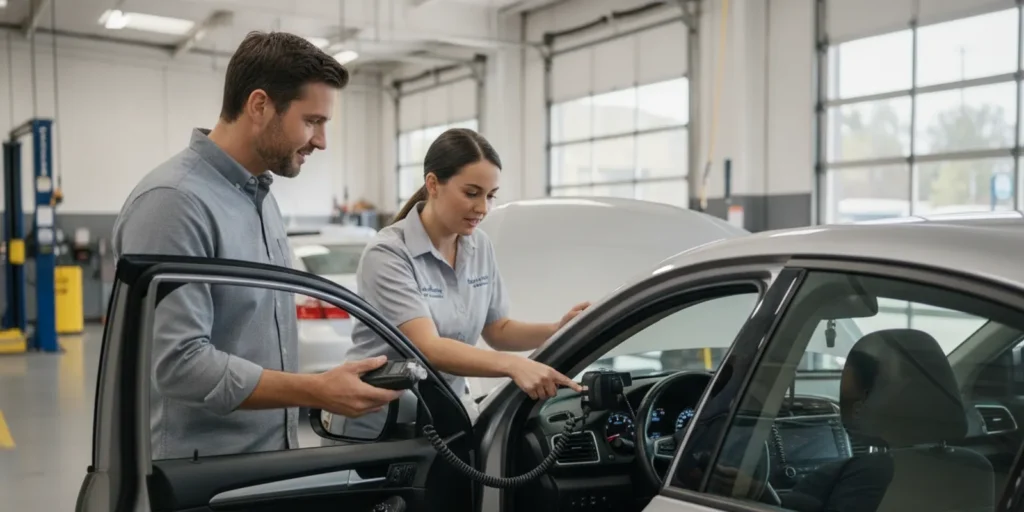
If a California ignition interlock vehicle is totaled, you may be managing an insurance claim, a damaged car, and an active IID requirement at the same time. Start by protecting your safety, then contact your ignition interlock provider and the agencies handling your case before making decisions about the device or your next vehicle.
Contact Budget IID to discuss your next steps
What should you do first after the crash?
Handle the crash before the interlock. Follow emergency instructions, seek medical attention when needed, and report the collision to the appropriate authorities and your insurer. Do not try to retrieve, test, or move a device from a vehicle that is unsafe, inaccessible, or being handled by a tow operator or storage facility.
If the car is at a tow yard, tell the insurer and the yard that it contains installed equipment. Ask who is authorized to access the vehicle and whether it may be moved, inspected, or dismantled. Do not assume the IID should be disconnected just because the car may be declared a total loss. The vehicle may still be under review, and removal or salvage instructions may depend on the claim and on your program.
Keep the IID issue separate from fault, coverage, and settlement decisions. Your insurer decides claim matters under your policy; your provider can explain device handling and service options; and the relevant California agency or court can clarify requirements for your individual driving privilege. A provider cannot decide whether you may drive a replacement car or change a state requirement.
Who should you contact, and what should you ask?
Contact your IID provider as soon as it is practical. Explain that the vehicle with the device has been involved in a crash and may be declared a total loss. Share only the information needed to identify your account and the vehicle. Ask the provider to note the situation and give you instructions before the vehicle is moved to salvage or the IID is removed.
Use direct, specific questions. For example:
- What should I do before the vehicle is moved, inspected, or released to a salvage facility?
- Can the device be removed from this vehicle, and who is permitted to do that work?
- What information or authorization do you need before scheduling removal?
- If I obtain another vehicle, what must I confirm before arranging an installation?
- How should I handle a missed service appointment while the vehicle is unavailable?
- What records or instructions can you provide for my files?
Ask the insurer a separate set of questions about claim inspection, access to the vehicle, personal property, and the salvage process. Ask the California agency responsible for your driving privilege or IID program about any requirement that is unclear. Do not rely on a general online answer to determine whether your order, restriction, or program period has changed.
Budget IID serves California drivers in Roseville. If you need a local service point, review the Roseville ignition interlock location and confirm availability and next steps directly. The contact page is a route to ask about your case; an online message is not a substitute for agency approval.
What details should you record?
A short, organized record can reduce confusion when several people are handling the vehicle. Write down the date of the crash, the vehicle year, make and model, the IID provider, the claim reference, and where the vehicle is being stored. Note the name or role of each person you speak with, the date and time, and any instructions they give you.
Keep copies of documents you already receive, such as a tow or storage receipt, claim correspondence, a total-loss determination, and written provider instructions. Do not delay urgent safety or claim steps while waiting for paperwork. If a document is not available yet, note that it is pending rather than guessing what it says.
Ask whether the provider can document the device’s status and any appointment or removal instructions in writing. If a device message or event is part of the situation, record what you observed and when. Do not make assumptions about whether an event affects your program. Device records and state-level program decisions are not the same thing; direct questions about consequences to the agency administering your requirement.
Keep personal and vehicle information secure. Send documents only through a channel the recipient has identified. If you are unsure whether a request is legitimate, contact the organization using a known contact method rather than responding to an unexpected message with sensitive details.
When you contact the provider, a concise summary helps keep the conversation focused: “My vehicle has an IID and was in a collision on [date]. It is currently at [location]. The insurer has [not decided / declared it a total loss], and I need to know what to do before the vehicle is moved or released.” Then ask for the next step, whether the provider needs authorization or vehicle details, and how to reach it if the situation changes. Use your actual facts and leave out anything you do not yet know.
After the call, make a brief note of the instructions and any follow-up owner or date. If the provider tells you to coordinate with the insurer or yard, write down the exact question to take to that party. If an answer is conditional, record the condition too; for example, whether an appointment depends on the vehicle still being accessible. This small handoff note can help you avoid repeating the entire story or acting on an incomplete recollection later.
For questions about the state requirement, summarize the situation separately for the agency or court: identify the relevant license or case details, explain that the IID vehicle is unavailable, and ask whether your next step changes. Ask where to find any instruction in writing. This does not guarantee a particular outcome, but it helps route the question to the organization that can answer it.
What happens to the IID in a totaled vehicle?
There is no single device-handling sequence that fits every collision or claim. The car may be awaiting inspection, at a repair facility, stored at a tow yard, or already approved for salvage. The unit may also be damaged or inaccessible. Your provider can explain its process, but access to the vehicle and permission to remove equipment may involve the insurer, the owner, a lienholder, or the facility holding the car.
Do not attempt to remove wiring or the device yourself. An IID is installed in the vehicle’s electrical system, and unapproved handling can damage the car or equipment and create uncertainty about the device’s condition. Ask the provider what it can inspect or recover and whether the installation location needs to coordinate with the insurer or storage facility. Get the instructions before anyone dismantles the vehicle.
If the car is considered a total loss, ask the insurer when it expects to take possession or transfer it to salvage. Then share that timing with your provider. Make sure you understand whether the provider can access the vehicle before release and what you should do if access is denied or the vehicle is moved sooner than expected. Avoid promising a removal date until the relevant parties have confirmed access.
If you are not sure whether the vehicle is truly a total loss yet, say that. A preliminary estimate, a damaged vehicle, and a final insurance disposition are different situations. The appropriate plan may change once the insurer completes its review.
How do you plan for a replacement vehicle?
Before buying, borrowing, or registering another vehicle for regular use, check the rules that apply to your license and IID requirement. Ask the agency or court that issued or administers the requirement whether the replacement vehicle is eligible and what steps, if any, you must complete. Ask your provider about vehicle compatibility, installation scheduling, and any details it needs to prepare.
Do not treat a vehicle as ready to drive simply because it is available or because an appointment has been requested. Confirm the required installation and any agency instructions first. California program requirements and individual orders may differ, so verify your own conditions rather than relying on another driver’s experience.
When you compare potential vehicles, gather basic details before you commit: year, make, model, and the type of starting system. Tell the provider if the vehicle is leased, financed, hybrid, or electric, and ask whether it can support the equipment and what coordination is needed. A provider can assess installation questions, but the agency decides whether a vehicle meets your program terms.
If you are considering a rental or a vehicle borrowed from someone else while the claim is pending, do not treat temporary access as permission to drive under an IID restriction. Ask the agency or court whether the vehicle can be used under your conditions, and ask the provider what installation or documentation would be required before using it. A rental agreement or the owner’s permission does not answer those program questions. If you are waiting for an insurance settlement, it can help to make two separate plans: one for transportation while the damaged vehicle is unavailable, and another for the vehicle that will ultimately meet your IID requirement. Keep the first plan within the limits of your license and any order. Do not make a purchase under pressure based only on a device appointment date; verify the vehicle details, eligibility questions, and service sequence first.
Budget IID’s information about IIDs for hybrid and electric vehicles can help you identify questions to raise. For broader background on the device, see what an IID is and how it is used. These pages do not determine whether a specific car is approved for your individual requirement, so confirm that directly before arranging service.
| Situation | Who to contact first | What to confirm | What to keep |
|---|---|---|---|
| Vehicle is at a tow yard or repair facility | Insurer and facility; notify your IID provider | Access, inspection, movement, and who may handle the device | Storage details, claim reference, and written instructions |
| Insurer is deciding whether the car is a total loss | Insurer and IID provider | Expected claim steps and whether any device appointment should wait | Claim updates and dates of conversations |
| Vehicle is approved for salvage | Insurer, salvage facility, and IID provider | Timing and authorization for access or professional removal | Total-loss notice, access confirmation, removal details |
| You have another vehicle in mind | Agency or court, then IID provider | Program eligibility, vehicle compatibility, and installation sequence | Agency guidance, vehicle details, appointment confirmation |
How should you avoid a gap or an assumption?
Keep three questions distinct: what the insurer is doing with the damaged vehicle, what the provider needs to do with the IID, and what your driving requirement allows. One answer does not settle the other two. An insurer’s total-loss decision does not, by itself, explain whether your IID period or driving privileges have changed. A provider appointment does not, by itself, authorize you to drive a different vehicle.
If different people give conflicting instructions, write down who said what and ask each organization to clarify its own part. For example, ask the insurer to confirm salvage timing, the provider to confirm the device procedure, and the relevant agency to explain program or license requirements. If you have an attorney, you may wish to ask them about legal questions connected to your case. This guide is general information, not individualized legal or insurance advice.
Plan around confirmed details rather than an assumed timeline. Insurance reviews, vehicle access, equipment condition, and appointment availability vary. Ask for the next action you can take now, what must happen first, and who will contact whom. If a date changes, update the provider and any facility holding the car so the instructions remain current.
For general device service information, Budget IID has pages about professional IID removal and service locations. Removal guidance for a normal program completion may not cover a crash or salvage situation, so do not apply it to a damaged car without confirming instructions for your case.
What if you cannot get immediate answers?
First, keep the vehicle’s location and claim contact details handy. If it is being held by a facility, ask about its access rules and whether it has a scheduled move or release. Notify your provider that the vehicle may be inaccessible and ask how to document the interruption. Do not enter a storage or salvage area or handle equipment without permission.
If the provider is closed or cannot answer a program question, do not guess. Use the provider’s official support route when it is available, and contact the appropriate California agency for questions about your license or IID requirement. Keep a note of the date you tried to reach each party and any response. Avoid driving a vehicle in a way that conflicts with your current restriction while you wait for confirmation.
Budget IID’s support page and frequently asked questions may help with general service questions. For a case-specific situation involving a totaled vehicle, use direct communication and explain what has happened rather than assuming an FAQ covers every detail.
California has evaluated ignition interlock implementation and effectiveness as part of its program. That research is general background, not a process for an individual insurance claim or totaled vehicle; for example, see the California DMV’s evaluation of ignition interlocks in California. Your own agency or order remains the source to confirm your individual requirements.
Ask Budget IID about the device and service steps
Frequently asked questions
Can I keep driving while the IID vehicle is being handled as a total loss?
Do not assume you may drive another vehicle. Check the restrictions and instructions that apply to your license with the relevant California agency or court. Ask your provider what is needed to equip another vehicle, and wait for required approvals and installation before driving in a way that could violate your conditions.
Should I remove the IID before the insurer inspects the car?
Do not remove it yourself or schedule removal without checking. Ask the insurer and provider about inspection, vehicle access, and authorization first. The right timing depends on the vehicle’s status and who controls access to it.
Does a totaled vehicle automatically end my IID requirement?
No general answer can determine the status of an individual requirement. A total-loss decision concerns the vehicle and claim; your program or driving conditions are administered separately. Confirm your status and next steps with the agency or court responsible for your requirement.
What information should I have ready when I call the provider?
Have your name and account details, vehicle year, make and model, crash date, current vehicle location, claim status if known, and any deadlines or instructions from the insurer. Explain whether the vehicle is awaiting inspection, repair, or salvage, and ask what the provider needs next.
Can I move the IID to a replacement car?
Ask the provider whether a transfer is possible and what the process involves. Confirm vehicle compatibility and check with the agency or court about any approval or program steps. Do not assume a device can be moved or that a transfer alone satisfies your requirements.
Get help planning your next IID service step
Keep safety, the insurance claim, device handling, and your California IID requirement in separate lanes, and get clear instructions from the organization responsible for each one before you act.