
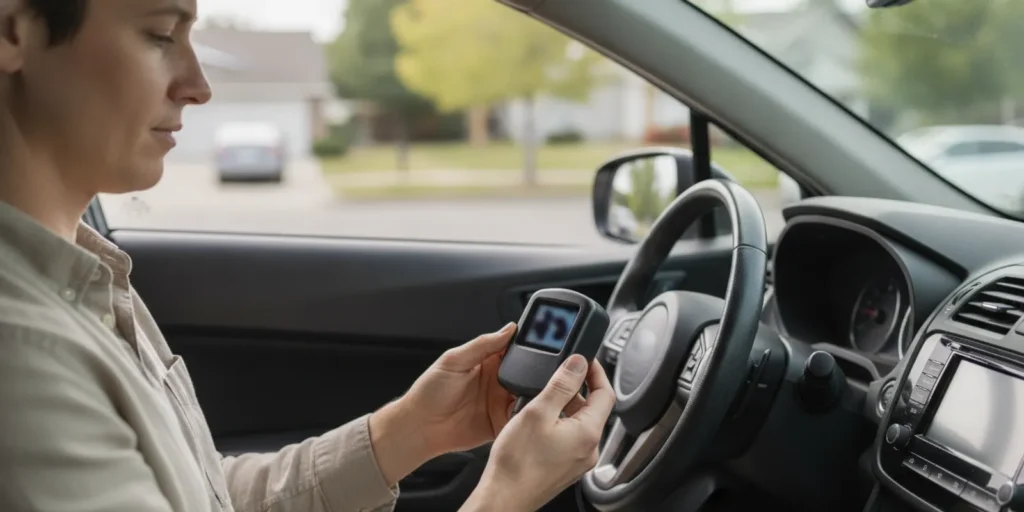
If you are looking for the best car breathalyzer for DUI requirements, first identify the device your state or licensing agency will accept. A court-required ignition interlock device (IID) is not the same as a consumer breath tester: it is installed in a vehicle and used as part of a monitored compliance program. The best fit is an approved device and provider that can install it correctly, explain your responsibilities, and support the service routine you must follow.
Ask about your IID installation options
What does “best car breathalyzer for DUI” mean?
For a court or motor-vehicle requirement, “best” does not mean the device with the most consumer features. It means a compliant IID accepted for your location and situation, installed in the required vehicle, and supported by a service process you can follow. Confirm approval with the relevant state agency rather than relying on an online product listing or a general recommendation.
A personal breath tester may provide an estimate, but it does not take the place of a court-required IID. An IID is connected to the vehicle’s starting system and may request additional breath samples while driving. Learn the basics in this overview of what an IID is, then use the Budget IID locations directory to check service-area information. This directory is a starting point for location research, not a substitute for confirming that a provider meets the requirements in your order or program.
What should you compare before choosing a provider?
Compare the service and compliance process, not just a device description. Ask for clear answers to each question before scheduling. If a response is verbal, ask where you can find the same information in your agreement, agency instructions, or written appointment details.
- Is the device and provider approved for my program? Approval can vary by state and program. Ask which agency’s current requirements apply and independently confirm with that agency.
- Where will installation and required service take place? Find out the installation location, how appointments are arranged, and what you should bring. Ask how often calibration or service visits are required for your specific program.
- How does the device work in everyday use? Request a demonstration of the breath sample process, retest instructions, indicator lights, and what to do if a message is unclear.
- How can I reach support? Confirm support hours, the right channel for urgent questions, and what details to provide when you contact the provider.
- What is included in the written agreement? Read the service terms carefully. Confirm the schedule, responsibilities, documentation, and possible charges directly with the provider. Do not rely on an estimate or an assumption.
How do the key comparison points differ?
A comparison table can make gaps in the answers easier to see. Use the same questions with every provider, and write down what is confirmed, what still needs verification, and who can answer it.
| Comparison point | What to verify | Why it matters |
|---|---|---|
| State approval | Current approval for your program and jurisdiction | A device that is not accepted for your requirement may not meet your obligation. |
| Installation | Vehicle compatibility, appointment details, and training | Clear installation and instruction help you understand how to use the equipment. |
| Ongoing service | Calibration schedule, service location, and appointment process | You need a practical way to complete required visits on time. |
| Usability | Sample steps, retest prompts, instructions, and alerts | Knowing what to expect can reduce confusion during normal operation. |
| Support and records | Support process, written agreement, visit records, and program paperwork | Written information helps you direct questions and keep a useful personal file. |
How can you make a fair provider comparison?
Start by creating a short comparison sheet instead of relying on memory. Put one provider in each column and use the same rows for approval, vehicle fit, installation, recurring visits, support, and written terms. Mark each item as confirmed, awaiting an answer, or not applicable. Avoid blending an assumption with a confirmed fact.
For example, suppose one provider clearly explains where installation occurs but has not confirmed whether your hybrid is supported. A second provider confirms the vehicle fit but has not explained the required service schedule. Neither conversation is complete. Ask each provider the missing question and confirm program approval with the relevant agency before making a decision.
Also separate three kinds of information:
- Agency requirements: what your order, licensing agency, or program says you must do.
- Provider procedures: how the provider handles installation, appointments, training, and support.
- Your practical constraints: the vehicle you have, your location, work schedule, and ability to attend visits.
A provider can explain its procedures, but it cannot replace an agency’s determination of your legal or licensing obligations. If information conflicts, pause before acting and ask the agency or court that issued the instruction to clarify it. Keep the answer with your other program records.
What should Arizona drivers confirm?
Arizona drivers should confirm their specific IID requirement and provider instructions with the Arizona Motor Vehicle Division (MVD) and the relevant program authority. Ask what approval applies to your case, which vehicle must have the device, when installation must occur, and what reporting or service steps are expected. Requirements can depend on your circumstances, so another person’s timeline is not a substitute for your own written instructions.
Arizona-licensed drivers should not assume an out-of-state installation satisfies an Arizona IID requirement. Confirm the proper Arizona-approved process before arranging installation. For local service-area information, see Phoenix IID installation information, Mesa service information, and the Tucson IID guide. Budget IID serves areas in Arizona and Roseville, California; confirm current availability for your location before making plans.
For official program information, consult the Arizona Department of Transportation Motor Vehicle Division driver services and ask which instructions apply to your case. Use agency guidance for legal and program requirements. A provider can explain installation and service procedures, but it cannot replace an agency’s determination.
What should California drivers confirm?
California drivers should verify the current requirement with the California Department of Motor Vehicles (DMV) and any court or program authority involved. Confirm whether an IID is required, the applicable timeframe, which vehicle is subject to the requirement, and what proof or reporting is needed. Do not assume Arizona procedures, approval lists, or appointment expectations carry over to California.
Ask a California provider whether its device and service are appropriate for your specific order or DMV requirement. If you are in the area, review Budget IID’s Roseville location information and confirm current service details before making plans. California’s official DMV ignition interlock device information is a place to check state-specific guidance; contact the agency about your own circumstances.
How can you judge whether the service routine will work?
Think through the full routine, not just installation day. If you rely on your vehicle for work, family obligations, or appointments, ask how installation and recurring service can be scheduled around your location and availability. Find out what process applies if you need to change vehicles, move, or cannot attend a scheduled visit. Ask for instructions rather than assuming the device can be moved or an appointment postponed without consequences.
Before the appointment, confirm the vehicle year, make, model, and ignition type with the provider. Share any unusual starting system details, such as a push-button ignition or hybrid or electric system. Ask whether the vehicle needs to be present for a compatibility check and how long to reserve for installation. Do not assume that a device fitting one model automatically fits another.
At installation, take notes and ask the technician to demonstrate normal operation. Before leaving, make sure you understand:
- How to provide the initial breath sample and start the vehicle.
- How and when the device may request a rolling retest.
- What its usual lights, sounds, and messages indicate.
- How to respond if a prompt is missed or a sample is not accepted.
- How to contact support and what details to share.
- When and where to attend the next service appointment.
Repeat the basic steps yourself while the technician is present. If an instruction is unclear, ask for another demonstration rather than guessing later. Make sure you know which actions are routine and which require you to stop safely and contact support. Do not try to troubleshoot in a way that distracts you while driving; follow the device instructions and road-safety requirements.
Keep the provider agreement, installation paperwork, service receipts, and agency notices together. Record appointment dates and save relevant messages. If a device alert or agency record seems inconsistent with what happened, ask the appropriate provider or agency how to report it and retain the response. Avoid making assumptions about the effect of a device event on your program; the agency determines program consequences.
Which device features are worth asking about?
Ask for a plain-language demonstration rather than choosing based on a feature label. You may want to ask whether a straight blow option is available, how the sample is taken, and whether the device offers a non-recorded test option for checking whether the vehicle can be started without recording the result. Confirm exactly what each feature does, whether it is available on the unit assigned to you, and whether it is permitted under your program.
Ask what the provider means by non-circumvention and how the device is intended to prevent bypassing the required test. The name of a feature alone does not tell you how it works in practice. Request an explanation of the normal sequence, what the device records, and which information may be reviewed as part of the program. Follow the program rules; a feature is not permission to avoid or alter a required test.
You can also ask whether a standalone breathalyzer is available and how it differs from the IID installed in your vehicle. A standalone tester is a separate product and does not satisfy an IID requirement. Ask what its readings can and cannot tell you, and do not treat a personal test as a replacement for agency instructions or safe driving decisions.
For vehicle questions, read about IIDs for hybrid and electric vehicles and keyless ignition and interlock devices. The provider should confirm compatibility for your exact vehicle rather than relying on a general statement.
What should you ask about records and service changes?
Before agreeing to an installation, ask what records you will receive and how they are delivered. Confirm whether you get a copy of the agreement, appointment confirmation, and service documentation. Find out how to request a copy later if you need it. Keep your own folder, either paper or digital, with notices, receipts, support messages, and dates of completed visits.
Ask how to handle a move, a change in vehicle ownership, a vehicle that is unavailable, or a provider change. These situations can involve both provider logistics and agency rules. Before taking action, identify who must approve the change, whether an appointment is needed, and what documentation is required. If you are changing providers, ask how to avoid a service gap and how the receiving provider will coordinate with your program. Do not remove or transfer equipment on your own unless the responsible authority and provider have given clear instructions.
If something unexpected happens, use a simple record of the event: date and time, device message, what you were doing, any steps you took, who you contacted, and the response. Keep the description factual. This record can help support staff understand the question, but it does not determine how an agency will treat the event.
How should you compare convenience without overlooking compliance?
Convenience matters because required appointments need to fit into real schedules, but convenience should come after confirming program acceptance. Compare travel distance, appointment availability, the process for rescheduling, and access to support. Ask whether service is offered at a fixed location or through another arrangement, and confirm what is available in your specific area. Do not assume mobile service exists everywhere or applies to every appointment.
Consider the whole calendar. Put the installation date, any agency deadlines, and the next required service date in one place. Set reminders with enough lead time to contact the provider if you need to change an appointment. If you share the vehicle, explain to other drivers that they should know the device’s basic operation and the program rules before using it. Ask the provider what orientation or written instructions are available for another authorized driver.
When comparing providers, avoid ranking them by a single feature or one online review. Look for specific, recent information about installation communication, appointment handling, and support response. Treat reviews as individual experiences, not proof of your likely outcome. Ask the provider to address practical concerns directly, then retain written answers.
How can you prepare a concise set of questions?
Use this checklist when contacting a provider or the agency. It helps keep the conversation focused and makes follow-up easier:
- What exact IID requirement applies to my case, and which agency issued it?
- How can I verify that this device and provider are accepted for my program?
- Does the provider support my vehicle year, make, model, and ignition system?
- Where will installation and recurring service take place, and how do I book?
- What will I be shown during installation, including retest prompts and alerts?
- What is the correct support channel if I have a device question or unexpected message?
- What are my written service responsibilities, appointment schedule, and documentation?
- What steps should I follow before a move, vehicle change, missed appointment, or provider change?
After the conversation, review your notes and identify unanswered questions. Send a brief follow-up asking for the missing detail in writing. Keep agency questions separate from provider questions so you do not confuse technical support with a decision about your legal or licensing status.
How can you compare options in a real situation?
Imagine a driver in Mesa who has an agency instruction to install an IID, works variable shifts, and drives a hybrid. The driver should first confirm the approved program requirements and deadline with the relevant authority. Next, the driver should contact providers with the vehicle year, make, model, and ignition details, then ask which service location or appointment options are available. The driver can compare the confirmed answers on the same checklist, rather than choosing on a broad claim such as “works with any car.”
Now consider a Roseville driver who already has an IID but is planning a change in vehicles. That is not simply a device-shopping decision. The driver should consult the DMV or program authority about any restrictions, ask the provider how a vehicle change is handled, and find out what records or appointments are required. The driver should wait for clear instructions before moving equipment or driving a replacement vehicle.
These examples show why the best option is specific to the driver’s program, location, and vehicle. Comparing confirmed details helps avoid acting on a feature claim or someone else’s experience that may not apply to your situation.
How do you choose without relying on guesswork?
Use the same questions with each provider and verify approval independently. Ask for written answers on installation steps, required service frequency, appointment locations, support access, and agreement terms. Confirm the state’s current device or provider information with the responsible agency. If something is unclear, ask for an explanation before signing or scheduling.
Budget IID serves areas in Arizona and Roseville, California. You can review information about Budget IID, check the location directory, and contact the team with installation questions. Availability and service details should be confirmed for your exact area and situation.
Frequently asked questions
Is a handheld breath tester the same as a court-required car breathalyzer?
No. A handheld personal breath tester is not the same as an installed IID used in a compliance program. If an agency or court requires an IID, confirm the accepted device and provider through the relevant authority.
Can I choose any IID I find online?
No. Do not select a device based only on an online listing. First confirm that the device and provider meet the current requirements for your jurisdiction and program.
Can an Arizona driver install an IID in another state?
An Arizona-licensed driver should not assume an out-of-state installation meets an Arizona IID requirement. Confirm the authorized process with the appropriate Arizona agency before arranging installation.
What should I bring to an installation appointment?
Ask the provider which documents and vehicle information it needs. Have your order or agency instructions available, and confirm the vehicle details, appointment location, and any preparation steps in advance.
Contact Budget IID to discuss your next step
The best comparison is grounded in current agency requirements, clear written service terms, and a provider process you understand before installation.