
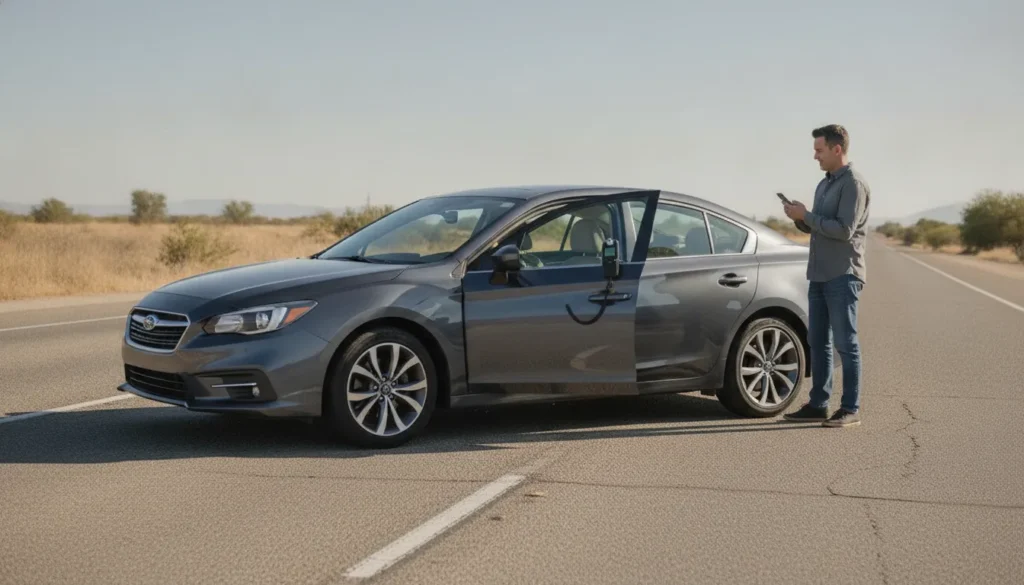
A dead battery, a tow, or a shop visit can feel like an ordinary car problem until an ignition interlock is wired into the car. Ignition interlock support after vehicle breakdown starts with two separate calls: one for the car, and one for the device. A repair does not pause a court order or a DMV restriction. Leave the device installed, get the car to a safe place, and ask the installer what the next service step is before anyone disconnects wiring.
Budget IID installs and services ignition interlock devices for drivers in Arizona and at its Roseville, California location. A technician can explain service steps for the device in your car. The technician cannot decide whether a breakdown changes your driving privilege. That answer stays with the court or the California DMV office that issued your notice.
Ask Budget IID about service after a breakdown.
What ignition interlock support after vehicle breakdown covers
Support after a breakdown is the help you ask for while the car is stopped and the device is still part of your requirement. It is not a new program, and it is not permission to drive a different car without an approved device. The goal is simple. Get roadside help, protect the installation, and keep a record of who you called.
California rules put a specific duty on the authorized installer. Under California Code of Regulations, title 13, section 125.12, the installer must give you a 24-hour emergency phone number. You can use that number if the device fails, or if a vehicle problem is related to how the device operates. The help must include technical information, tow service, or road service. The rule also says the device must be made functional within 48 hours of the call, or the device must be replaced.
Read that window carefully. It is a service duty for the installer. It is not a promise that every car will be repaired in 48 hours. A blown engine, a parts delay, or a body shop schedule can take longer. Ask a narrower question. Can the device itself be made functional, or replaced, inside that window once the car is somewhere a technician can work on it?
Two limits matter before you plan the day:
- The 48-hour duty is about the device, not a guarantee that the vehicle repair will finish on that clock.
- A tow or a repair does not end the IID requirement. Confirm any driving plan with the agency that issued your order.
Get safe, then make the two calls
If the car stops in traffic, your first job is safety. Move out of the lane if you can, turn on the hazard lights, and stand away from traffic. Do not remove the handset, cut a wire, or pull a fuse to “reset” the car. Those steps can look like tampering, and they can leave the car unable to start later.
Once you are off the road, use this order:
- Call the 24-hour number that came with your installation packet. Say the car broke down, name the symptom, and ask whether the device needs service before a tow.
- Call a tow or roadside service only after you know where the car should go. Ask the installer whether a specific shop or service location should receive it.
- If the car will be repaired, tell the shop an ignition interlock is installed and that wiring should not be disconnected without the installer.
- Write down the time of each call, the name of the person you spoke with, and what they told you to do next.
If you are near Roseville, you can also check the Roseville ignition interlock guide for the local service location before you assume a shop across town can recalibrate the device. Arizona service areas, including Phoenix, Mesa, Tucson, and Goodyear, are a separate question. Free mobile installation is an Arizona service. Do not expect that same mobile visit in California.
What to tell the installer on the emergency line
A short, factual report gets a better answer than a long guess about the cause. You do not need to diagnose the car. You need the installer to know whether this is a device failure, a car failure, or both.
Have these details ready:
- Where the car is, and whether it is safe to leave there.
- What happened: no start, a warning on the handset, a dead battery, a crash, or a shop that already has the car.
- Whether anyone has disconnected the battery or the device.
- The vehicle year, make, and model, and the provider name on your installation papers.
- The date of your last calibration, if you know it.
Then ask four direct questions. Can the device stay installed during the tow? Does the 48-hour repair-or-replace duty apply to this call? Where should the car be taken? What record will they give you after the call? Write the answers in your own words while you are still on the phone. A later summary is easier to dispute than a note made the same hour.
Section 125.12 also says the installer must give written instructions on vehicle malfunctions or repairs that may affect the device, and what to do when those repairs are necessary. If you never received that sheet, ask for it again during this call. It is part of the installation packet, not a favor.
Tow trucks, repair shops, and the installed device
Most breakdowns end in a tow or a repair bay. The risk is not the tow itself. The risk is someone treating the interlock like an alarm or a stereo and unplugging it. Tell the driver and the service writer, before work starts, that a breath device is tied to the ignition and that the installer should be involved before any wire is removed.
A few shop situations come up often:
- Battery or alternator work. Disconnecting the battery can stop the device and may require a check before the car is released. Ask the installer before the shop pulls the cables.
- Starter, ignition, or electrical repairs. These repairs sit next to the device wiring. Ask the shop to pause if they reach a connector they do not recognize.
- Body work after a minor crash. A fender repair is not the same as a totaled car. Keep the device in place unless the installer schedules a removal. If the car cannot be saved, that is a different problem, covered in the guide to a totaled California IID vehicle.
- A loaner or a spouse’s car. Do not move your driving to another vehicle to get around a dead car. A requirement that names an equipped vehicle is not met by a car with no device.
For a planned visit, the car repair checklist walks through what to tell a mechanic before an appointment. Use it as a companion. This page is for the unplanned stop, when you do not have a shop date yet.
How the 48-hour window fits a real repair
The regulation draws a line that drivers often miss. Service of the device happens on a schedule of not more than 60 days, and that visit includes a physical inspection, calibration, and a download of the device memory. The 48-hour rule is different. It starts when you call for help because the device failed or the car problem is tied to the device. It is not a new 60-day calibration clock, and it is not a deadline for the body shop.
Use the questions below to separate the two clocks. Ask the installer which row describes your call. Do not fill the answer in yourself.
| What happened | What to ask | What not to assume |
|---|---|---|
| The handset or the car will not complete a start test | Does this call start the 48-hour repair-or-replace duty? | That you may drive another car until the device is fixed |
| The car needs a tow for a flat, engine, or accident | Can the device stay installed, and where should the car go? | That a tow cancels your next calibration date |
| A shop must disconnect the battery or ignition wiring | What should the shop avoid, and who checks the device afterward? | That any mechanic can reconnect an IID |
| You cannot return for a regular calibration because of the breakdown | What date still applies, and what proof of the delay do they need? | That a late calibration is excused without documentation |
The same regulation allows a limited extension if you cannot return for recalibration within 60 days. The listed reasons are military service, a family death, or a similar event you can document. A breakdown is not automatically one of those events. If the car will be in a shop past your service date, tell the installer before that date. Ask what proof they need. If you miss the date without an extension, the installer must report non-compliance on California DMV form DL 921, the Notice of Non-Compliance.
Records worth keeping the same day
Paper feels optional when you are waiting on a tow. It is the part you will wish you had if a calibration date or a violation notice shows up later. You do not need a formal file. A note on your phone is enough if it has dates and names.
Keep these items together:
- The time you called the 24-hour line, the person you reached, and the advice you received.
- The tow invoice or a photo of the tow slip, including where the car was taken.
- Any text or email from the installer about the 48-hour window or a replacement device.
- The shop estimate, but only the lines that mention the battery, ignition, or device wiring.
- Your last calibration receipt, so you can see whether a service date is about to pass while the car is down.
If the installer replaces the device, section 125.12 says that replacement must be documented, with each device identified in your file. Ask for a copy. If you later need a broader set of records, the California IID records request guide explains how to ask for the file. Do not wait for a dispute to start the folder.
Calibration timing is a separate topic. The overview of ignition interlock calibration timing explains why a missed visit is not the same thing as a failed test. Read it if your breakdown is going to overlap a scheduled service, and then confirm the date on your own paperwork.
What this breakdown does not change
A stopped car does not close your case. Drivers sometimes stack three different problems into one phone call, and the answers get mixed. Keep them apart.
Changing companies is its own process. If you are unhappy with how the breakdown was handled and you want a different company, read the California provider change guide before you schedule a removal. Do not remove the current device to “start fresh” while the car is in a shop. A gap between removal and the next installation is a compliance problem, not a shortcut.
Moving the device to a replacement car is also its own process. A breakdown repair is not a vehicle transfer. If the shop later tells you the car will not return to the road, stop and ask the installer about a transfer before you buy or borrow another vehicle. The transfer paperwork is covered separately. This article does not repeat those steps.
Arizona drivers should not borrow this page. Arizona uses its own reporting rules and service areas. Budget IID’s free mobile installation applies in some Arizona areas only, not statewide and not in Roseville. If your order is from an Arizona court, use your Arizona instructions rather than a California emergency-line rule.
Contact Budget IID before the device is disconnected.
Frequently asked questions
Who do I call first if my car breaks down with an IID installed?
Call the 24-hour emergency number from your installer before you approve a tow. California rules require that number for device failure and for vehicle problems related to the device. Ask where the car should go, and whether the device can stay installed, before a driver loads it.
Does the 48-hour rule mean my car will be fixed in two days?
No. The rule says the device must be made functional within 48 hours of the call for assistance, or replaced. It does not require a body shop, a parts order, or an engine repair to finish on that clock. Ask the installer which part of your situation the window covers.
Can a regular mechanic disconnect the interlock to finish a repair?
Do not ask a shop to disconnect it on their own. Tell them the device is part of a legal requirement and that the installer should approve any wiring change. Battery and ignition work are the repairs most likely to disturb the installation. A planned-repair checklist is useful once you have a shop date.
Will a breakdown excuse a missed calibration?
Not by itself. Service is due at intervals that do not exceed 60 days. An extension is limited to events you can document, such as military service, a family death, or a similar event the installer accepts before a non-compliance report. Tell them about the shop delay before your date and ask what proof they need.
Can I drive a different car until mine is repaired?
Do not assume a spare car, a rental, or a household vehicle is allowed. Your order or restriction may require the vehicle you drive to have an approved device. Ask the court or DMV office that issued your notice before you drive anything else. A provider can service a device. It cannot expand your driving privilege.
Get a clear next step for the car and the device
If the car is stopped and the device is still installed, call the emergency line and keep the notes from that call. Budget IID can walk through service options for drivers it serves in Roseville and in its Arizona locations. Bring the symptom, the vehicle, and your last service date. Leave legal conclusions to the agency that issued your order.
When you are ready, contact Budget IID and describe the breakdown before anyone disconnects the device.