
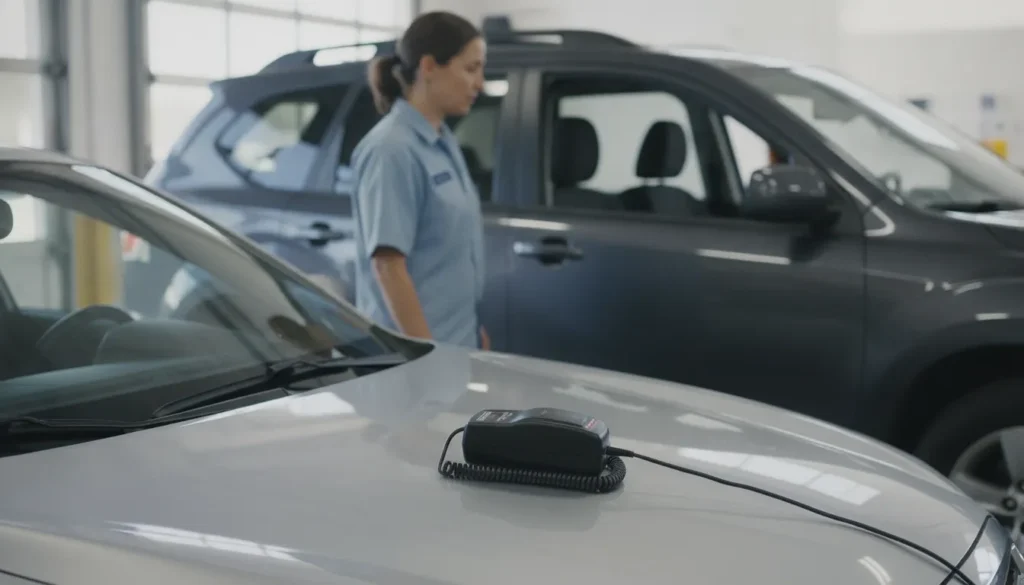
A California ignition interlock transfer to another vehicle is a planned handoff, not a do-it-yourself swap. The restriction follows you, the driver. Selling, buying, or parking the equipped car does not pause it. Call your installer before the old car is unequipped. Book removal and the new installation as one sequence. Do not drive a car your order requires to have a working device until that car is equipped and reported.
Call (480) 487-8877 to schedule your California vehicle handoff
What a California ignition interlock transfer to another vehicle actually is.
People use “transfer” for several different events. This page is about one of them: you already have a device, you will stop using that vehicle, and you need a device on a different vehicle you will drive. The installer removes the unit, restores the old vehicle, and installs on the replacement. You keep the same restriction. Only the equipped car changes.
That is not the same job as changing manufacturers. A provider change has its own file handoff and its own reporting pair, covered in the California ignition interlock provider change procedure. It is also not an out-of-state move. Relocation is covered in the California ignition interlock out-of-state move guide. Arizona drivers follow a different agency and a different clock, so do not borrow Arizona timing for a California car change.
The field-by-field form checklist is a separate article. Use this page for the sequence: who to call, how to time the two visits, which reports the installer files, and what you should not do in the gap.
Confirm the rule that applies to your license before you sell
California does not use one script for every driver. The California DMV Statewide Ignition Interlock Device Pilot Program tells participants to install a device on a vehicle they operate. They must give DMV a Verification of Installation, form DL 920, before an IID-restricted license can be issued. Read your own order of suspension, restriction letter, and any court minute order. Those papers control your term, not a general article.
Two official rules shape the handoff:
- California Vehicle Code section 23247(e) makes it unlawful for a person under a covered IID restriction to operate a vehicle that is not equipped with a functioning certified device. Confirm the wording against your own restriction letter. If it applies to you, the replacement is not a legal substitute until it is equipped.
- Title 13, California Code of Regulations, section 125.12(b) says that whenever a device is removed, the manufacturer must have the authorized installer restore the vehicle. The installer reports that removal to the court on the court’s form, or to DMV on form DL 922 under section 125.20.
Section 125.20(a) says the installer submits DL 922 to DMV within three working days of a removal. It does not, by itself, describe a vehicle-to-vehicle reinstall. Ask your installer which path applies to your file. It may be a removal plus a new DL 920, or a court form that lists both cars. Do not guess the form path from a blog.
Budget IID can install and service devices for drivers in its Roseville area. It cannot tell you that a particular court order allows a gap, a rental, or a work truck. If the papers and the installer disagree, stop and get the conflict in writing before anyone removes the unit.
Set the sequence before the old car changes hands.
Most gaps happen because the car is sold, repossessed, or left at a shop before the installer has a plan. Work backward from the day you must stop using the old vehicle.
- Read the restriction letter and write down the end date, the vehicles named, and any court instruction about additional cars.
- Call the installer that services your current device. Say you are changing vehicles, not ending the program and not changing companies. Ask which office can remove and which office can install, and whether both visits can be the same day.
- Give the year, make, model, VIN, plate, and ignition type for the replacement. Ask them to confirm the car can take a certified device before you buy it or sign a sale.
- If someone else owns the replacement, get that owner’s permission in writing. The installer needs access to the car and a person who can authorize wiring work.
- Book removal and installation as a pair. Ask for that in a text or email. The new car should not be released for driving until installation and the required notice are done.
- Keep the old car available until removal is finished. A buyer, tow yard, or body shop can block the appointment.
- After both visits, ask for your copies the same day: the removal notice, the installation verification, the next monitor date, and the vehicle identifiers on each form.
If you are also changing installers, do not fold that into this visit. Finish or separately schedule the provider change so the file, the calibration history, and the DMV notices stay with one responsible company at a time.
Who does what on removal day and install day
You coordinate. You do not disconnect the handset or cut wiring. Do not let the buyer take the car with the unit still in it. An authorized installer removes the device and restores the vehicle. You can wipe personal items out of the car. You cannot clear the device.
| Step | You | Authorized installer | Stop and ask before going further |
|---|---|---|---|
| Before either visit. | Share both vehicles, your deadline, and any court wording. | Confirms the car can be equipped. Names the forms it will file. | The installer has not said the replacement is compatible. |
| Removal | Bring the old car, your ID, and the restriction letter. Do not drive off in an unequipped car your order forbids. | Removes the device. Restores the vehicle. Starts the DL 922 notice. | The old car is already sold, impounded, or at a shop the installer cannot enter. |
| Installation | Bring the replacement. Bring the owner’s permission if it is not yours. Bring any insurance proof the installer asks for. | Installs and trains you. Completes DL 920 or Section II of DL 922, as its process requires. | You are told to drive the new car home before the device is tested. |
| Same day, after the visits | File your copies. Photograph the VIN on the form against the VIN on the dash. | Tells you the next monitor date and where to service the car. | Your copy lists the wrong plate, the wrong VIN, or no next service date. |
Section 125.12(a) also sets the service rhythm after the car is equipped. The installer services the device at intervals that do not exceed 60 days, inspects for tampering, calibrates, and downloads the memory. A vehicle change does not reset your duty to make that next visit. Put the date from the installer on your calendar before you leave the lot.
Training is part of the install, not a favor. The same rule says the installer gives written care instructions and hands-on training to the participant and to other people who will operate the vehicle. If a spouse or coworker will drive the replacement, they need that training on that car.
Keep a small record of the handoff
You need a record of this event. You do not need to request your entire history. The full request process lives in the California ignition interlock device records request checklist. For the car change itself, keep:
- The installer’s written appointment confirmation for removal and for installation, with dates and vehicle descriptions.
- Your copy of DL 922, and DL 920 if a new installation verification was issued. Check the VIN, plate, and dates against the cars.
- Any court verification form the installer says it filed, and the date it was sent.
- The next monitor-check date and the service location.
- Photos of both vehicles’ VIN plates and of the installed handset on the new car.
- The name of the person you spoke with, if the plan changed on the phone.
Match the paper to the cars that day. A notice that still lists the sold vehicle can make a later compliance check look like you removed the device and never reinstalled it. If a character is wrong, ask the installer to correct it before you rely on the copy.
DMV uses installer forms to see that a device was installed or removed. The DL 925 installation and removal request is an installer form used to ask DMV about eligibility. It is not something you fill out at the kitchen table to “move” a device. If a form is required, your installer completes and submits it.
Driving, selling, and the gap between the two cars.
Plan on no driving that your order requires to be in an equipped vehicle, from the moment the device comes off until the replacement is installed and you have been told the report is underway. Do not treat a spouse’s car, a dealer loaner, or a one-day rental as a bridge. Borrowed and rented vehicles raise a separate equipment question. If the trip matters, ask the installer and read your order before the removal is scheduled.
A few situations need a pause:
- The buyer wants the car this week. Tell the buyer the device has to be removed by the installer first. Build that visit into the sale date.
- The car was totaled, stolen, or impounded. Call the installer before you arrange a new car. They may need a police report, a tow release, or access to a shop before they can remove and report.
- You will have two cars. Equipping the new one does not, by itself, answer whether the old one must stay equipped. Ask whether your order reaches every vehicle you own or operate, then follow that answer.
- The replacement is a work truck or a company car. Employer-owned vehicles can have a different permission path. Get the employer’s written OK, and do not promise coworkers the car is compliant until the installer finishes.
- You are near the end of the term. A vehicle change is not program completion. Final removal still needs the authorization described in the California program completion requirements.
Section 125.18 requires the installer to send DMV a non-compliance notice, form DL 921, within three working days in defined cases. Those cases include an attempt to remove, bypass, or tamper, three or more missed maintenance requirements, or no maintenance within 60 days of the prior service. A sloppy, self-done disconnect can become a reported event. Leave the hardware to the installer.
None of this promises that a form will be processed by a certain day, or that a restricted license will update the hour the device is installed. DMV and the court control those records. Your job is to leave with true copies and a next service date.
Where Roseville drivers can get the visits done
Budget IID’s California service point for this handoff is its Roseville location. Drivers who need removal from one car and installation on another can start with the Roseville ignition interlock installation page and ask for both appointments together. Bring the restriction letter, both vehicle descriptions, and, if the replacement is not yours, the owner’s permission.
Say “vehicle change” when you call. A removal-only appointment can close the old car and leave you without a legal vehicle. A new-install appointment that ignores the old unit can leave a device on a car you no longer have. The useful request is one sequence, with copies of DL 922 and any DL 920 before you go home.
Service rules still come from your order and from DMV, not from a local shop’s calendar. Roseville staff can install, calibrate, train you, and help you gather the visit record. They cannot shorten a term or authorize driving an unequipped car.
Call (480) 487-8877 before you unequip the current car
Frequently asked questions
Can I move the handset to the new car myself?
No. Removal and installation are installer work. Title 13 CCR section 125.12 requires the authorized installer to restore the old vehicle and to document removal. A homemade move can damage the car and can be reported as tampering.
Does selling the equipped car end my California IID term?
No. The restriction follows your driving privilege. Selling, totaling, or parking the car does not complete the program. You still need a device on a vehicle you will operate, unless your own order says otherwise.
How long can I drive with no device between cars?
Do not plan on a grace period. Vehicle Code section 23247(e) prohibits a restricted driver from operating a vehicle that is not equipped with a functioning certified device. Schedule removal and installation so you are not stuck between cars.
Which form shows the device moved to the new vehicle?
Ask your installer. A removal is reported on DL 922. A new installation is verified on DL 920. Get your copy either way. Check that it names the car you will actually drive.
What if I am changing installers at the same time?
Treat that as a provider change, not as a simple vehicle handoff. The provider-change guide covers the file transfer. Doing both at once without a written plan is how drivers lose a service date or end up with two companies each thinking the other filed the notice.
Plan the handoff, then drive the equipped car.
List both vehicles, call the installer, and put removal and installation on one plan before the old car is gone. Leave with copies that show the correct VIN and the next monitor date. If you are in the Roseville area, Budget IID can set that two-visit sequence. Bring your restriction letter and the new car’s details when you contact Budget IID.