
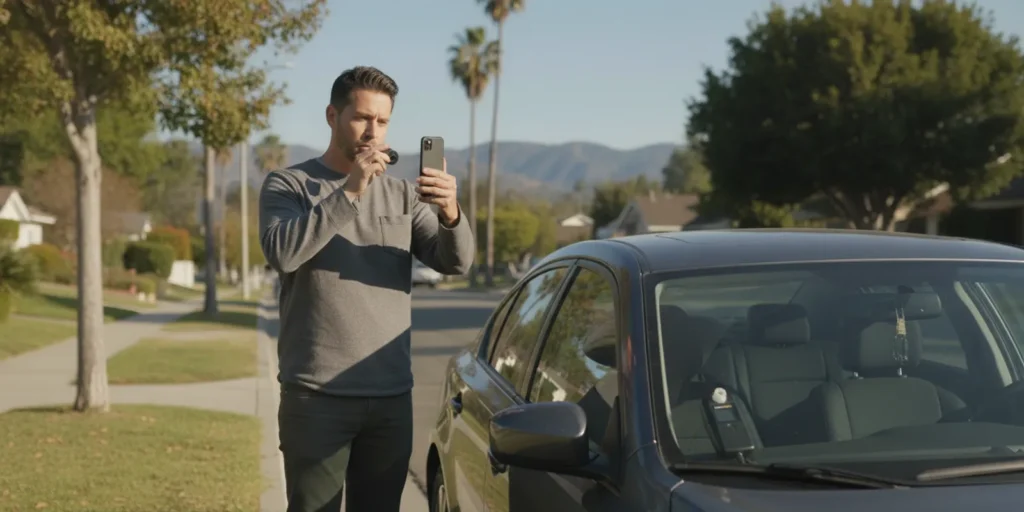
A crash can leave you juggling safety, transportation, repairs, and uncertainty about your ignition interlock device. This California ignition interlock vehicle accident checklist gives you a practical order for handling those questions without assuming that a working display means the car is safe or that an accident automatically changes your IID requirement. Take the next step only after addressing immediate hazards and confirming instructions with the right people.
Contact Budget IID for device support
What should you do first after a crash?
Start with people and the scene, not the IID. Move away from traffic or another immediate hazard when it is safe to do so. Check for injuries, request emergency help when needed, and follow directions from responders. Do not troubleshoot a handset or take photographs if doing so would put you or someone else at risk.
Once the scene is under control, consider whether the car can safely be moved. A vehicle may start even when a collision has affected steering, brakes, tires, lights, or electrical components. If you are unsure, do not drive it; ask for appropriate roadside assistance or towing and have the vehicle assessed by a qualified repair professional. A functioning ignition interlock does not certify the vehicle as roadworthy.
- Follow emergency responder and law-enforcement instructions.
- Do not stand in a travel lane or handle the device in an unsafe location.
- Do not drive a vehicle that may be unsafe or that you have been instructed not to drive.
- Leave the IID handset and wiring undisturbed unless a responder or qualified professional gives a safety-related instruction.
If the car is in a tow yard or repair facility, write down where it was taken and how to reach the facility. Tell the tow operator that an IID is installed, when practical, so the fact is not missed during intake or later handling.
What information should you record?
After immediate safety needs are addressed, make a simple factual record. Your notes are for accurate communication, not for diagnosing the crash, assigning fault, or deciding whether a program rule was met. Keep observations separate from conclusions. For example, write “display was blank after impact” rather than “the collision broke the IID,” unless a qualified person has confirmed that cause.
- Date, approximate time, and location of the collision.
- Vehicle year, make, model, and its condition after the incident, as you observed it.
- Whether it was moving, parked, being towed, or at a repair facility when the issue occurred.
- Any device message, indicator, sound, or power behavior you actually observed.
- Whether the handset, cable, or area around the installation appears visibly affected; do not pull or move wiring to inspect it.
- Names and contact details for the tow operator, repair facility, and other relevant contacts.
- Any incident, tow, or insurance claim reference number you receive.
- Photographs of the vehicle damage and display, only if taking them is safe and lawful.
Save messages, work orders, towing receipts, and instructions from the provider or authorities. If an alert is visible and it is safe to document it, record the exact wording and time. Avoid repeatedly trying to start the car or repeating a breath test to see if a message clears. Unnecessary attempts may complicate the timeline and do not identify the mechanical cause.
A useful record can be brief. For instance: “At about 4:30 p.m., the parked car was struck on the driver side. The display showed [exact message] when I checked at 5:05 p.m. The car was towed to [facility]. I have not tried to restart it.” This gives the provider concrete facts and avoids guessing about what caused the display.
Who should you contact, and in what order?
Different people handle different parts of the situation. Emergency responders address immediate safety; a repair professional assesses vehicle condition; your insurance contact handles questions about your policy or claim; the IID provider advises about the device and service process; and the agency responsible for your California driving or IID program status answers official program questions. One contact should not be treated as a substitute for all the others.
- Handle urgent safety matters. Follow responder directions and arrange towing if the car is unsafe or inoperable.
- Notify the IID provider. Explain that the vehicle was in a collision, report what you observed, and ask whether to leave it parked and whether device service is needed.
- Tell the repair facility. Before work begins, let the facility know an IID is installed and ask it to coordinate with the provider before touching the device or its wiring.
- Ask the responsible authority about official status. For deadlines, driving privileges, or the effect of a change in circumstances, use official channels or consult your attorney rather than relying on a repair shop’s view.
For provider-specific help, Budget IID customers can use the support portal or contact page. When you call or send a message, have the vehicle location, incident date, exact device display, and any repair or tow information available. Ask for instructions you can refer to later, and write down the date and the person or team that responded.
For official California information, check the California DMV website and confirm that the specific page or office you consult addresses your situation. The DMV is the relevant state motor vehicle agency, but a general webpage is not a decision on an individual case. If the official information is unclear, contact the agency handling your requirement or ask your attorney how to proceed.
What should you tell the IID provider and repair shop?
Be specific about what happened without presenting a guess as a confirmed fault. State whether the car was driven or parked, whether it was towed, what the handset displayed, and whether the shop has begun work. If there is no visible device damage, say that you have not noticed any; do not claim the installation is unaffected unless it has been checked.
Ask the provider what to do before anyone attempts to use the car again. Confirm whether the device or installation needs inspection, whether an appointment is needed, what records to bring, and whether the vehicle should be transported rather than driven to service. Ask how the provider wants to coordinate with the repair facility if the car cannot be brought to a service location. The specific answer may depend on the device condition and the vehicle’s location.
Tell the repair facility, preferably before authorizing work, that the vehicle has an IID. Explain that device-related work must be coordinated with the provider. The repair facility can assess and repair the vehicle; the provider can give device-specific instructions. Do not ask a mechanic to bypass the IID, and do not disconnect or alter the installation yourself. If the repair plan might involve power, wiring, or the area where the device is installed, ask the shop and provider to communicate before work proceeds.
Keep these roles distinct. A repair estimate does not answer whether the IID needs service. A provider’s instructions about the device do not determine whether the vehicle is safe to drive. A tow operator’s statement that the car can be loaded does not establish whether it is safe for road use. Confirm each issue with the person qualified to address it.
How should you respond to an IID alert or an unusual display?
A crash and an unusual display may happen around the same time, but timing alone does not establish what caused the message. Record the exact text or indicator and tell the provider what you saw. Do not infer from an alert that you have violated a program condition, and do not assume the alert is harmless. Only the appropriate provider can advise about the device, while the responsible authority addresses official program consequences.
If the device does not power on, seems loose, or shows a message you do not recognize, leave it in place and contact the provider before attempting a fix. Avoid unplugging, resetting, or moving the handset or wiring. If smoke, heat, exposed wiring, or another immediate hazard is present, prioritize personal safety and follow emergency guidance rather than trying to preserve the device or its data.
When the provider recommends service, confirm logistics before traveling. Ask whether the car should be towed, whether an appointment is needed, and whether you should bring photographs, the tow record, or repair paperwork. If you need general background on scheduled device service, review the information about IID calibration service; an accident-related concern may require separate, case-specific instructions.
Does a collision automatically change your California IID requirement?
Do not assume that an accident automatically pauses, ends, or changes an IID requirement, a deadline, or your driving privileges. Those questions depend on your individual record and the instructions that apply to your case. Keep following the directions you have received unless the authority responsible for your matter tells you otherwise. If a damaged or unavailable vehicle makes compliance difficult, report the circumstances promptly to the provider and ask the relevant authority what action or documentation is required.
Do not treat an informal comment from a repair shop, tow operator, or another driver as official approval to drive a different vehicle or skip a required step. A device alert also is not, by itself, a definitive official finding. For an overview of device basics, you can read what an IID is and how it is used, but use official channels for a decision about your own status. This article is general information, not legal advice, a vehicle inspection, or an insurance determination.
How do common accident situations change the next step?
| Situation | Immediate priority | IID and coordination step |
|---|---|---|
| Minor impact and no obvious device message | Check for hazards and do not infer that the car is safe based only on appearance. | Report the collision to the provider and ask whether inspection is appropriate before driving. |
| Vehicle may be unsafe or will not operate | Do not drive it; arrange suitable roadside help or towing. | Tell the provider where the vehicle is and ask how device service should be coordinated. |
| Handset shows an alert or is unresponsive | Keep the vehicle in a safe location and record the display if safe. | Contact the provider for device-specific direction; avoid resets or repeated attempts. |
| Vehicle is at a repair facility | Tell the facility an IID is installed before work begins. | Ask the repair shop and provider to coordinate before device wiring is touched. |
| Vehicle may be replaced or declared a total loss | Keep records and do not assume the device can be moved. | Ask the provider and authority what applies; see the separate Budget IID information and service resources for a starting point, then obtain case-specific instructions. |
This table is a practical sorting aid, not a legal decision tree. If the facts fit more than one row—for example, the car is unsafe and the handset is also unresponsive—address the safety issue first, then contact the provider and relevant authority. Do not drive merely to make an appointment if a qualified person has not established that the vehicle is safe and the provider has not advised how to handle the device.
What questions should you ask before repairs or driving again?
A short written list can prevent misunderstandings when several people are involved. You can use these questions with the IID provider and repair facility:
- Based on the message and incident details I provided, what should I do with the vehicle now?
- Should the car remain parked or be transported to a service location?
- Does the provider need to inspect the IID or installation before I use the vehicle again?
- What should the repair facility avoid doing to the handset, wiring, or installation?
- Can the provider coordinate directly with the repair facility, and what contact details should I share?
- What information, photographs, or documents should I preserve or bring to an appointment?
- Who is the right California authority to contact about my individual program status or deadlines?
- Can you confirm the instructions in writing so I can keep them with the repair records?
Record the answer and any follow-up date. If instructions from two contacts seem to conflict, pause before taking a step that could affect safety or compliance and ask the responsible party to clarify. Do not try to resolve conflicting advice by choosing the answer that is easiest or by relying on another driver’s experience.
How can you keep the accident process organized?
Make one folder, digital or paper, for the crash and related IID communication. A clear file structure can save time when the provider, repair facility, insurer, or agency asks for details again. Include:
- Your dated incident notes and any safe, lawful photographs.
- Tow information, repair estimates, work orders, and invoices.
- Provider messages and a log of calls, including dates and the instructions given.
- Any official letters or program instructions related to your question.
- Claim or incident reference numbers and the names of people who handled each matter.
Use descriptive file names, such as “2026-11-16-device-display” or “2026-11-16-tow-receipt,” and keep the original documents. Share copies when requested. When you report the issue, give a short chronology in order: collision, tow or inspection, device observation, provider contact, and any instruction received. This makes it easier to distinguish what you know from what remains to be confirmed.
If the car is being repaired, coordinate the vehicle work and IID questions as separate tracks. Keep the repair shop’s estimate and device-provider instructions together, but do not treat either document as a substitute for the other. When the vehicle is ready, confirm that the repair professional considers it safe and follow the provider’s direction about the IID before returning to regular use.
What if the vehicle cannot be used or must be replaced?
If the car cannot be driven, explain that clearly to the provider and ask what to do while it is unavailable. Do not assume the device can be moved to another vehicle, that the requirement is suspended, or that a different car may be driven without further steps. The answer depends on your individual program and device arrangements, so confirm the process before authorizing a transfer or taking another vehicle on the road.
This article focuses on accident response and coordination, not the detailed process for a totaled vehicle or a transfer. For general questions about the provider’s service area, see Budget IID locations. For device removal questions, use the dedicated IID removal information only when removal is actually relevant, and obtain confirmation from the authority responsible for your requirement before arranging any change. The IID frequently asked questions page can help with general background but cannot determine your case status.
Ask Budget IID about your next device-related step
Frequently asked questions
Should I drive if the IID still turns on after the crash?
Not based on that fact alone. The vehicle must be safe to operate, and the device or installation may need provider guidance. Follow responder instructions, get the vehicle assessed if needed, and ask the provider what to do before driving.
Can a repair shop disconnect or remove the IID?
Do not assume that disconnecting or removing it is appropriate. Tell the shop an IID is installed and ask the provider to coordinate before the shop touches the device or its wiring. Do not attempt to bypass or alter the installation yourself.
Does the accident itself mean I have an IID violation?
An accident alone does not establish a device event or an official program consequence. Preserve the facts, report any unusual display to the provider, and contact the responsible California authority about official status questions.
What should I do if the car is towed or stored?
Write down where it was taken, tell the IID provider its location, and ask whether the provider needs to coordinate with the facility. Do not arrange device work or attempt to drive it away until the vehicle’s safety and device instructions are clear.
Where can I confirm a California program question?
Start with the agency responsible for the particular requirement or driving-status question, and use official channels. The California DMV website is a source of motor vehicle information, but general information there is not a ruling on an individual case. Consider asking your attorney if you need advice about your legal obligations.
Make the next step clear and documented
After a collision in an IID-equipped California vehicle, prioritize people and vehicle safety, record what you actually observed, and coordinate with the provider before device-related work or driving decisions. Keep repair questions, device questions, and official program questions with the people responsible for each one.
Contact Budget IID for help coordinating your IID questions.
For questions about your individual legal status or driving privileges, confirm the answer with the responsible California authority or your attorney.