

Ignition Interlock on Leased Car: What to Know
Installing an ignition interlock on a leased car is generally possible, but the vehicle owner, lease terms, installer, and state program may each have requirements. Before scheduling service, read the agreement, ask the leasing company for written authorization when required, and tell the installer that the vehicle is leased. That preparation helps you comply without making assumptions about permission, warranty coverage, or the car’s condition.
Schedule a professional ignition interlock installation with Budget IID and ask what documents to bring for a leased or financed vehicle.
A lease does not automatically prevent an IID installation. It does change who can approve work and who is responsible for the vehicle at return. A financed vehicle is different because the driver is usually the registered owner while a lender holds a lien. In either case, checking the paperwork first is safer than relying on a general rule.
Can you install an ignition interlock on a leased car?
In many cases, yes. An ignition interlock can generally be installed on a leased car when the lease permits it or the leasing company authorizes it. Requirements vary by agreement, vehicle, provider, and state program, so confirm permission and documentation before installation.
An IID is a breath-testing system connected to the vehicle’s starting circuit. If a court or licensing agency requires one, the requirement usually applies to vehicles you operate, not only vehicles you own. That can include a leased car, but the legal requirement does not erase the owner’s contractual rights.
The most useful way to think about the decision is as a four-party check:
- You: responsible for following the lease, maintaining the car, and meeting program rules.
- The leasing company: owns the vehicle and can set conditions for equipment installation.
- The IID provider: determines whether its approved installation approach is compatible with the vehicle.
- The court or licensing agency: determines what counts as compliant installation, monitoring, transfer, and removal.
Do not assume that another driver’s experience applies to your lease. Two vehicles from the same manufacturer can have different trim-level electronics, and two leasing companies can use different contract terms. Written confirmation creates a clearer record if questions come up later.
Leased cars and financed cars are not the same
With a lease, the leasing company remains the owner while you pay to use the vehicle for a defined term and mileage limit. With financing, you usually own the vehicle while the lender holds a security interest until the loan is paid. A finance agreement can still restrict alterations or require the vehicle to be maintained, so review it instead of assuming no approval is needed.
If the registration, lease, or loan is in someone else’s name, ask that person and the IID provider what authorization is required. The installer may need proof that the owner understands and permits the work.
What should you check before installation?
Review the lease or finance agreement for alteration, electrical-work, maintenance, insurance, and return-condition clauses. Then ask the vehicle owner and IID provider what written authorization, registration, insurance, and court or agency documents are required before the appointment.
Start with the actual agreement, not a summary from a salesperson or an online forum. Search for terms such as alteration, modification, electrical equipment, accessory, maintenance, and return condition. If a clause is unclear, contact the leasing company and ask how it applies to a court-required ignition interlock.
Use this pre-installation checklist:
- Confirm the compliance requirement. Verify the deadline, approved-provider rules, and any required forms with the court or licensing agency.
- Read the vehicle agreement. Identify clauses covering modifications, electrical work, service, insurance, and early return.
- Ask for written authorization. If the owner requires approval, keep a copy of the email, letter, or signed form.
- Confirm vehicle compatibility. Give Budget IID the year, make, model, trim, and powertrain, especially for a hybrid or electric vehicle.
- Document current condition. Take dated photos of the dashboard, steering-column area, and visible interior before the appointment.
- Plan for service and return. Check how calibration visits, repair appointments, lease-end timing, and removal will be handled.
Budget IID provides court-approved ignition interlock devices and professional installation in Arizona and select California areas. Installation commonly takes about one to two hours depending on the vehicle, but your appointment length can vary. Review Budget IID’s ignition interlock questions and service details before you arrive.
Questions to ask the leasing company
- Does the agreement allow a court-required ignition interlock?
- Is written authorization required before installation?
- Are there approved installers or documentation standards?
- What records should I keep for the vehicle-return inspection?
- What happens if the lease ends before the IID requirement?
Ask the representative to answer in writing. A dated response is more useful than relying on your memory of a phone call.
How does professional IID installation protect the vehicle?
Professional installation reduces avoidable risk because a trained technician evaluates the vehicle, follows device and program requirements, chooses an appropriate mounting approach, and tests operation. Results still depend on the vehicle and prior condition, so discuss concerns and document the car before service.
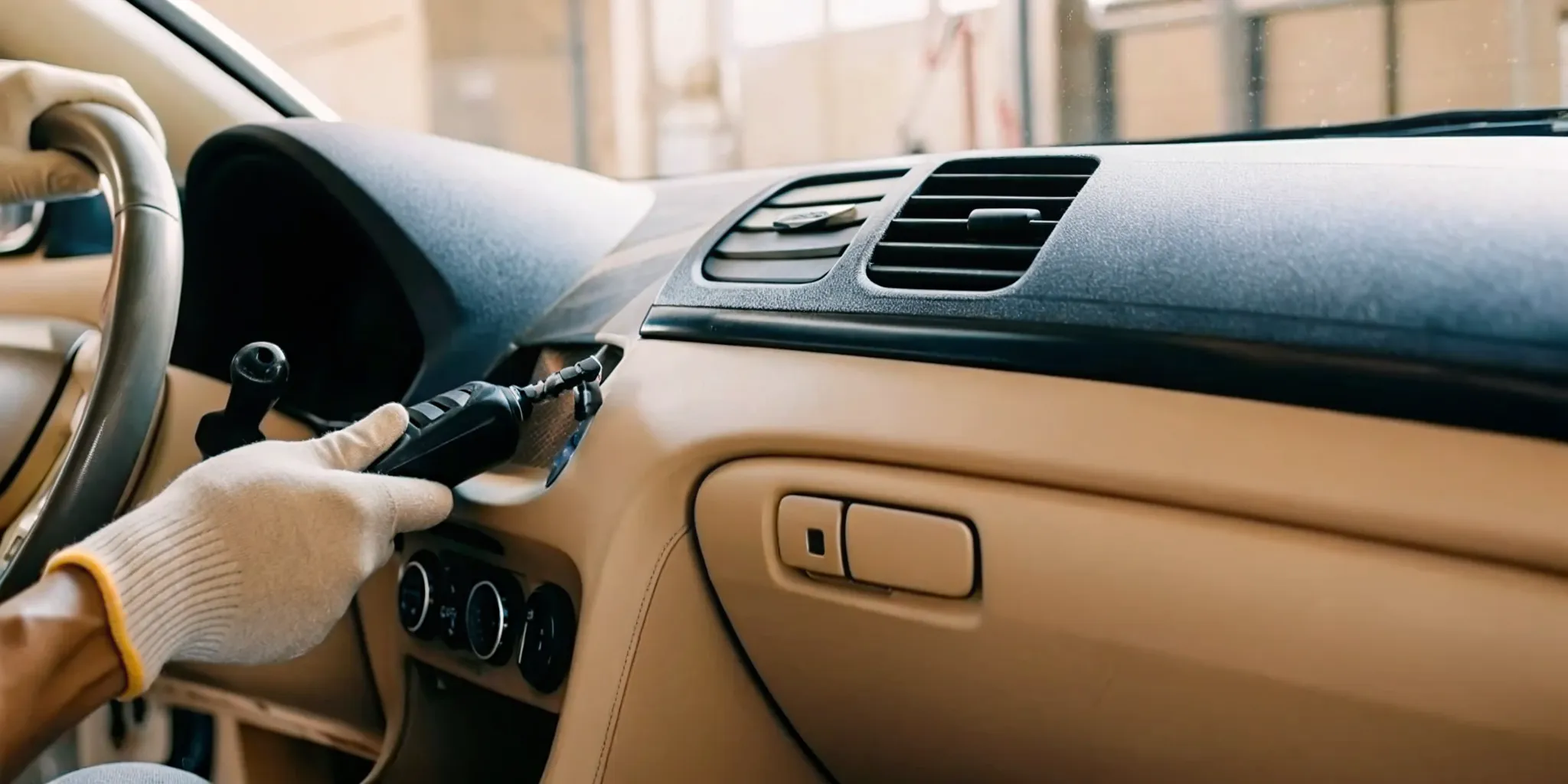
An IID installation involves more than placing a handset in the cabin. The technician must connect the system so it can control starting, record required events, and support testing while meeting applicable program rules. Modern vehicles can have sensitive electronics and model-specific starting systems, which is why do-it-yourself installation is not appropriate.
A professional process should include a vehicle assessment, confirmation of paperwork, installation, operational testing, and driver training. Before work begins, tell the technician about warning lights, aftermarket electronics, remote-start equipment, battery issues, or recent repairs. These details can affect how the vehicle is evaluated and help separate pre-existing conditions from later questions.
Budget IID’s professional IID installation process includes training so drivers understand how to use the device and prepare for required tests. Ask the technician where the handset and related components will sit, whether any visible mounting is necessary, and what to expect during removal.
Keep a simple vehicle-condition file
A small record can prevent a large disagreement. Save your written authorization, appointment confirmation, photos, installation paperwork, calibration records, repair invoices, and removal authorization together. If the vehicle has an inspection at lease return, add that report too.
This file does not guarantee that a warranty or condition question will be resolved in your favor. It does give the leasing company, provider, and repair shop a clearer timeline and better evidence.
Will an IID affect the warranty or lease return?
An IID does not automatically determine warranty coverage or lease-return charges. Coverage and condition decisions depend on the agreement, vehicle, installation, and cause of any issue. Ask the lessor and manufacturer about specific concerns, use a qualified installer, and keep complete service records.
Drivers often ask whether an ignition interlock will void the vehicle warranty. There is no responsible universal answer. Warranty decisions are typically tied to the terms of the warranty and the cause of a particular problem. The leasing company can also assess the vehicle against its own return-condition standards.
The safest approach is to narrow the question. Instead of asking, “Will this void my warranty?” ask the lessor or manufacturer:
- Does installing a court-required IID require prior authorization?
- Could the installation affect coverage for a specific electrical or starting-system issue?
- What documentation is required if the vehicle needs warranty service?
- Should the IID provider coordinate with the repair facility before service?
Do not ask a mechanic to disconnect or bypass the device without first contacting the IID provider. Unapproved disconnection can create a compliance event even when the underlying repair is legitimate. Coordinate the timing and documentation before the vehicle enters the shop.
A practical risk comparison
| Concern | Best preventive step | Record to keep |
|---|---|---|
| Lease permission | Read the agreement and obtain required authorization | Written approval and lease clause |
| Vehicle condition | Photograph the interior before installation and after removal | Dated photos and inspection reports |
| Warranty service | Coordinate with the lessor, repair shop, and IID provider | Repair order and provider communication |
| Compliance reporting | Use an approved provider and attend required service | Installation certificate and service records |
| Lease-end timing | Plan authorized removal before the return appointment | Removal authorization and receipt |
This ownership-focused approach is more useful than a blanket promise. It identifies who controls each decision and what evidence can reduce uncertainty.
Find your nearest Budget IID service location to discuss vehicle compatibility, paperwork, and appointment timing before installation.
How should you plan removal, trade-in, or lease return?
Plan IID removal before the lease return or trade-in date, but never remove or disconnect it early. First obtain authorization from the responsible court or licensing agency, then schedule professional removal and keep the receipt, condition photos, and final inspection documents.
The lease-end date and IID completion date may not line up. Address that mismatch early. If the lease ends while the device is still required, contact Budget IID, the leasing company, and the responsible agency to ask about an approved vehicle transfer. Do not wait until the return appointment, because transfers can require paperwork and scheduling.
If your IID period is ending first, confirm that the responsible authority has authorized removal. A completed calendar period alone may not be enough. Budget IID explains the general process in its guide to authorized ignition interlock removal.
On removal day, bring any required authorization and ask for documentation showing that a professional removed the device. Take fresh photos of the same areas photographed before installation. If you notice a condition concern, raise it promptly so the right parties can inspect it before the vehicle changes hands.
Never attempt DIY removal or transfer
Disconnecting, bypassing, or moving an IID yourself can create electrical problems, violate the vehicle agreement, and trigger a reportable compliance event. Even if you have mechanical experience, an ignition interlock is monitored compliance equipment. Contact the provider before repairs, battery work, towing, sale, trade-in, or return.
What if the leased vehicle needs repairs?
If a leased vehicle with an IID needs repair, contact the IID provider before the shop disconnects the battery or works on related systems. Tell the repair facility about the device, follow program procedures, and keep work orders and communications documenting legitimate service.
Ordinary vehicle issues do not pause an IID requirement. A dead battery, collision, recall, or electrical repair can overlap with monitoring rules, so communication matters. Call Budget IID as soon as you know the car needs service. Ask what the shop may do, what must be documented, and whether the provider needs to coordinate with the technician.
Also notify the leasing company when the agreement requires it. Some leases direct drivers to approved repair facilities or set procedures for collision and warranty work. Following both the compliance process and the vehicle agreement helps avoid creating one problem while solving another.
If the car will be unavailable for an extended period, ask the responsible agency and provider what options exist. Do not assume that missed driving, missed calibration, or an informal vehicle switch will be excused.
Frequently asked questions
Do I always need permission to put an IID on a leased car?
Not every lease uses the same terms. Review your agreement and ask the leasing company whether written authorization is required. The IID provider may also request proof that the owner permits installation.
Can I install an IID on a financed car?
Generally, an IID can be installed on a financed vehicle, but the loan agreement, vehicle requirements, and state program still apply. Review alteration and maintenance clauses and tell the installer that a lender holds a lien.
Will the installation damage my leased vehicle?
A professional installation is intended to support compliant operation while limiting avoidable risk, but no provider should make a universal promise about every vehicle or condition. Document the car, discuss mounting and wiring, and keep installation and removal records.
What happens if the leasing company refuses permission?
Do not proceed against the owner’s direction. Ask the IID provider and responsible agency about compliant alternatives, such as using or transferring to another authorized vehicle. Get guidance before your installation deadline.
Can a repair shop disconnect the IID?
Contact the IID provider before any shop disconnects or works around the device. The provider can explain required procedures and records. Unapproved disconnection may be reported as a compliance event.
Schedule your ignition interlock installation
Budget IID helps drivers in Arizona and select California areas complete professional installation, service, and authorized removal. Tell the team that your car is leased or financed when scheduling so they can explain the vehicle details and documents to confirm before your appointment.
Schedule your Budget IID installation and get clear next steps for your leased or financed car.