
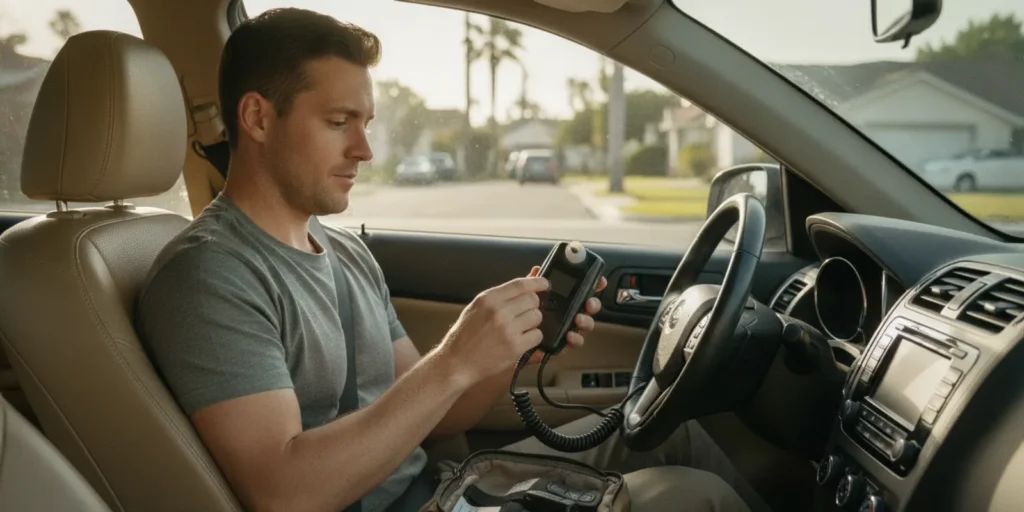
Searching for a low cost interlock California drivers can rely on means looking beyond a low advertised starting figure. An ignition interlock device (IID) is part of a compliance requirement, so the practical choice is a provider that can serve your location, explain the charges clearly, support required appointments, and help you follow the instructions that apply to your case.
Ask about California IID service
What does “low cost” mean when comparing California IID options?
There is no single number that tells you what an IID will cost over the time you need it. The amount and duration depend on your case, the vehicle, and the requirements you have been given. A useful comparison looks at the full set of costs and obligations rather than treating an initial quote as the total.
Ask each provider to explain the components in writing. Depending on the service arrangement, these may include installation, recurring device use or monitoring, required service visits, a vehicle change or transfer, and removal when you are authorized to finish. Ask which items apply to you, when each one is due, and whether an additional appointment or event could create another charge. Do not assume that a charge applies—or that it does not—until the provider explains the terms for your situation.
“Affordable” also includes the cost of getting to service. A provider with a lower initial quote may be difficult to use if its service center is far away, its appointment hours do not fit your schedule, or you cannot get a clear answer about required visits. Travel time, missed work, and arranging transportation are real practical burdens even though they may not appear on a device quote.
Before comparing options, make a short list of what you need to know: whether the provider can serve the county or city where you live, the exact vehicle you will use, the instructions from the court or California DMV, and how often you must return for service. Then compare each provider against that same list.
Which California requirements should you confirm first?
Start with the documents and directions for your own case, not a general online description. IID requirements can differ depending on the circumstances. Confirm which agency or court issued the instruction, whether an IID is required, the date it must be installed, how long the requirement applies, and what proof or reporting is expected. Ask the issuing agency or your attorney if a document is unclear; a device provider can explain its service but should not replace legal guidance.
California DMV has a page about its Statewide Ignition Interlock Device Pilot Program. It notes that a driver convicted of a DUI in another state may need an IID for California and directs the driver to contact the DMV Mandatory Actions Unit for information. If your conviction or license history crosses state lines, do not assume that a rule from another state tells you what to do in California. Use the agency named in the instructions to confirm what applies.
Keep a copy of written directions, installation paperwork, and service records together. When you call a provider, describe the instruction accurately and ask what information it needs to confirm the right installation and reporting process. Avoid relying on a friend’s timeline or a search result that describes a different program.
How can you compare the total cost categories?
Use a consistent comparison. Ask for every charge that may apply from installation through authorized removal, rather than comparing one provider’s monthly amount with another provider’s installation figure. The table below is a checklist of categories to ask about, not a price list or a claim that every fee applies to every driver.
| Cost or service category | What to ask the provider | Why it matters |
|---|---|---|
| Installation | What does the installation appointment include, and what should I bring? | Clarifies the initial work and helps prevent surprises on installation day. |
| Ongoing device service | What recurring charges apply, when are they due, and what do they cover? | Shows the continuing obligation rather than only the starting amount. |
| Calibration or required service visit | How will I know my due date, how do I book, and what happens if I need to reschedule? | Helps you plan around work, transportation, and required service. |
| Vehicle change or transfer | What steps and charges apply if my car changes or needs repair? | Clarifies how a change in vehicle affects service and compliance continuity. |
| Removal | Who confirms that removal is permitted, and what is the process and charge? | Prevents confusing device service with permission to end the requirement. |
| Other possible charges | Are there charges for missed appointments, lockouts, support, or paperwork? | Lets you identify conditional charges and the circumstances that trigger them. |
Ask the provider to separate fixed charges from conditional ones and to give examples of when each conditional charge could apply. Ask whether the written terms include taxes or other required amounts, how billing dates work, and whom to contact if a charge looks different from what you expected. If you cannot get a clear answer, pause before agreeing and ask for clarification.
It is reasonable to request a written summary. Save the quote and terms with your case documents, then compare like with like. For an additional checklist of provider questions, see this guide to evaluating an IID service center. A comparison is useful only if the details describe the same vehicle, service area, and required program.
How important is a nearby California service location?
Installation is only one appointment in the relationship. Depending on your instructions, you may need recurring service, help when the vehicle needs repair, or assistance understanding a device message. Before choosing a provider, identify where those services can be completed and how much travel they involve from home, work, or school.
Ask the service team to confirm that it handles your particular IID and can support the location where you plan to receive service. If you are considering a provider outside your area, confirm who will handle future appointments, whether you can use another authorized service location, and how records will stay connected. Do not make a long trip based solely on a directory listing; call first to verify current availability.
Budget IID’s California service location is in Roseville. Its Roseville IID location page provides the local service details. This is a defined local service boundary, not a promise of service throughout California. Drivers outside the area should contact the provider before making a plan and confirm where installation and later service can actually be provided.
You can also review the provider’s location information when checking whether a service point fits your route. Verify the location and appointment details directly before you travel, especially if you need a prompt installation or have a deadline.
What should you ask about installation and the device?
A reliable installation process starts with matching the device to your vehicle and explaining how to use it. Tell the provider the make, model, and year of the vehicle, and mention relevant details such as a push-button start, hybrid system, or electric drivetrain. Ask whether the provider can install and service the device in that vehicle before you schedule.
Ask how long to reserve for installation, what documents to bring, and whether the person who will drive the car should attend the appointment. Request a hands-on explanation of how to provide a sample, read the device prompts, handle a restart, and contact support. A clear demonstration lets you raise questions before you leave rather than trying to work out the basics on the road.
Find out what the device records and what information is sent for required monitoring. Ask the provider to explain the functions available on the device you will receive and whether a non-recorded test option is offered for checking whether you can safely start the car. Do not assume that all devices or programs handle information in the same way; ask what applies to your specific equipment and case. Ask about the device’s operation, too: Budget IID offers a straight blow option and a standalone breathalyzer, along with a non-circumvention feature. Have the provider explain how each feature works on the equipment you would receive and whether it fits your program instructions.
If you want a plain-language overview of the equipment, Budget IID’s guide to what an IID is can help you prepare questions. Use it as background, then have the provider explain the actual device and instructions for your appointment.
How can you assess calibration access and support?
Ask for your service schedule in a form you can save, and identify how the provider communicates upcoming due dates. The interval and required steps should come from the instructions that apply to you and your device, so do not substitute a general schedule you found online. Confirm whether the service appointment has to be made in advance and what to do if your available dates conflict with work or travel.
Ask what happens if a warning appears, the unit does not accept a sample, or you are unsure whether the car can be started. Get the support contact method and hours before installation. Ask whether the person who answers can help you interpret a device message, and what situations require an in-person appointment. Keep those instructions somewhere accessible, not only in an email you may not be able to find later.
Good support is specific. A useful answer tells you what to do next, what not to do, and whether the issue needs a service visit. If an answer is vague, ask the representative to restate the steps and explain what information to have ready when you call. Never try to defeat, bypass, or alter the device; follow the instructions given for the unit and your program.
What should you compare besides the quote?
Compare the parts of the service experience you will depend on throughout the requirement. The following questions can help you spot gaps without relying on marketing claims or unsupported comparisons between providers.
- Coverage: Can the provider serve your location now, and where will required service visits take place?
- Availability: What appointment times are offered, and how do you book a visit?
- Vehicle fit: Has the provider confirmed it can install and support the device in your exact vehicle?
- Clarity: Can staff explain all applicable and conditional charges in writing?
- Instructions: Will someone demonstrate use and give you a support contact?
- Continuity: Who helps if you move, change vehicles, or need maintenance while the IID is installed?
- Completion: How will you confirm the agency or court has authorized the end of the requirement before arranging removal?
Do not choose only by the fastest appointment or the most appealing first number. If two options appear similar, compare the written terms, actual travel distance, service access, and clarity of the answers. The provider should be able to tell you what it can do and where its limits are.
How does choosing a local provider affect Budget IID customers?
Budget IID serves select areas in California through its Roseville location. That local boundary matters: having a California address on a website does not automatically mean a provider can install or service an IID close to every driver in the state. Contact the team with your location and vehicle details to confirm whether it can help before relying on a general service description.
For people in the Roseville service area, compare the same details you would ask of any provider: installation availability, recurring appointments, support, applicable charges, and the steps for a vehicle change or eventual removal. Ask for clear answers about your own instructions. Budget IID describes its service and background on its About Us page; confirm the practical details for your appointment directly.
Drivers who are not near Roseville should not assume that mobile installation or service is available at their address. Ask whether your location is within the provider’s service area and where all later appointments would occur. If it is not a workable fit, use your case instructions to identify an authorized option closer to you.
Contact Budget IID to check Roseville-area service
Frequently asked questions
Can I compare California IID providers by monthly charge alone?
No. A monthly figure may not include installation, required service visits, transfers, removal, or conditional charges. Ask each provider for a written explanation of all charges that may apply over the full period and compare the same categories.
Does a low advertised amount guarantee the lowest total cost?
No. The advertised amount may describe only one part of the service. Confirm what is included, what is billed separately, and the circumstances that could lead to additional charges. Also account for practical access to appointments and support.
Can I use a provider outside my city?
Possibly, but confirm where installation and every required service visit can take place before enrolling. Ask how far you would need to travel, whether appointments are available when you need them, and what support is offered if a problem occurs away from the installation location.
What if my DUI conviction was in another state?
Do not assume that another state’s process answers California requirements. California DMV says drivers convicted of a DUI in another state may need an IID for California and directs them to its Mandatory Actions Unit. Review the DMV program information and contact the agency named in your instructions to confirm what applies to you.
When can I have the IID removed?
Do not treat the end of an estimated period or a provider’s billing date as authorization to remove the device. Ask the court or agency responsible for your requirement how completion is confirmed, then ask your provider what documentation it needs to arrange removal. Keep confirmation with your records.
Compare service coverage, written cost details, appointment access, and support before you choose. For help confirming whether Budget IID can serve the Roseville area and your vehicle, contact the team with your location and case instructions.