
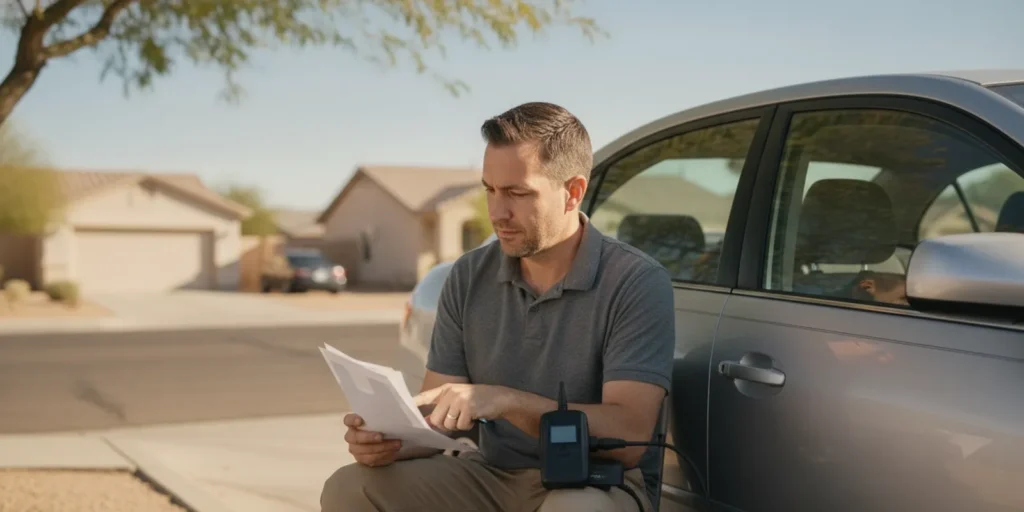
If you searched for an Intoxalock customer service number, you may have a specific question about a device, an upcoming appointment, or what it could cost to remove an IID. This guide does not publish another provider’s phone number. Instead, it explains what to have ready, what to ask, and how Arizona drivers can keep a removal or service decision separate from the status of a state requirement.
Ask Budget IID about your IID service question
What should you confirm before calling customer service?
A focused call begins with a clear description of the decision you need to make. A question about a device that will not operate is different from a question about removing it after a requirement ends. A provider can explain the provider’s service process and account information. It cannot necessarily resolve a state record or confirm that you may drive without a restriction.
Before you call, gather only information that helps the representative find the relevant account or explain the service. Keep any sensitive account details private and share them only through a channel you trust. Write down the following:
- Your state and the authority named on your notice. Arizona drivers should check which agency or court instruction applies to their own situation.
- The vehicle details. Note the year, make, and model, and whether the device is currently installed in that vehicle.
- The reason for the call. Say whether you need help with removal, a calibration visit, a vehicle change, a device concern, a bill, or program status.
- Relevant dates and documents. Keep an appointment notice, written completion direction, service agreement, and any account correspondence nearby.
- Your specific question. For example, ask whether the quote covers removal alone or includes a final service visit or other account items.
Start by telling the representative what outcome you need, then ask what information they need to check it. If you have more than one issue, handle them one at a time. This makes it easier to distinguish an account question from an appointment request or an official eligibility question. For general background before calling, review what an ignition interlock device does.
How do device removal, service, and program completion differ?
These terms are sometimes used as if they mean the same thing, but they refer to different steps. Removal is the physical service of taking the device out of a vehicle. Provider service can include an appointment, device check, calibration, or a change of equipment. Program completion is an administrative status that should be confirmed with the authority responsible for the requirement or record.
That distinction matters when a driver hears that removal is available or sees a projected end date. A service provider can explain what its records show and what it needs to schedule work. Do not assume that a provider’s record, an appointment date, or physical removal by itself changes a state driving status. Review the written instructions for your case and confirm status with the agency that issued or administers the requirement.
Arizona’s Department of Transportation provides official motor vehicle information through its Arizona DOT website. Use the official state channel relevant to your record when you need to verify an administrative requirement or driving status. If a state notice and a provider’s information appear to conflict, ask the state agency which document or next step controls, and retain the answer.
| Question to resolve | Who can usually explain it | What to confirm |
|---|---|---|
| Am I eligible to have the device removed? | The authority responsible for the requirement, with provider coordination as needed | Current eligibility, remaining conditions, and whether written authorization is required |
| What does the scheduled appointment include? | The IID provider | Whether it is removal, calibration, a vehicle transfer, or another service |
| What amount could be due? | The provider and your written service agreement | Each applicable service or account item, how it is calculated, and when it is due |
| Is the program marked complete? | The agency responsible for your record | Whether the record reflects completion and how to address a mismatch |
| May I drive without the restriction? | The authority responsible for your driving privilege | Your current status and any restrictions that remain |
Which possible charges should you ask about?
There is no reliable one-size-fits-all answer to “What does removal cost?” A quoted amount may refer only to one service, while an account can have other terms or outstanding items. The written agreement, the provider’s current explanation, and the instructions for your specific case matter more than another driver’s invoice or an old online estimate. Ask for the expected total in writing when possible, and ask what it does not include.
For example, imagine a driver hears one amount on a call but later sees a separate line on an account statement. Rather than assuming the first amount was the final total, ask whether it covered only the appointment or also any remaining account balance. In a different case, a driver may be planning to change vehicles and hear a quote for removal; that does not establish that transfer service is included. The useful comparison is not simply one number against another. It is a written list of the requested service, any separate account items, what remains uncertain, and the next step needed to confirm each item.
- Removal service. Ask whether there is a separate charge for taking the device out. Confirm what the charge covers and whether the service depends on the vehicle or appointment arrangements.
- Final calibration or other visit. Ask whether a final check, calibration, or separate appointment is expected before removal. Do not assume that every account has the same service sequence.
- Remaining lease or service balance. Ask whether the account shows an unpaid amount, how it relates to the agreement, and whether it must be settled before service.
- Vehicle transfer rather than removal. If you are changing cars but still have an IID requirement, ask about transfer service. A transfer is not the same request as ending the installation.
- Government or court charges. Ask the responsible agency about fees or obligations under its authority. A provider may not be able to verify a government charge from its own account records.
- Appointment-related conditions. Confirm location, scheduling, vehicle availability, and what paperwork to bring. Ask whether any of those details change the quoted service.
Request an itemized explanation that names each amount, whether it is a provider charge or another type of obligation, when it is due, and whether taxes or additional services are excluded. If the representative gives only a general estimate, ask what facts could change it. For example: “Is this estimate for removal only, or does it also account for any balance or final visit?”
Compare the explanation with your agreement and recent account statements. If the terms do not match or the answer is not clear, ask the provider to point to the relevant agreement language or provide a written breakdown. Keep the explanation with your appointment confirmation and receipt. For a broader checklist of questions about IID fees, see questions to ask about ignition interlock costs and fees; use it as a preparation aid, not as a quote for your account.
What questions make a provider call more useful?
Use direct questions that lead to a concrete next step. You can adapt these prompts to the issue you are calling about:
- “What information do you need to locate my account and confirm which device or vehicle I am asking about?”
- “Does your record show a removal request, or do I need to obtain written confirmation from the authority first?”
- “What exactly is included in the service I am asking to schedule?”
- “Could you list the charges that may apply to my account and explain which ones are separate from removal?”
- “Is this an appropriate appointment for removal, or is my situation a vehicle transfer or another service?”
- “What should I bring, and does the vehicle need to be present for the full appointment?”
- “Will I receive a work order, receipt, or written summary after the visit?”
- “If your information differs from my state notice, which agency should I contact and what should I ask it to verify?”
At the end of the call, repeat the next step back to the representative. Confirm the appointment date if one was made, what remains your responsibility, and whether anyone will send written follow-up. Record the date and time of the call, the representative’s name or identifier if offered, and the main answer. Avoid relying on a vague note such as “approved” without writing down what was approved, by whom, and for which step.
How can you prepare for removal or a change of vehicle?
First decide whether your goal is to stop using the current vehicle, move the IID to another vehicle, or complete a requirement. State that goal plainly when you contact the provider. If you are still required to use an IID, do not treat removal from one vehicle as a complete solution; ask the relevant authority and provider how to maintain the required arrangement while changing vehicles.
Before setting an appointment, work through this sequence:
- Check the official instruction. Find the notice, order, or agency record that describes your requirement. If it is unclear whether you may remove the device, contact the authority responsible for the instruction.
- Ask the provider about the service type. Explain whether you need removal or a transfer. Ask what the provider needs before it can schedule the correct service.
- Confirm the account details. Request an itemized account explanation and ask whether any service visit or balance is separate from the appointment you are planning.
- Check where service is available. Ask which locations can serve your vehicle and situation. Budget IID serves Arizona and Roseville, California; its service locations page can help you review location information.
- Keep the confirmation. Save the appointment details, written cost explanation, and any direction from the agency with your other records.
If your case involves Arizona requirements, confirm that the instructions you received apply to your current record and circumstances; do not rely on a general article or another driver’s experience to settle an individual status question. If an address or record looks wrong, ask the agency how to correct or clarify it before you make assumptions about the device appointment. The site’s guide to checking Arizona driving records may help you prepare to review records, but the responsible agency remains the source for official status.
What records should you keep after a call or appointment?
Good records make follow-up easier, especially when different people handle the device, account, and state record. Create one folder—paper or digital—for the documents connected to the IID. Keep the original notice or order, later instructions, provider agreement, account statements, call notes, appointment confirmations, work orders, receipts, and written completion information together.
For each phone call, note what you asked and what answer you received. Separate confirmed facts from items that still need verification. For example, “provider offered an appointment for removal” is not the same as “state authority confirmed the requirement is complete.” This simple distinction can prevent an appointment note from being mistaken for an official decision.
After service, review the work order before leaving or as soon as you receive it. Check that it identifies the service performed and the vehicle, and keep any receipt or follow-up instruction. Then check the relevant official record if your next decision depends on program completion or driving status. If a record has not changed or does not match a written notice, ask the responsible agency how to proceed and preserve the response.
How can local service help with the next step?
Drivers searching for a national provider’s customer-service contact may actually need a nearby appointment, a clear account explanation, or help identifying the right service. Budget IID provides ignition interlock service in Arizona and Roseville, California. Service options depend on the driver’s location and situation. Its Phoenix service information is one example of a local page; review the location details that match where your vehicle is based.
For a service question, use the provider’s contact page and describe the task you need help with. If you are not sure whether the issue is removal, calibration, installation, or a vehicle change, say what has happened and ask which service category fits. You can also review the IID frequently asked questions for general background, or the removal service information before asking about a specific appointment. Neither general page replaces confirmation of your own official program status.
Budget IID’s broader Arizona DUI program information may also help orient you to topics to discuss. Bring the question back to the source that can answer it: ask the provider about its service and account, and ask the responsible authority about the legal or administrative requirement. Keeping those roles clear is useful whether you use Budget IID or another provider.
Frequently asked questions
Where can I find the Intoxalock customer service number?
Use the contact information on your current account documents or the provider’s official communication channel, and confirm that it is current before sharing personal details. This guide does not list or verify another company’s phone number. If your question is about local Budget IID service, use the contact page linked above.
Can a provider tell me that my Arizona IID requirement is complete?
A provider can explain what its own account or service records show. Verify the official status and any remaining driving restrictions with the authority responsible for your case. Keep a written record of both answers if they address different parts of the process.
Should I schedule removal before checking eligibility?
Check the notice or official record and confirm eligibility with the responsible authority before treating removal as authorized. Then ask the provider what it needs to arrange the appropriate appointment. If eligibility is unclear, resolve that question before relying on a tentative date.
Is switching vehicles the same as removing the IID?
No. A vehicle change may call for transfer service if the requirement continues, while removal takes the device out of the current vehicle. Tell the provider which situation applies and verify any requirement with the authority responsible for your case.
What if the amount I am quoted is unclear?
Ask for a written, itemized explanation. Have the representative distinguish removal service, any other provider service, account balances, and government obligations. Then compare it with your agreement and ask follow-up questions about anything that is not included.
Contact Budget IID to discuss your next IID service step
Get clear answers before arranging service
Confirm official eligibility with the authority responsible for your requirement, ask the provider to explain the exact service and possible charges, and keep the answers in writing. If you still need help identifying a Budget IID service next step, use the contact page linked above. That process helps you distinguish an account or appointment question from program completion and make a better-informed next decision.