
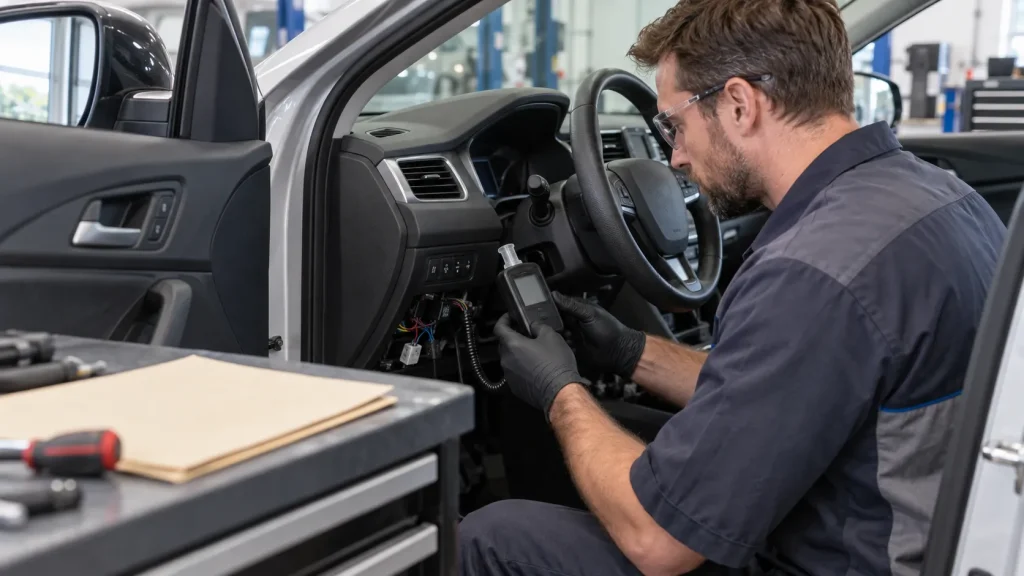
Quick answer: Installing an ignition interlock does not automatically cancel a vehicle manufacturer’s warranty. The Federal Trade Commission (FTC) says a dealer or manufacturer cannot deny warranty coverage just because an aftermarket part or independent service was used. It may deny coverage for a particular damaged part if it can show that the aftermarket part or improper installation caused that damage. The answer to “does an ignition interlock void a vehicle warranty?” therefore depends on the vehicle’s written warranty, the problem being claimed, and evidence of what caused it.
Ask Budget IID about a documented ignition interlock installation for your vehicle.
Arizona drivers may still need a certified ignition interlock installed to meet an MVD or court requirement. A warranty concern should be addressed before installation with the vehicle owner, an authorized provider, and the warranty administrator. It should not be a reason to miss a required deadline.
Does an Ignition Interlock Void a Vehicle Warranty Automatically?
No. The FTC’s consumer guidance on auto warranties explains that a warranty remains in effect when a consumer uses aftermarket parts or an independent repairer. A dealer or manufacturer may refuse to pay for a repair to a damaged component if it proves that a defective aftermarket part or incorrect installation caused that damage. The presence of the device alone is not the same as proof that it caused a vehicle fault.
An ignition interlock connects to the vehicle’s ignition system. The installer must assess the vehicle and make the required connections safely. That work can be relevant if a later claim concerns the affected electrical or starting system. A claim involving an unrelated component calls for a different cause analysis. Neither the driver nor the installer should promise that every future warranty claim will be covered.
Read the actual manufacturer warranty for your vehicle’s year, model, and mileage. Note the start and end dates, the covered components, and the claims process. Some owners also have a separately purchased service contract or a lease. Those agreements are different documents with their own terms; the FTC explains that a purchased auto service contract is not the same as the manufacturer’s written warranty.
Does an Ignition Interlock Void Warranty Coverage for Wiring Damage?
A specific claim could be disputed if the dealer or manufacturer connects a fault to the interlock device or how it was installed. For example, if a wiring connection was made incorrectly and damaged a vehicle electrical component, the warranty provider may dispute coverage for that damage. The FTC says it must show the aftermarket part or improper work caused the damage before denying the related repair. This is a cause-based question, not a blanket cancellation of the vehicle warranty.
Two details matter: the exact part that failed and the evidence of the failure. A dealer’s general statement that “there is an interlock in the car” does not identify a cause. A written diagnosis, photos, repair order, and installer records give the vehicle owner a concrete basis to discuss the claim. The installer may need to inspect the device or connections, but do not let anyone disconnect or alter a required interlock without coordinating with the authorized provider.
Some concerns arise before a failure. A vehicle owner may be worried that the device will draw power, interfere with a starter, or affect another system. Those are questions for a trained installer to answer for the specific vehicle. Budget IID describes compatibility across vehicle types, including hybrid and electric vehicles, but a general compatibility statement does not replace a vehicle-specific assessment. If the vehicle already has an electrical fault, document it before installation so the later record does not confuse a pre-existing problem with new work.
How Do Arizona Interlock Rules Fit With Warranty Concerns?
The Arizona MVD ignition interlock guide directs drivers with a requirement to choose an authorized provider and schedule installation with an Arizona-certified provider. The provider is responsible for the required device, installation, and driver training. The MVD also says that some providers require written authorization from every owner when the vehicle belongs to someone else.
These requirements are separate from warranty coverage. The MVD decides whether an installation satisfies the driving requirement. A vehicle manufacturer or warranty administrator evaluates a vehicle repair claim under the applicable warranty. A service provider installs and services the interlock. One actor’s approval does not substitute for the others.
If the vehicle is leased, financed, owned by a family member, or assigned by an employer, ask the owner or contract administrator about any consent needed before installation. A lease may have rules about modifications or return condition that are separate from a manufacturer’s warranty. Get the answer in writing where possible, and give the installer the owner’s authorization before the appointment if the provider requires it.
What Should You Document Before Installation?
Good records make both the interlock requirement and a later vehicle issue easier to review. Before the appointment, gather:
- The vehicle identification number (VIN), year, make, model, and current mileage.
- The manufacturer’s warranty and any separate service contract or lease terms.
- Vehicle-owner consent when the car is not solely yours.
- Any existing starting, battery, or electrical symptoms, with dated repair notes or photos.
- The MVD or court notice and the installation deadline that applies to your case.
Ask the authorized provider which device will be installed, whether the vehicle needs any special assessment, and what installation record you will receive. Arizona MVD requires a certified device and provider. Keep the completed installation receipt, provider name, device details, date, and training record. If the provider supplies a report to MVD, retain proof of submission or ask how to verify the report arrived.
For a new or unusual vehicle, ask the installer to explain the vehicle-specific connection and any known manufacturer guidance. If a dealer has raised a warranty concern, request the exact written term or affected component rather than relying on a broad verbal warning. You can compare that concern with the FTC’s guidance and, if needed, ask the manufacturer or warranty administrator directly.
What Records Should You Keep After Installation?
Keep the installation paperwork with your vehicle service records. The FTC says maintenance and repair records can help support a later warranty claim. Add interlock service visits, calibration receipts, vehicle repair orders, and any written communication about a device issue. If a technician services the car, tell the shop that an interlock is installed so it can coordinate testing or repairs with the authorized provider.
If the car develops a problem, record when it began and what the dashboard or device displayed. Contact the appropriate party: the vehicle repair shop for a vehicle fault, the interlock provider for a device or installation concern, and MVD or the court for a case-specific driving question. Avoid altering the interlock yourself. Budget IID’s car-repair checklist for vehicles with an interlock explains how to coordinate ordinary mechanical work.
If the vehicle is sold, wrecked, or stolen, Arizona MVD tells drivers to contact their interlock provider promptly to discuss options. Keep the relevant records before changing vehicles. The provider must handle any device removal or transfer through the authorized process; taking it out yourself creates a separate compliance risk.
What If a Dealer Denies a Warranty Claim Because of the Interlock?
Ask for the denial in writing. It should identify the failed component, the warranty provision being used, and why the dealer or manufacturer says the interlock device or installation caused the failure. A specific explanation lets the installer and vehicle owner review the same facts. The FTC’s guidance is clear that using an aftermarket part or independent service by itself does not justify denying coverage.
Then gather the warranty, installation receipt, maintenance records, photographs, and diagnosis. Ask the manufacturer or another authorized dealer to review the claim if the first response is unclear. Ask the interlock provider to inspect its work if the claimed fault could involve the device’s connection. Document who reviewed the vehicle and what each person found.
If the dispute persists, the FTC lists consumer complaint routes and explains that warranty terms and service contracts vary. A consumer-protection office or qualified attorney can advise on a disputed claim. Budget IID can explain its installation and service records; it cannot decide a manufacturer’s warranty claim or give a legal ruling.
Contact Budget IID if a vehicle repair shop needs installation or service records.
How Is This Different From Mobile Installation, Vehicle Compatibility, or Car Repair?
This article answers the warranty question: whether coverage is automatically lost and how to document a specific claim. Budget IID’s mobile installation guide covers where and how an Arizona appointment can be arranged. Its installation process guide covers appointment steps and training. The car-problems guide covers symptoms after a device is fitted.
Those pages can help you prepare for installation or troubleshoot a vehicle. They do not replace a review of the written warranty and a cause-based claim decision. Keep the two questions separate: “Can a certified interlock be installed on this vehicle?” and “Would this particular later repair be covered under this vehicle’s warranty?”
Ignition Interlock and Vehicle Warranty FAQs
Can a dealer say my whole car warranty is void because an interlock was installed?
The FTC says the use of an aftermarket part or an independent service provider does not, by itself, cancel a vehicle warranty. A dealer or manufacturer may deny a claim for damage it can show was caused by the part or improper installation. Ask for any denial and its cause in writing.
Does a professionally installed interlock guarantee every claim will be covered?
No. Professional installation reduces avoidable installation risk, but every claim depends on the written warranty and the cause of the problem. A provider can document the work; it cannot promise how a manufacturer will decide a future claim.
Should I ask my dealer before my Arizona installation appointment?
You can ask for written vehicle-specific guidance, especially if the vehicle is new, leased, or has an existing electrical problem. Also speak with an Arizona-authorized interlock provider. Do not let an open-ended warranty discussion make you miss an MVD or court deadline that applies to your case.
What if I do not own the vehicle?
Arizona MVD says some providers require written authorization from all owners before installation. Check the owner’s permission and any lease or employer terms before booking. Those contract terms are separate from the manufacturer’s warranty.
Can I remove the interlock before a dealer examines the car?
Do not disconnect or remove a required device yourself. Tell the dealer that an interlock is installed and coordinate inspection or service with the authorized provider. The driving requirement and a warranty repair are separate processes.
A careful installation record helps you meet the Arizona requirement and discuss a later vehicle problem with concrete evidence. The most useful next step is to identify the vehicle, review its warranty, and ask a certified provider how it will document the installation.
Ask Budget IID to review your vehicle and installation questions before you book.