
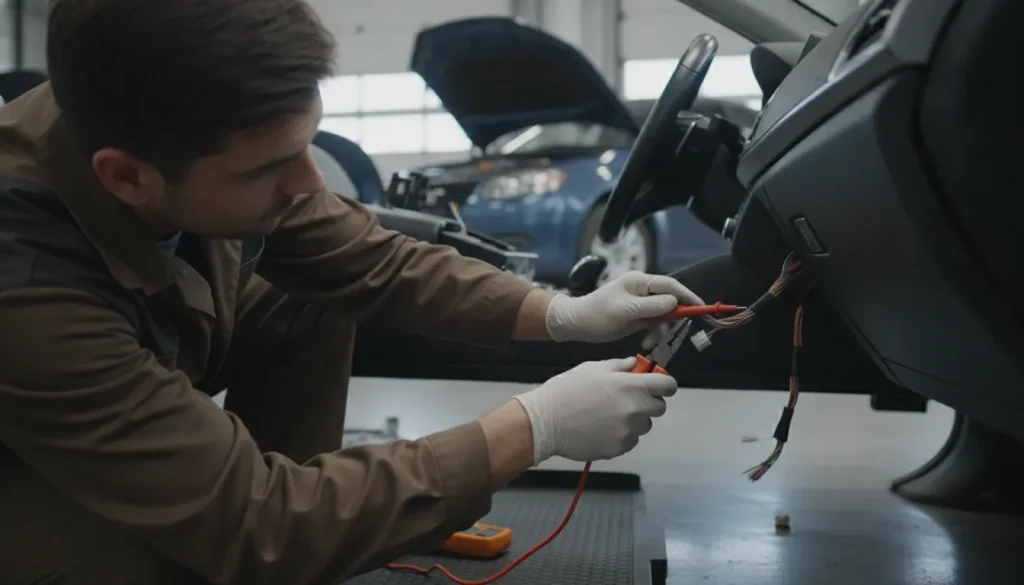
When you need an ignition interlock device, the last thing you want is another problem with the car you depend on for work, family, and everyday life. It is reasonable to wonder whether an interlock can damage the vehicle, drain the battery, or create electrical trouble. In many cases, the concern is not the device itself but an aging battery, loose connection, or another issue that was already developing.
An ignition interlock should not damage a properly maintained vehicle when it is professionally installed and serviced. Although ignition interlock causing car problems can be a genuine concern. Symptoms such as hard starting or battery drain often point to vehicle maintenance needs or wiring that should be inspected by a qualified technician. The interlock is a compliance tool that helps you regain mobility, not a reason to troubleshoot complex electrical systems on your own.
That distinction matters. An IID measures a breath sample and controls vehicle starting according to program requirements. While a weak battery or poor connection can affect the car independently of the device. A service warning, failed test, or starting symptom also has a specific meaning, and responding correctly can help prevent an avoidable lockout. The right approach is to understand what the interlock is doing, recognize signs that deserve attention, and get professional help before a small maintenance issue becomes a disruption. Start by looking at why certain vehicle conditions or installation concerns may make problems seem connected to the interlock.
Get a professional ignition interlock inspection and help with any car problem you are unsure about.
Why an Ignition Interlock Might Cause Car Problems
If you are worried that an ignition interlock is causing car problems, your concern is understandable. An IID becomes part of your everyday driving routine, so a slow start, electrical warning, or dead battery can make it seem like the device is responsible. In many cases, however, the device is revealing an existing weakness in the vehicle rather than creating a new one.
Modern ignition interlocks are designed to be minimally invasive when they are installed correctly. The device connects with specific vehicle systems so it can perform its core compliance function, measuring a breath sample before startup and at required rolling retests. It should not interfere with normal vehicle performance when the installation matches the vehicle and the wiring is secure.
Separate a device issue from a vehicle issue
Many reported car problems are related to pre-existing battery or electrical conditions. An aging battery, loose connection, corroded terminal, or vehicle that sits unused for long periods can cause hard starting or intermittent electrical behavior. Those symptoms may appear after IID installation simply because the device is now part of the driver’s daily routine, not because it caused the underlying condition.
This distinction matters. A weak battery can make the vehicle crank slowly, fail to start, or lose power between uses. A problem with the interlock may instead involve an unusual device display, repeated service messages. An unexpected failure to recognize a breath sample, or behavior that began immediately after installation. These signs should be evaluated by a qualified technician rather than guessed at from the driver’s seat.
Why professional installation protects your vehicle
An ignition interlock is a calibrated precision instrument. It requires careful electrical integration so it can work accurately while preserving vehicle safety and reliability. Modern vehicles have sophisticated electrical systems, and wiring mistakes or poorly secured connections can create problems that are unrelated to the interlock’s intended operation. Professional installation is the primary defense against those wiring issues.
A trained installer can identify the correct connection points, secure the wiring, and account for the vehicle’s make, model, and electrical configuration. That is especially important when a vehicle has an older battery, aftermarket accessories, or other electrical concerns. If you suspect a wiring or installation problem, do not probe connections or alter the IID yourself. Changes can create additional faults, affect compliance, or damage the vehicle.
The most useful first step is a calm diagnosis. Note exactly what happens, when it happens, and what the device displays. Then have the vehicle and IID checked together by a professional. With proper installation and routine vehicle care, an interlock can serve as a reliable compliance tool that helps you maintain mobility without causing unnecessary vehicle trouble.
Can an Ignition Interlock Drain Your Car Battery?
Yes, an ignition interlock can contribute to battery drain, but that does not mean it is damaging your vehicle. An IID uses a small amount of continuous electrical power while it remains connected. In a healthy vehicle, that demand is generally manageable. Problems are more likely when the car sits unused for several days, especially if the battery is already aging or weakened.
Battery drain is one of the most common complaints associated with ignition interlock devices. Some providers report that it may become noticeable when a vehicle is not driven for three to four days. That pattern is important because an idle vehicle is not recharging its battery through normal driving, while the interlock remains connected to the vehicle’s electrical system. The device may be part of the situation without being the underlying cause of the battery’s poor condition. Source: common ignition interlock problems.
Why battery condition matters
A weak battery has less reserve capacity than a healthy one. It may start the car reliably after a short stop, then struggle after the vehicle sits overnight or over a weekend. Loose connections, corrosion, or other pre-existing electrical problems can create similar symptoms. Many issues drivers attribute to an IID are actually related to battery health rather than the device itself.
Well-maintained vehicles with healthy batteries and secure wiring are better able to handle the electrical demand of an add-on component. If your vehicle was already slow to start before installation, mention that to the technician. A battery test and inspection of the terminals can help separate a normal maintenance issue from a device or wiring concern. Do not disconnect or bypass the interlock yourself, because that can create compliance problems and may not address the actual fault.
Practical ways to reduce battery problems
- Drive the vehicle regularly. Normal driving gives the alternator an opportunity to recharge the battery. If the car will sit for several days, ask your installer or an automotive professional what storage approach is appropriate for your vehicle.
- Check battery health. Have the battery tested when it is older, the engine cranks slowly, or the car has needed jump-starts. Replace a failing battery rather than assuming the IID is defective.
- Keep connections secure. Corroded or loose battery terminals and other poor connections can cause starting symptoms that look like an interlock problem.
- Plan for long-term storage. Before leaving the vehicle unused for an extended period, contact your interlock provider for approved guidance. Storage needs vary by vehicle and device, so do not improvise with the wiring.
For more practical guidance, review Budget IID’s maintenance and battery health recommendations. If the battery tests healthy but the vehicle still develops repeated starting or power issues, have the IID and its installation checked by a qualified technician. That is the safest way to determine whether the concern involves the battery, the vehicle, or the interlock connection.
Starting Problems: Device Issue or Something Else?
When an ignition interlock is causing car problems, the first step is to identify what the device is actually reporting. A vehicle that cranks slowly, fails to start, or loses power may have a weak battery or another electrical problem that is unrelated to a breath test. On the other hand, a warn, fail, or violation message usually reflects the result of a breath sample, not a starter or wiring failure.
That distinction matters because the next action is different. Electrical symptoms call for a vehicle or interlock service inspection. A breath-related message calls for following the device instructions and your monitoring requirements. The table below can help you describe the symptom accurately without attempting to bypass or repair the installation yourself.
| What you notice | Likely underlying cause | What to check |
|---|---|---|
| The car will not start on a cold morning | Weak or aging battery, especially if the vehicle has been unused for several days | Note whether the engine cranks slowly or the lights dim. Have the battery and charging system tested by a qualified technician. |
| The engine makes a slow crank | Low battery charge, corroded connection, or a starter beginning to fail | Do not assume the IID is at fault. Request a battery, terminal, ground, and starter inspection. |
| The interlock powers up, but the starter does not engage | Wiring or connection concern, starter relay issue, or another vehicle-side electrical fault | Record the exact display message and contact your installer or service provider. Do not alter the IID wiring. |
| A warn, fail, or violation message appears | Alcohol detected in the breath sample, rather than a battery or starter problem | Follow the device prompts and program instructions. If you believe the reading is incorrect, contact your provider promptly and document what happened. |
| The engine cuts out while running | Possible vehicle or wiring issue that needs professional diagnosis; do not assume a normal breath-test event | Move to a safe location, note when it occurred, and arrange service before continuing to drive if the vehicle is unsafe. |
Battery-related starting complaints are common when a vehicle sits unused for three or four days. But an older battery, loose connection, or charging-system fault can create the same pattern. Regular use and sensible maintenance and battery health checks can reduce avoidable problems. Do not disconnect the device or try to correct its wiring, since an unauthorized change can create a safety or compliance issue.
A fail or violation message is not an electrical diagnosis. Interlocks are designed to measure alcohol in a breath sample and prevent a vehicle from starting when the result exceeds the applicable threshold, as described by the CDC. Review guidance on avoiding device lockouts, then contact a qualified service provider if the message repeats or the vehicle has a separate starting symptom. Clear details about the display, engine sound, battery age, and recent vehicle use will help the technician determine whether the concern is device-level or electrical.
Does an Ignition Interlock Affect Your Car’s Wiring?
An ignition interlock has to communicate with the vehicle’s starting system, so installation does involve an electrical connection. That does not mean the device should disrupt the rest of the vehicle or leave the wiring unreliable. Modern IIDs are calibrated precision instruments, and careful electrical integration is essential for accurate operation and vehicle safety.
The main safeguard is the quality of the installation. Modern vehicles have increasingly complex electrical systems, with multiple control modules, sensors, and protected circuits. A certified installer identifies the correct starter-related circuit, makes the connection cleanly, secures the wiring, and routes it away from heat, moisture, and moving components. Professional installation is the primary defense against wiring-related issues.
What happens when the starter circuit is connected?
An IID generally connects to the circuit that controls whether the vehicle can start. In practical terms, the device permits the starting sequence after the required breath sample is accepted. If the sample does not meet the device’s requirements, the interlock prevents a start. This device-level function is different from damaging the vehicle’s electrical system.
People often worry when they hear that wires must be cut or tapped. An installer may need to interrupt a starter circuit and create a secure connection, but the workmanship matters more than the fact that a connection exists. A clean splice uses the proper method and materials, protects the connection from exposure, and leaves the circuit stable. A rushed or amateur installation may use loose taps, poor insulation, incorrect routing, or an unsuitable connection point. Those problems can lead to intermittent starting behavior, warning lights, damaged wiring, or a connection that worsens over time.
Why DIY wiring is not a safe solution
Electrical troubleshooting can be difficult even on a familiar vehicle. Attempting to bypass, move, disconnect, or repair an IID connection yourself can create a safety problem and may also interfere with compliance records or device operation. Do not splice wires, alter the starter circuit, or try to relocate the device at home. If you suspect a loose connection or notice an electrical symptom after installation, stop experimenting and contact a certified interlock technician.
Keep the vehicle itself in good condition as well. An aging battery, loose factory connection, or another pre-existing electrical issue can be mistaken for a problem caused by the IID. A professional can check the installation and separate an interlock concern from an unrelated vehicle repair. Drivers with newer powertrains can also review Budget IID’s guide to hybrid and electric vehicle compatibility before scheduling service, since the correct installation approach depends on the vehicle.
How to Troubleshoot Ignition Interlock Electrical Problems Safely
When an ignition interlock causing car problems is suspected, start with simple observations and stop before touching installed wiring. A weak battery, loose terminal, or warning message can look like one broad electrical failure, but each issue needs a different response. Use the following top-to-bottom check to gather useful information without creating a safety or compliance problem.
-
Rule out the vehicle battery first
Have the battery tested for charge and health, especially if the vehicle has been sitting for several days or the starter sounds slow. Battery drain is a commonly reported interlock concern when a vehicle goes unused for three to four days. But an aging or weak battery may be the underlying problem rather than the device itself. Look at the battery terminals for visible corrosion or looseness, and have them cleaned or tightened by a qualified person if needed. Do not assume a jump-start proves the interlock is faulty. A jump-start only gets the vehicle moving temporarily and does not confirm battery condition.
-
Read the interlock screen and record the exact message
Write down the displayed error code, the time it appeared, and what happened immediately beforehand. A warn, fail, or violation message generally means the device detected alcohol in a breath sample, not that the battery or vehicle wiring failed. That distinction matters. Do not keep providing samples or repeatedly restart the vehicle in an attempt to clear the message. Follow the device instructions and contact your provider for guidance. See the provider’s explanation of common interlock messages for context: review common interlock device problems.
-
Check only visible fuses and connections
If your vehicle owner manual identifies an accessible fuse box, you may look for an obviously blown fuse or a visibly loose battery connection. Keep this inspection visual and limited to ordinary vehicle components. Do not open the interlock housing, pull installed wires, probe terminals, splice connections, or remove the device. Modern vehicles have complex electrical systems, and an interlock is a calibrated precision instrument that requires careful integration. DIY wiring work can damage the vehicle, compromise device operation, or create a compliance issue.
-
Use the manual or service line for error codes
Consult the device manual for the exact meaning of an ERR message or other code, then call the service line if the instructions do not resolve the question. Give the technician the code, vehicle symptoms, battery-test result, and any recent repairs. This information helps separate a normal device-level message from a genuine service concern without guesswork.
-
Respond promptly to a service warning
A service warning usually provides a limited window, typically five to seven days, to obtain professional service before a lockout can occur. Do not wait for the vehicle to stop starting. Contact your certified provider as soon as the warning appears and ask what appointment or documentation is required. If you suspect an interlock or wiring issue, professional service is the safest next step. Budget IID serves Arizona and select California areas with trained installation and compliance support, so find your local Budget IID installation center before the warning window closes.
These checks are intended to help you describe the problem, not to replace diagnosis by a certified technician. Avoiding hands-on wiring work protects both your vehicle and your compliance record.
When to See a Professional About Your Interlock
It is understandable to worry when your vehicle behaves differently after an ignition interlock is installed. A slow start, warning message, or unexpected lockout can feel like proof that the device is causing car problems. In many cases, however, the underlying issue is an aging battery, a loose connection, or another condition that existed before installation. A professional can separate those possibilities and help you address the right problem without risking your vehicle or your compliance.
An ignition interlock is a safety device, not a general engine diagnostic tool. The CDC explains that interlocks measure alcohol on a driver’s breath and prevent the vehicle from starting above a specified threshold. That function is different from a battery or starter failure. A fail or violation message, for example, may reflect a breath sample result rather than an electrical malfunction. Do not assume every warning means the wiring has failed.
What you can check safely
Basic battery care is usually reasonable for a vehicle owner. Check whether the car has been sitting unused for several days, and follow your provider’s maintenance instructions for keeping the battery charged. Battery drain is one of the common issues reported with interlocks, particularly when a vehicle is not used for three to four days. You can also note when the problem occurs, what the display says, and whether the vehicle starts normally after the battery is charged. That information gives the technician a useful starting point.
Many starting complaints are linked to pre-existing battery health problems rather than the interlock itself. If the battery is old, repeatedly goes flat, or the engine cranks slowly, arrange a battery test. Avoid opening the device, cutting wires, moving connections, or attempting to bypass the interlock. These systems are calibrated instruments that require careful electrical integration, and an improvised repair can create a safety issue or a compliance concern.
When a service visit should come first
Contact your certified provider promptly if the device displays a service warning, repeatedly prevents a normal start. Gives inconsistent instructions, or shows an error that returns after following the approved reset procedure. A service warning typically gives you only five to seven days to obtain service before a lockout can occur, according to interlock service guidance from Intoxalock. Do not wait for the final day. Scheduling early gives the provider time to inspect the device, check the vehicle’s electrical condition, and document the visit if your program requires it.
Getting help within that window can prevent a preventable lockout, extra inconvenience, and complications with your required interlock period. Tell the provider exactly what happened, including any recent battery replacement, jump-start, warning code, or failed starting attempt. A trained technician can determine whether the concern involves the device, the vehicle, or both, then recommend the safest next step. Seeking professional help is not an admission that you did anything wrong. It is the most reliable way to keep the interlock functioning properly and preserve your mobility.
Frequently Asked Questions
Can an ignition interlock device drain my car battery?
It can contribute to battery drain, especially when the vehicle sits unused for several days. A weak or aging battery is also a common cause of the same symptom. If the car has been parked for three or four days and will not start. Have a professional test the battery and charging system before assuming the interlock is defective. Battery drain troubleshooting guidance can help identify the pattern.
Why is my ignition interlock causing starting issues?
Starting trouble is not automatically an interlock problem. Low battery voltage, loose battery connections, a starter fault, or another pre-existing electrical issue can produce similar symptoms. Note the device message and what happens when you turn the key, then contact your installer rather than repeatedly attempting to start the vehicle.
How do I troubleshoot ignition interlock electrical problems?
Do not disconnect, splice, or reposition the interlock wiring yourself. Record any warning or service message, check that the battery terminals are visibly secure, and arrange professional testing of the battery, starter, and installation. If the device displays a service warning, seek service promptly because the typical service window is five to seven days before a lockout. Review service-warning guidance while arranging help.
Does an ignition interlock affect my car’s wiring integrity?
A properly installed device is designed to integrate carefully with the vehicle. Because modern electrical systems are complex, professional installation and service are the best safeguards against wiring damage or unreliable operation. Ask a qualified technician to inspect the connections if you notice intermittent starting, unexpected power loss, or visible wiring concerns.
Are starting issues always caused by the ignition interlock?
No. Many drivers attribute a starting problem to the interlock when the underlying cause is battery health or another vehicle fault. A technician can separate normal device behavior from a genuine interlock or wiring issue without risking damage through do-it-yourself troubleshooting.
Ready to Schedule Ignition Interlock Service?
If you are worried that an ignition interlock is causing car problems. A professional review can help separate a device-related concern from an underlying battery, starter, or electrical issue. You do not have to troubleshoot wiring on your own. Budget IID can evaluate the situation, explain the next step clearly, and help you keep your vehicle and compliance plan moving forward. Schedule ignition interlock service or installation with Budget IID for support in Arizona and select California areas. Contact Budget IID to request service or find your local Budget IID installation center to get started. A trained professional can review symptoms, confirm whether service is needed, and recommend an appropriate solution without adding confusion. Whether you need an initial installation or help understanding a starting or electrical concern. Reaching out is a practical way to get clear guidance and regain confidence in your vehicle.