
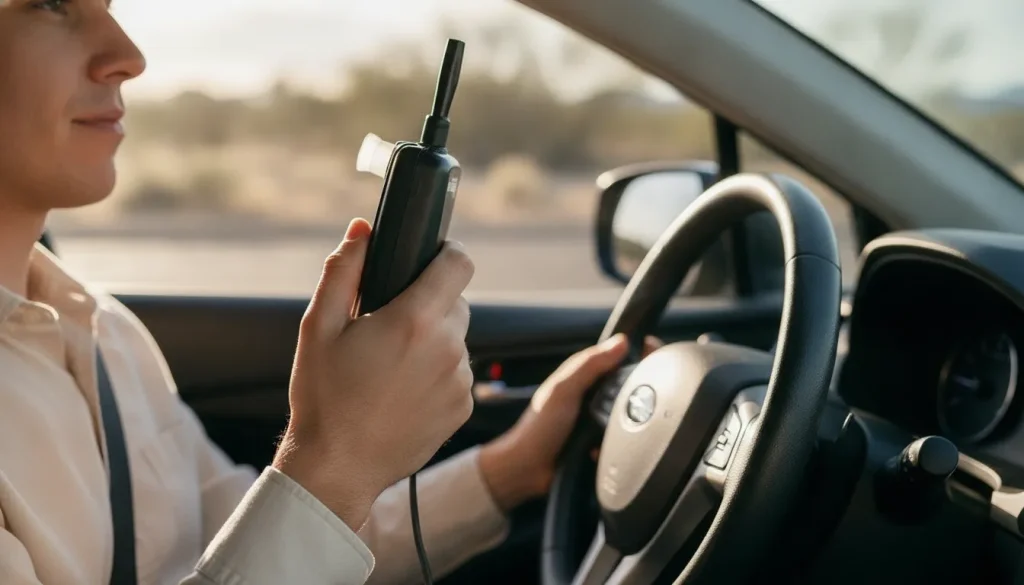
Using an ignition interlock for the first time can feel unfamiliar, but the routine is straightforward once you know what the device is checking. You will provide a breath sample before starting the vehicle, then respond to additional prompts while driving. Staying calm, following the timing instructions, and keeping your mouthpiece clean can help you avoid preventable problems.
To learn how to use a car breathalyzer, blow steadily into the mouthpiece before starting the engine and wait for the device to approve the sample. In Arizona, the preset BrAC limit is 0.02, so a reading above that limit prevents the vehicle from starting, according to the Arizona MVD guide. After startup, answer each rolling retest promptly. A missed retest is different from a failed, alcohol-positive test, so the next steps depend on what occurred.
Before covering the exact startup steps, it helps to understand what this small device measures. Where it fits in the vehicle, and why it controls ignition access rather than shutting off an engine already running.
Get your court-approved interlock installed in Arizona today.
What Is a Car Breathalyzer?
A car breathalyzer is the common name for an ignition interlock device (IID), a small breath-testing device connected to a vehicle’s ignition. Before the engine starts, the driver provides a breath sample through the device. If the sample is above Arizona’s preset BrAC limit of 0.02, the vehicle will not start. This startup check is designed to prevent a vehicle from being operated when alcohol is detected above the permitted threshold. Arizona MVD explains the ignition interlock startup requirement.
How the device works
The IID analyzes breath alcohol concentration rather than relying on a visual inspection or a driver’s estimate of sobriety. The driver must give a breath sample before starting the vehicle, and the device communicates the result to the ignition system. A sample at or below the preset limit allows the vehicle to start. A sample above 0.02 prevents startup.
Modern ignition interlocks use fuel-cell sensor technology. Devices with reliable fuel-cell sensors emerged as the industry’s second generation by the early 1990s, helping establish the technology used in vehicle alcohol screening today. Learn more about the development of ignition interlock devices.
Small, discreet, and located within reach
An IID is generally about the size of a smartphone. It can be installed discreetly near the driver’s seat. Where the mouthpiece is easy to reach before starting the vehicle without making the device the focus of the vehicle’s interior. The exact placement depends on the vehicle and the installation setup.
For Arizona drivers, choosing a court-approved provider matters. Budget IID helps drivers meet an ignition interlock requirement with clear guidance, professional installation, and practical support throughout the process. The device itself handles the breath test, while the driver remains responsible for using it as instructed and following the applicable requirements.
Understanding the startup test is the first step in learning how to use a car breathalyzer. After the initial sample, some drivers may also be prompted for additional samples while the engine is running. Those in-car checks are covered next.
How to Use a Car Breathalyzer
Using an ignition interlock becomes a straightforward part of starting your vehicle once you know the sequence. The device checks a breath sample before the engine can start, so give yourself a little time to complete the test without rushing. Arizona guidance explains that the driver blows into the device before starting the vehicle. And the vehicle will not start when the measured BrAC is above the preset limit of 0.02. Read the Arizona MVD ignition interlock guidance for the official description.
- Get ready before you start. Sit in the driver seat, have your key or start control ready, and make sure you can operate the device safely. Do not try to test while the vehicle is moving. If you have recently used a product that may affect a breath sample, follow your installer’s instructions before testing. The goal is to provide a clean, steady sample at the beginning of the startup process.
- Power on the device. Turn the ignition to the position that powers the vehicle accessories, or use the start sequence provided during installation. The interlock will activate and display or announce when it is ready. Give it time to complete its startup check rather than blowing before the device prompts you.
- Hold the mouthpiece correctly. Place the mouthpiece where you can create a good seal with your lips. Keep the handset steady and avoid covering any openings. If the mouthpiece needs attention, follow the instructions for cleaning your mouthpiece so the device is ready for routine use.
- Blow steadily until the prompt ends. When the device signals you to provide a sample, blow continuously and evenly for the period requested. Do not stop and restart unless the device tells you to do so. A short or interrupted sample may be rejected as incomplete, even when there is no alcohol in your breath. Your installer should demonstrate the correct pressure and duration for your specific device.
- Wait for the result. Keep the device connected and wait for it to finish analyzing the sample. The interlock compares the result with its preset BrAC limit. Do not turn the key or press the start button repeatedly while the result is processing. If the device reports a problem, follow the on-screen instructions and contact your installer if the message does not clear.
- Start the car if the test is cleared. When the device indicates that the sample has passed, start the engine normally. If the result is above the permitted limit, the vehicle will remain prevented from starting. Do not keep testing repeatedly in an attempt to change the result. Instead, document the message and contact your installer for guidance.
Budget IID uses blow-only devices designed to minimize battery drain, so the handset does not require extra actions beyond providing the requested breath sample. Keep the device accessible, follow the exact prompts, and allow enough time for the result before driving. This simple routine helps make daily operation predictable while keeping the focus on safe, compliant use of the vehicle.
Rolling Retests: How the Device Checks You While You Drive
After your vehicle starts, the ignition interlock may ask for additional breath samples at unpredictable times. These checks are called rolling retests. They are designed to confirm that the same sober driver remains behind the wheel throughout the trip, not to stop the vehicle suddenly or create a dangerous situation. Arizona’s driver guidance explains that a rolling retest can be requested while the engine is running. Read the Arizona MVD ignition interlock guidance for the official description.
How the retest prompt works
The device gives you an audible and visual alert when a retest is due. Once the prompt appears, follow the instructions on the handset and provide the breath sample within the retest window. The exact prompt sequence can vary by device, so pay attention to the sounds, lights, and screen instructions rather than guessing at the steps.
Do not wait until the last moment if you can respond safely. Keep the device within easy reach, watch for its alert, and leave enough time to find a safe place to complete the sample. If traffic, weather, or another driving condition makes it unsafe to handle the device immediately, keep control of the vehicle first. Pull over in a safe location when feasible, then complete the retest according to the device instructions.
How to provide a sample while driving
A rolling retest does not mean you should try to blow while taking a turn, changing lanes, navigating an intersection, or driving in heavy traffic. When the alert sounds, scan the road and choose the safest practical response. If conditions allow, pull fully off the roadway, put the vehicle in park, and then use the mouthpiece. If you cannot pull over immediately, continue driving carefully until you can do so safely, while following the device’s timing instructions as closely as possible.
When you are ready, place your mouth around the mouthpiece and blow steadily as instructed. Avoid rushing, removing the mouthpiece early, or repeatedly attempting a sample without reviewing the prompt. If the device reports an error, remain calm and follow the displayed instructions. Keeping the mouthpiece clean and using the correct technique can also help prevent avoidable reading problems. For more practical guidance, see our article on avoiding false positive readings.
The engine will not shut off during a retest
The interlock is not designed to turn off an engine that has already started. Arizona’s guidance states that, for safety reasons, the device cannot turn off the car ignition once it has been started. A retest alert is therefore a request for a follow-up sample, not an instruction that the vehicle will suddenly stop. You remain responsible for safe driving while responding.
Rolling retests are part of ordinary device-level compliance. Respond promptly, use the audible and visual cues, and make safety your first priority. Blow-only devices are designed to require very little battery power, so normal retest use should not create a meaningful battery-drain concern.
How to Avoid a Locked Ignition Cylinder
A locked ignition cylinder usually means the IID recorded a problem during the vehicle’s testing sequence. The common causes are missing a required sample, providing a failed sample, or producing a reading affected by alcohol in the mouth or surrounding environment. Staying calm and following the device prompts helps you avoid unnecessary interruptions.
Complete the startup test before you drive
Give the startup blow test your full attention. Turn on the vehicle when you are ready to leave, then provide the breath sample as instructed. Blow steadily through the mouthpiece for the required duration rather than rushing or stopping early. The IID evaluates the sample before allowing the engine to start. In Arizona, the preset BrAC limit for starting is 0.02, according to the Arizona Department of Transportation’s ignition interlock information.
Do not try to start the car immediately after using products that may contain alcohol, such as some mouthwashes, breath sprays, or medications. Food, drinks, and other substances in the mouth can also affect a sample. If you are unsure whether something could interfere with testing, give yourself time and follow your provider’s instructions. For more practical guidance, review Budget IID’s article on avoiding false positive readings.
Respond promptly to rolling retest prompts
After the engine starts, the device may request additional samples at random times while you are driving. These are rolling retests. Watch and listen for the prompt, and complete the test as soon as it is safe to do so. If a rolling retest is not completed within the required window, the device records it as a missed test. Do not reach for the device while handling a dangerous traffic situation. Pull over safely if you need more time or a better position to provide the sample.
Use the mouthpiece correctly
Keep the mouthpiece accessible and use the accessory supplied for your device when it makes testing easier. A clean, properly positioned mouthpiece supports a steady sample and reduces the temptation to rush. If the device gives an unexpected reading, do not keep repeating tests in frustration. Note the message, follow the instructions on the unit, and contact Budget IID for guidance.
For transparency, Budget IID charges $0 for a lockout reset. That does not make missed or failed tests harmless, so treat every prompt seriously and keep required service appointments on schedule.
What to Do If You Miss or Fail a Rolling Retest
A rolling retest issue does not always mean the same thing. The device distinguishes between a missed retest, when no breath sample is provided within the required window. And a failed retest, when the sample indicates alcohol above the permitted limit. Knowing which event occurred helps you respond calmly and take the right next step.
If you miss the retest window
When the device requests a rolling retest, look for the visual or audible prompts and provide the sample as soon as it is safe to do so. Do not reach for the handset while turning, merging, or handling another driving task. If you cannot test immediately, keep control of the vehicle and complete the retest when the device allows it. Never try to stop or interfere with the device while driving.
For safety reasons, an ignition interlock cannot turn off an engine that has already started. A missed retest is therefore an event recorded by the device, not an engine shutoff while you are moving. At the program level, a missed retest may extend the IID requirement by about one month per occurrence under Arizona rules. That is different from a positive alcohol result and should not be described as a failed test.
If you fail the retest
A failed retest means the device detected a BAC-positive sample. Stay calm, keep the vehicle safely controlled, and follow the instructions shown by the device. Do not make repeated attempts simply to try to change a result. If you believe the reading may have been caused by a recent food, drink. Or other environmental source, make a note of what happened and contact your installer for guidance. Budget IID also explains practical steps for avoiding false positive readings.
A failed retest can have more serious Arizona program-level consequences, including an immediate suspension and a reinstatement hearing. This section is focused on the in-car response, so contact the appropriate MVD or ADHS resources for instructions about any hearing or reinstatement requirement. Do not assume that a missed retest and a failed retest will be handled identically.
Keep the device current and get help when needed
Arizona requires an installed interlock device to be calibrated and inspected by a certified installer every 90 days. The manufacturer also electronically submits compliance checks to MVD on that schedule. Keep every appointment and ask your installer promptly about a device that gives an unexpected prompt, will not accept a breath sample, or appears to malfunction. The Arizona MVD guidance describes the 90-day calibration and inspection requirement in form 99-0177.
If you have a device issue or are unsure whether an event was missed or failed, reach the team through the Budget IID contact page. Prompt, accurate information is the best way to protect your compliance and keep the next step clear.
What It Costs to Use a Car Breathalyzer and Why a Court-Approved Installer Matters
The cost of an ignition interlock is more than the device itself. Drivers should ask how installation, monitoring, calibration, lockout assistance, and removal are handled before choosing a provider. A low advertised price can become much higher when routine services carry separate charges.
A court-approved installer also helps keep the device aligned with Arizona requirements. The Arizona Department of Transportation states that an interlock must be calibrated and inspected by a certified installer every 90 days, with compliance information submitted to MVD. That recurring service is part of maintaining a properly documented installation, not an optional add-on. The official guidance also explains that the device checks a breath sample before the vehicle starts and may request additional samples while the engine is running. Read the Arizona MVD guidance for the underlying requirements.
| Service question | Budget IID | Common industry practice |
|---|---|---|
| Removal fee | $0 removal fee | May add a separate removal charge |
| Lockout reset | $0 lockout reset fee | May charge an additional reset or service fee |
| Required service | 90-day calibration and inspection as part of the service process | May be listed separately or paired with extra service charges |
| Pricing clarity | Transparent pricing designed to avoid hidden fees | Advertised rates may not show every possible fee |
Budget IID charges $0 for removal and $0 for a lockout reset. Those details matter because a lockout can be stressful, especially when you are trying to get to work, court, or an appointment. Ask for the complete fee structure in writing, including what happens at the end of the required period and what support is available if the device needs attention.
You can review the full Budget IID pricing information before scheduling. If you need service in the Phoenix area, a Phoenix ignition interlock installation with a court-approved provider can give you a clear starting point and help you understand the device-level service process. Free mobile service is available only in some Arizona areas, so confirm availability for your location rather than assuming it is universal.
Schedule your installation and stay on track with using a car breathalyzer in Arizona.
If you are comparing device procedures and support, see the Smart Start ignition interlock and Budget IID comparison for additional questions to ask before installation.
Frequently Asked Questions
How do you use a car breathalyzer correctly?
Turn on the vehicle and wait for the device to prompt you. Breathe steadily into the mouthpiece for the required sample, then wait for the result before turning the key or pressing the start button. If the reading is at or below Arizona’s 0.02 BrAC preset limit, the vehicle can start; a reading above that limit prevents startup (Arizona MVD guidance).
How accurate are car breathalyzers?
An ignition interlock is a compliance device, not a home alcohol tester. Its result can be affected by alcohol-containing products or an improperly collected sample, so follow the instructions and avoid anything that could create a false reading before testing. The device must also be calibrated and inspected by a certified installer every 90 days in Arizona (Arizona MVD guidance).
Does an interlock drain your car battery?
The device is designed for minimal battery drain. Keep the vehicle maintained and follow the installer instructions, especially if the car will sit unused for an extended period. If you notice starting or electrical problems, contact your installer instead of disconnecting the device yourself.
How do you pass an ignition interlock test?
Only drive when you are sober. Provide a clean, steady breath sample when prompted, and keep the mouthpiece clean according to the device instructions. While driving, respond promptly to rolling retest prompts. Never try to evade a retest or have another person provide a sample.
What is the difference between a missed and failed rolling retest?
A missed retest means no breath sample was provided within the allowed window. A failed retest means the device detected alcohol in the sample. Arizona treats these as different events: a missed retest may extend the IID period by about one month. While a failed retest can trigger an immediate suspension and hearing under the applicable program rules.
Ready to Get Started With Your Arizona IID?
If you need help using, installing, or servicing a court-approved ignition interlock device, Budget IID can explain the next step clearly and help you move forward with confidence. Reach the team through the Budget IID contact page to arrange installation or service in Phoenix, Tucson, Mesa, Goodyear, and other service areas across Arizona.