
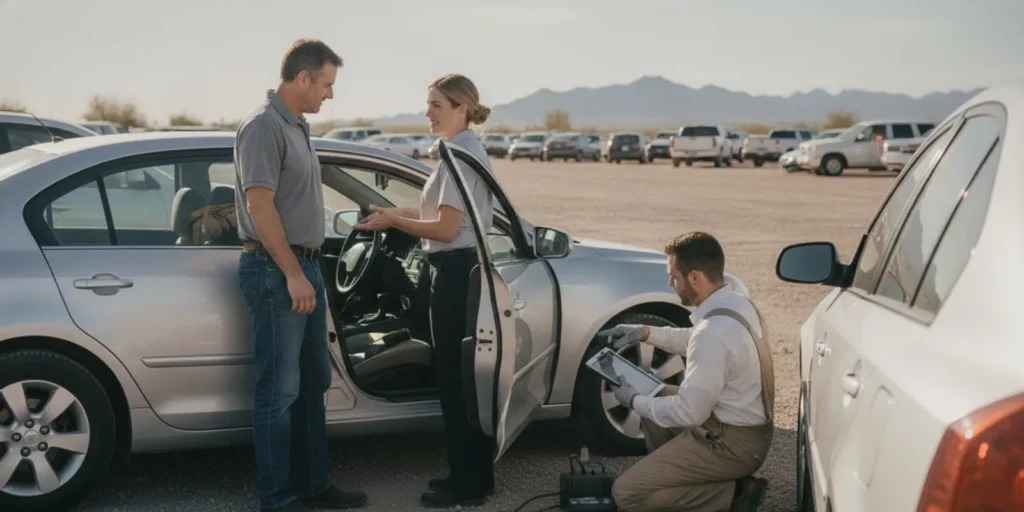
If you are arranging ignition interlock installation on an impounded vehicle in Arizona, the process can feel like a second problem on top of the arrest, fees, and transportation disruption. The key is to coordinate three separate parties before anyone moves the vehicle: the impound facility, your authorized IID provider, and the Arizona Motor Vehicle Division (MVD) or other authority that gave you the requirement. Policies vary by lot, so do not assume you can enter the yard, have a technician work there, or drive the vehicle away as soon as a device is installed.
Contact Budget IID to discuss your installation options
Ignition Interlock Installation on Impounded Vehicle Arizona: Can It Be Done?
It may be possible, but the answer depends on the lot’s access and work policies, the vehicle’s condition, and whether the required authority will accept the installation for your case. Some facilities may allow an approved installer to work on a vehicle inside the lot after the owner or an authorized representative completes the required paperwork. Others may prohibit outside work, require an appointment, or require the vehicle to be released or moved to an approved installation location first.
These are separate questions, and a “yes” to one does not settle the others:
- Can you authorize access? The facility may require proof that you own or have authority over the vehicle, identification, a signed release, or written permission naming the technician.
- Can the provider perform work there? The lot may restrict tools, work hours, vendors, or the technician’s access to the vehicle.
- Will the installation meet your requirement? Confirm that the device and provider are accepted for your Arizona case and that the installation is reported or documented as required.
- Can the vehicle leave afterward? IID installation does not, by itself, cancel an impound hold, satisfy all release conditions, or restore driving privileges.
Arizona ADOT explains that drivers required to have an IID must provide proof of installation of a functioning certified device to meet the interlock requirement. Check the current Arizona MVD ignition interlock FAQ and your own case instructions rather than relying on a general article to determine what your record requires.
Ignition Interlock Installation on Impounded Vehicle Arizona: What Should You Confirm?
Start by identifying why the vehicle is being held and who controls its release. An impound connected to a DUI arrest may involve more than one process. The impound facility controls its property-access rules; law enforcement or another agency may have placed a hold; and MVD controls driving privileges and IID program records. A provider can install and service a device, but cannot override those separate decisions.
Gather the following details before making calls. If you do not have every item yet, ask each organization what it needs and write down the name of the person who answered, the date, and any deadlines they gave you.
- The impound company’s name, address, phone number, lot hours, and vehicle inventory or case number.
- The vehicle’s year, make, model, and whether it has a push-button start, hybrid or electric system, or other feature the installer should know about.
- Your proof of ownership or authority to act for the registered owner, along with a photo ID.
- Any release paperwork, hold information, court or agency instructions, and the MVD notice describing the IID requirement.
- The due date or compliance deadline, if one is stated, and the contact details for the agency that can clarify it.
- Whether the car can start, has a working battery, and can be accessed safely. Do not attempt to enter a restricted lot or move a vehicle without permission.
If you are unsure what an Arizona notice means, use the official instructions or contact MVD. Budget IID’s Arizona ADOT and IID FAQ resource can also help you identify questions to ask, but your case-specific notice and agency record control.
Who needs to approve access to the impounded car?
Usually, the first call should be to the impound facility. Ask whether the car is physically available for an IID installation and what written permission is necessary. Be precise: you are not simply asking to retrieve personal property; you are asking whether a named installer can enter the lot and work on a vehicle that remains in custody.
Questions to ask the lot include:
- Is the vehicle still at this location, and is there an active police, court, or agency hold?
- Does the registered owner need to be present, or can the owner authorize someone else in writing?
- Can an outside IID technician enter the property and install the device? If so, what identification, insurance, appointment, or authorization is required?
- Are there restrictions on installation days, hours, tools, or the amount of time the technician may be on site?
- Does the lot require the vehicle to be released before work can begin, or can installation occur while it is held?
- After installation, what separate steps are required to request release, and who can confirm that all holds are cleared?
Record the exact answers. “The owner can access the vehicle” might not mean a technician can work on it. Likewise, permission to install a device does not mean the lot will release the car afterward. Get approval for the actual plan, preferably in writing, before scheduling labor or travel.
Impound requirements can be local and facility-specific. For example, Coconino County publishes its own vehicle impound and release information. Treat that as guidance for the county process described there, not as a statewide rule for every Arizona impound yard. Ask the agency or facility responsible for your specific vehicle.
How do you coordinate an installer and the lot?
Once the lot explains its rules, contact an authorized IID provider with the vehicle details and the lot’s instructions. Share the deadline shown on your paperwork, the vehicle’s location, and whether the lot has approved on-site work. Ask the provider to confirm that it can serve the location and vehicle, what documentation it needs, and whether the installation can be completed under the facility’s conditions.
Do not book on the assumption that a standard shop appointment automatically works at an impound yard. The provider may need to verify access, arrange an appointment, or discuss another location. If the vehicle cannot be serviced where it is, ask what lawful alternatives may be available. Depending on the lot and case, those might include completing the release process first and then arranging installation, or moving the vehicle to an approved location. Do not drive it yourself unless your license status and all applicable release conditions permit that trip.
Before confirming a plan, make sure the lot and provider agree on the same details:
- The date and arrival window, including any required check-in procedure.
- The name of the technician and any vehicle or work authorization the lot needs.
- Who will be present to unlock or release access to the vehicle.
- Whether the car must have a charged battery, keys available, or another specific condition for installation.
- What the provider will give you after installation, such as installation confirmation or documents for your records.
- Who will send required installation information to the relevant Arizona authority, and whether you need to submit or verify anything yourself.
Budget IID serves Arizona communities including Phoenix, Mesa, Tucson, and Goodyear. Service options depend on the location and circumstances. You can review the Arizona and California service locations or the Phoenix IID service information when considering where to ask about coordination. For vehicles with a hybrid or electric system, raise that detail at the start of the conversation; see the information on IIDs for hybrid and electric vehicles.
Which installation plan fits your situation?
Use this comparison to organize the next call. It is not a guarantee that a particular option is available; the impound facility, release authority, provider, and your case requirements determine what is allowed.
| Possible plan | What must be confirmed | Best next step |
|---|---|---|
| Install at the impound lot | The lot permits outside technicians and work on held vehicles; the vehicle is accessible; the provider can serve the site. | Get the lot’s written access instructions, then ask the provider to confirm a compatible appointment. |
| Release first, then install | All holds and release conditions are cleared, and the vehicle may lawfully be moved to an installation location. | Ask the lot and responsible agency what release requires. Confirm your driving status before arranging any movement. |
| Move the vehicle by an authorized method | The lot permits removal or transport, and the destination and method comply with the release conditions. | Ask the facility who may move the car and whether towing or another authorized transport method is necessary. |
| Clarify a case-specific restriction | The issue is a hold, ownership question, deadline, or uncertainty about acceptable proof. | Contact the agency named on your paperwork or MVD, then relay its answer to the provider and lot. |
What happens after installation?
Ask for and keep the installation confirmation and any other documents the provider gives you. Confirm how required installation information is reported and when it should appear in the state record. If you are responsible for submitting proof, ask where and how to do so. Follow the instructions for your own case and keep copies of notices, receipts, and messages.
Installation and impound release are not the same milestone. The lot may still require release authorization, payment of applicable impound charges, proof of ownership, or clearance of a hold. The legal and administrative requirements depend on the reason for the impound and the agency involved. An IID provider cannot promise that a vehicle will be released or that a suspended license is reinstated.
Likewise, a device installed in a vehicle outside Arizona does not satisfy Arizona IID requirements for an Arizona-licensed driver. Confirm that your installation arrangement is accepted for your Arizona requirement before choosing an out-of-state location. For a broader overview of the administrative process, see Budget IID’s Arizona DUI program information and the state’s current MVD guidance.
Once driving is authorized and the vehicle is released, follow the provider’s instructions for using the device, keeping appointments, and responding to notices. If you have a concern about how the device is working, contact your provider promptly; do not try to bypass or disconnect it. The overview of what an IID is explains the basic role of the device, while your case instructions determine the specific program duties.
What if the vehicle cannot be accessed or moved?
If the lot denies technician access, ask for the policy and the reason. Then ask the provider and the agency responsible for your requirement what alternatives, if any, are acceptable. A lot’s refusal to permit work does not automatically remove the IID obligation or extend a deadline. Do not assume that an exception exists; get an answer from the authority that controls your case.
If the car is on a police or court hold, the impound operator may not be able to release it even if you meet its ordinary requirements. Ask which agency placed the hold and how to contact that agency. If a deadline is near, explain that plainly when you contact the agency and provider, and keep a record of what you were told. For questions about a vehicle release in Coconino County, consult the county’s information linked above; in other areas, contact the relevant impound facility or local authority.
If the registered owner is someone else, do not assume that you can authorize access or removal. Ask the lot what the owner must sign or attend in person. If the vehicle is leased, financed, or company-owned, check any authorization requirements with the responsible owner or organization as well. The goal is to make a plan that all parties accept before a technician arrives or the vehicle is moved.
Ask Budget IID about coordinating an Arizona IID installation
Frequently Asked Questions
Can I have an IID installed before the impound lot releases my car?
Possibly, if the impound facility allows the work and the provider can access the vehicle. Call the lot first and verify any hold, authorization, appointment, and technician requirements. Installation does not itself authorize release.
Will installing the device make the impound lot release my vehicle?
Not necessarily. IID installation and vehicle release are separate processes. Ask the lot and the agency responsible for any hold about every condition that remains, and obtain confirmation before arranging to pick up or move the car.
Can I drive the car from the impound lot to the installation shop?
Only if the car is released for that purpose and you are legally allowed to drive it under your current license status and case restrictions. If you are not certain, do not drive it; ask the responsible agency and the lot about an authorized alternative.
What if the impound lot and provider give me different answers?
Ask each party to clarify the exact issue. The lot decides its access and property procedures; the provider confirms whether it can perform the installation; MVD or the authority named in your paperwork addresses program requirements. Share written instructions between them and ask the agency with authority over the disputed question to resolve it.
Does an installation outside Arizona count for an Arizona requirement?
Arizona-licensed drivers should not assume so. Arizona administrative requirements do not accept an out-of-state IID installation as satisfying the Arizona IID requirement. Confirm an Arizona-compliant plan with MVD or the authority responsible for your case before scheduling work outside the state.
When your vehicle is impounded, take the process one confirmation at a time: verify access with the lot, verify the installation plan with an authorized provider, and verify compliance and release steps with the responsible agency. Keeping those decisions separate can help you avoid a wasted appointment or an unauthorized trip.