
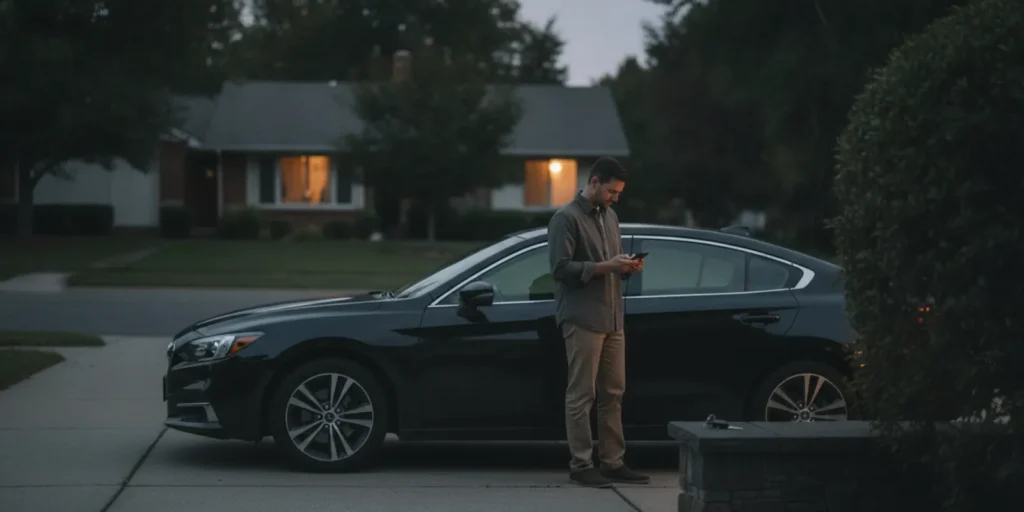
If you are asking how long will 2 beers show up on a breathalyzer, the honest answer is that there is no reliable, universal number of hours. Alcohol may remain detectable on a breath test for hours, but the timing varies from person to person and situation to situation. Two beers cannot tell you your blood alcohol concentration (BAC), whether you are legally safe to drive, or whether an ignition interlock will allow a vehicle to start.
Talk with Budget IID about your next step
Why is there no exact breathalyzer time for two beers?
A breathalyzer measures alcohol in a breath sample and uses that reading to estimate alcohol in the body. It does not count drinks or calculate how quickly someone drank them. The same number of beers can affect two people differently. So a simple rule such as “wait a certain number of hours per beer” cannot promise that a breath test will read zero or that driving is safe.
One published overview says alcohol can be detectable on a breathalyzer for a window that may range from one to 24 hours after the last drink, while emphasizing that the period depends on individual factors. That broad range is not a personal prediction or a safe-driving rule. It is a reminder that a drink count and clock cannot provide a dependable answer for a specific person. Read the overview of alcohol detection on breath.
Also, a breath reading and impairment are related but are not interchangeable questions. Someone should not use a breathalyzer, an ignition interlock, or an estimate of elapsed time to decide that driving is safe. If you have been drinking, plan not to drive.
Consider two different situations. One person has two small, lower-alcohol beers with a meal over several hours. Another has two large, stronger beers quickly, without eating. Both may describe the evening as “two beers,” but the amount of alcohol and the timing are not the same. Even with those details, neither person can calculate a reliable breath result or departure time from the count. The distinction illustrates why an answer that sounds precise can be misleading: it treats a rough description as if it were a measurement.
What can change how long alcohol is detectable?
Several factors can affect how alcohol is absorbed and processed, and how long it can be detected. You usually cannot account for all of them with a quick calculation.
- What counts as a drink: Beer strength and serving size vary. A large or high-alcohol beer may contain more alcohol than someone assumes when counting “one beer.”
- How quickly you drank: Drinking over a short period can affect the body differently from spacing drinks out. The time since the last drink matters, but it does not establish a safe departure time.
- Food and personal differences: Food, body composition, metabolism, health, medications, and other individual factors can influence alcohol absorption and effects. Their impact is not predictable from a drink count alone.
- When the sample is taken: A reading can differ depending on timing and the circumstances around the breath sample. A single measurement is not a guarantee about how a person will feel or perform later.
There is another practical problem with counting beers: people do not always mean the same thing by “a beer.” A pint, a tall can, and a small bottle are different volumes. Products also vary in alcohol content. Two servings at a restaurant or event might not match two servings someone has in mind from a standard drink chart. Even when the label is known, it still does not reveal an individual’s breath result or impairment.
These factors help explain why another person’s experience is not a useful benchmark. A friend may say they felt fine after waiting a certain period, but their experience cannot establish your BAC or your ability to drive. Neither coffee, water, food, a shower, nor exercise can be relied on to quickly remove alcohol from the body. Eating after drinking or drinking water can change how you feel, but it should not be treated as a reset button for an alcohol test or permission to drive.
A useful way to check your assumptions is to ask what information is missing. Do you know the exact serving size and alcohol content? How long did the drinks take to consume, and when was the last one finished? Are there medications or health factors involved? Even if you can answer each question, the information still does not produce a dependable personal reading. It only shows why a rule of thumb leaves out important details. When an estimate depends on several unknowns, do not turn it into a driving plan.
Does two beers mean you will pass a breathalyzer?
No. “Two beers” is not enough information to predict a breathalyzer result. Even if you know the beer size and strength, you still cannot use those details to calculate a precise result for a particular moment. A result also does not turn into permission to drive just because it is below a particular number. Alcohol can affect judgment and reaction even when a person feels normal.
It is also important to separate a general detection estimate from a test performed under a specific program or legal process. Different devices and testing circumstances may have different purposes and instructions. An informal estimate from a website cannot tell you what an official test will show, and a prior reading cannot guarantee what a later test will show. If a legal matter or driving restriction is involved, ask the relevant authority or a qualified professional about that specific matter; do not infer an answer from the number of beers.
For that reason, do not make a driving decision based on a home device, an online calculator, a rule of thumb, or a test taken earlier. Those tools cannot establish that you are safe on the road. If you consumed alcohol, arrange another way home and leave the vehicle parked.
| What you know | What it can tell you | What it cannot tell you |
|---|---|---|
| You had two beers | You consumed alcohol; the amount may still depend on serving size and strength. | Your BAC, breathalyzer reading, or a safe time to drive. |
| A certain amount of time has passed | Time has elapsed since drinking. | That alcohol is no longer detectable or that you are unimpaired. |
| You feel normal | How you currently feel. | Whether your judgment, coordination, or reaction time is unaffected. |
| A breath test gave a reading | The device’s reading at that moment, subject to its instructions and limits. | A guarantee that driving is safe or that a future test will be the same. |
The table is not a way to interpret or work around a test. It is a reminder to keep the question in the right category. A drink count is a description of what was consumed; elapsed time is a clock measure; a device reading is a measurement under particular conditions. None of these independently answers every safety, legal, and program question. If you are unsure which rules apply, use the official instructions for your situation rather than assuming the general answer applies.
Why should you never use timing as a safe-driving guarantee?
Time estimates cannot account for all the variables that affect alcohol absorption and detection. They can also create false confidence: a person may decide that enough hours have passed even though they do not know their BAC or how alcohol is affecting them. A breath test is not a substitute for choosing a sober ride.
Driving after drinking carries risks beyond a possible test result. Slower reactions or impaired judgment can make it harder to respond to traffic, pedestrians, or an unexpected hazard. There is no need to settle a personal detection-time question before making the safer decision: if you drank, do not drive.
A useful way to think about the question is to separate three things that often get mixed together: whether alcohol can be detected, whether a person is impaired, and whether a person may legally drive. A detection window is not an impairment test, and neither one answers the legal question for every driver or circumstance. A driver may also have a court or licensing condition that applies independently of how they feel. Do not try to turn a general article, an online calculator, or a device result into an individual legal or medical decision.
Choose a sober driver, taxi, rideshare, or public transportation where available. You can also stay where you are until a sober ride is arranged. If your car is parked away from home, retrieve it later with a sober driver. Do not ask a passenger who has also been drinking to take the wheel.
For broader information about what an ignition interlock is and how it works, see Budget IID’s guide to ignition interlock devices. If your question concerns a court or motor vehicle requirement, check the instructions from the agency responsible for your case rather than using an alcohol-detection estimate to make a compliance decision.
What should you do if you have an ignition interlock?
An ignition interlock is a vehicle-related compliance device, not a tool for calculating when it is safe to drive after drinking. Do not drink and then try to determine when to provide a breath sample. Follow your program requirements and the device instructions. If you are unsure how a situation affects your obligation, contact your provider or the relevant agency before acting.
Do not ask another person to provide a sample for you or try to get around the device. An IID requirement is separate from the decision to drive safely. If alcohol has been consumed, use a sober ride and leave the interlock-equipped vehicle parked. For basic device-use information, review the Arizona guide to using a car breathalyzer. If the device displays an alert or you have a service concern, the ignition interlock lockout guide can help you identify a practical next step; do not treat it as a way to predict alcohol clearance.
Drivers arranging an installation can read about how to get an interlock device in Arizona and review the Arizona DUI program information. These resources address installation and program questions, not a personal breathalyzer prediction.
If you have an IID, treat its operating instructions and your program obligations as separate from an estimate about alcohol detection. Do not start the vehicle just to see what the device does, and do not borrow or use another person’s vehicle if doing so would conflict with your restrictions. For a device alert, a missed appointment, or uncertainty about your required testing schedule, write down what happened and contact your provider or the agency responsible for your program. They can address the specific instruction or requirement; an online estimate cannot.
What are safer choices after drinking?
Make the transportation plan before drinking whenever possible. If plans change, pause and choose a sober option instead of trying to determine whether you can pass a breath test. These steps are straightforward:
- Put the keys away. Do not start the car to “check” whether you feel alert or whether a device will accept a sample.
- Call a sober driver or ride service. Confirm the ride is arranged before leaving.
- Stay put if a ride is not available yet. Wait somewhere safe and ask a trusted person for help.
- Collect the car later. Return with a sober driver or use another lawful option to retrieve it.
- Follow any IID instructions. For device or program concerns, contact your provider or the agency overseeing the requirement.
If you need information about local installation or support, Budget IID serves drivers in Arizona and Roseville, California. Use the locations page to identify service-area information, or visit the ignition interlock FAQ for common device and compliance questions. Service coverage and program requirements can vary, so confirm the details that apply to you.
A little planning can make the safer option easier. Before an event, decide how you will get home, keep ride details accessible, and agree with friends that no one who has been drinking will drive. If you are already away from home and a ride is delayed, remain somewhere safe rather than making a last-minute calculation about how you feel. When you have an IID, make sure the person helping you understands that the vehicle must stay parked and that your program instructions still apply. Asking a provider a device question is sensible; using a device as a drinking-time calculator is not.
Contact Budget IID with an IID service question
Frequently asked questions
Can two beers still show on a breathalyzer the next morning?
It is possible for alcohol to remain detectable for hours, and the exact period varies. No one can confirm a result or safe driving time based only on “two beers” and the number of hours since drinking. If you drank, do not use an estimate to decide to drive.
Does drinking water or coffee help you pass a breathalyzer faster?
No. Water or coffee may change how you feel, but neither should be relied on to quickly remove alcohol from your body or guarantee a particular breathalyzer result. Time estimates and attempts to feel more alert are not a safe substitute for a sober ride.
Can I use a personal breathalyzer to decide whether I can drive?
No. A personal device cannot guarantee that you are unimpaired, safe to drive, or legally permitted to drive. Read and follow its instructions, but make the transportation decision conservatively: do not drive after drinking.
What if an ignition interlock is installed in my car?
Do not use the IID as a test of when you are safe to drive. Leave the car parked after drinking, use a sober ride, and follow the requirements for your program. Contact your provider or the responsible agency if you have a question about device instructions or compliance.
Get clear answers about your next step
Two beers do not translate into a predictable breathalyzer window, and no elapsed-time formula can prove that a person is sober or safe to drive. Make the safer choice by arranging a sober ride and keeping the car parked after drinking.