
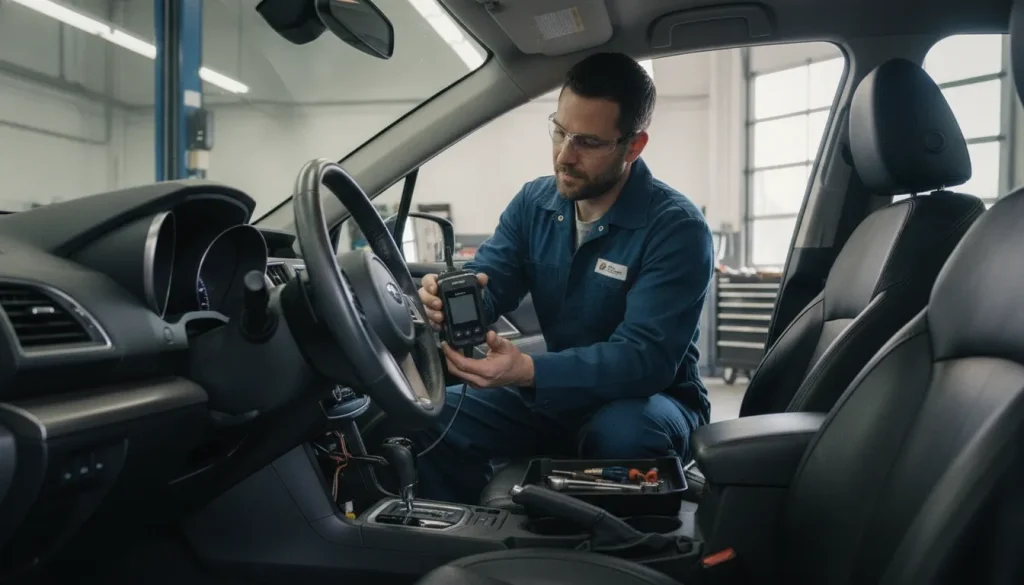
An ignition interlock appointment can feel like one more complicated step in an already stressful process. In practice, a trained technician handles the vehicle work, explains the device, and gives you the records and guidance needed to use it correctly.
Clear ignition interlock installation instructions usually involve modest preparation, a professional installation that takes about one to three hours. Regular calibration visits, and official removal when the monitoring authority confirms you are eligible.
An IID is a breath alcohol test connected to your vehicle’s ignition. It can prevent the vehicle from starting when the test exceeds the programmed limit, helping you meet compliance requirements while protecting your ability to drive. Arizona drivers should also confirm that the installation meets Arizona requirements, since an out-of-state installation does not satisfy the state’s rules for an Arizona-licensed driver.
The smoothest appointment starts before you arrive. Gathering the right information, checking your vehicle, and confirming the installation details can help you avoid delays and understand what will happen next.
Get your court-approved ignition interlock installed in Arizona today.
How to Prepare for Your Ignition Interlock Installation Appointment
An installation appointment is easier when you know what to bring, what your vehicle needs, and which Arizona requirements apply to your situation. A little preparation can help prevent a second trip and keep your compliance timeline on track.
Confirm your documents and driving status
Before scheduling, review your MVD paperwork and confirm that an ignition interlock is required for your driving privileges. Bring your identification, any court or MVD paperwork that lists the requirement, and vehicle information the installer requests. If you are unsure whether your license is eligible, contact MVD or your monitoring authority before the appointment. An installer can fit and service the device, but cannot replace legal guidance about your suspension or reinstatement status.
Arizona’s timing matters. The Arizona Department of Transportation says the device must be installed and proof of installation provided to MVD within 30 days of conviction. Or the license may be suspended immediately. Arizona law also keeps driving privileges suspended until proof of installation is provided. Review the Arizona MVD ignition interlock FAQ and ARS 28-1461 for the official requirements that apply to your case.
If you are still getting an ignition interlock device, ask which proof document you will receive and how it should be submitted. You can also review expected ignition interlock installation costs before choosing an appointment time.
Prepare the vehicle
Bring the vehicle that will be used under the IID requirement, and make sure it is accessible to the technician. Check that the battery starts the vehicle reliably and that the charging system is working properly. A weak battery or electrical problem can interfere with installation, device operation, or both. Address warning lights or starting problems before the appointment when possible, and tell the installer about any aftermarket alarm, remote-start system, or other electrical equipment.
Arizona-licensed drivers must also use an installation that satisfies Arizona’s requirements. An IID installed in another state does not satisfy Arizona IID requirements for an Arizona-licensed driver. If you are considering an out-of-state appointment because you are temporarily away, verify the arrangement with the appropriate Arizona authority first. Arriving with the right paperwork, a dependable vehicle, and a confirmed installation plan gives the technician what is needed to complete the appointment with fewer surprises.
How to Follow Ignition Interlock Installation Instructions Without Stress
A professional installation turns a complicated-looking requirement into a guided appointment. Instead of trying to interpret wiring diagrams or guess whether a connection is secure. You have a certified technician handling the vehicle work and explaining what you need to know before you leave. Plan on roughly one to three hours, depending on your vehicle’s make and model.
-
Vehicle inspection and safety check
The technician begins by inspecting the vehicle and its wiring. This helps identify the correct connection points and confirms that the car’s electrical system can support the device. The installer may also check the battery and charging system, since an underlying vehicle problem can complicate installation or later device operation. A careful inspection is an important part of a reliable installation, not an unnecessary delay.
-
Device mounting and wiring
Next, the technician mounts the ignition interlock device in an accessible position and connects it to the ignition system and relevant vehicle electronics. The device is designed to require a breath test before the vehicle starts. Because the installation is tied to the vehicle’s ignition and compliance reporting, it should be completed by a court-approved or authorized provider. Washington’s authorized-installer requirements provide one example of how state rules define qualified installation work: review the authorized-installer regulation.
-
Hands-on demonstration and training
Installation is not complete when the wires are connected. Your technician trains you on normal operation, including how to provide a valid breath sample and what to expect from the device. Budget IID’s device includes a straight blow option for non-circumvention. This is different from the traditional “suck-back and blow” technique. The technician can demonstrate the correct method and give you a chance to practice so you are not learning under pressure in a parking lot or on your first trip.
-
Non-recorded test demonstration
You should also learn how to use the device’s non-recorded test option. It functions as a standalone breathalyzer, allowing you to check whether you can safely start the vehicle without recording that preliminary result. This feature gives you a practical choice when you have any doubt about whether it is safe to drive. It does not replace responsible decisions about alcohol and driving, but it can help you avoid an unnecessary start attempt.
-
Verification and handoff
Before you leave, the installer verifies that the device communicates correctly with the vehicle and operates as expected. Ask questions while the technician is still present, especially if a step feels unclear. You should receive an installation certificate for your records and compliance paperwork, along with extra mouthpieces if needed. Keep the certificate and any appointment instructions in a safe place.
Choosing professional, court-approved installation is usually far less stressful than attempting a DIY setup. The technician completes the vehicle-specific work, teaches you the device’s features, and confirms that you can use it correctly before the appointment ends. That combination of installation and training helps you leave with a clear process instead of a new source of uncertainty.
How Long Does Ignition Interlock Installation Take?
Most professional ignition interlock installations take about one to three hours. The exact time depends on your vehicle and the installation work required. So it is best to reserve a little extra time rather than planning a tight appointment around work, school, or another obligation.
What affects the installation time?
Make and model are the biggest factors. A sedan with straightforward access to its ignition wiring may take less time than a truck with more involved routing or limited space for the device and connections. The technician also needs to account for the vehicle’s electronics and confirm that the device communicates correctly with the ignition system.
Some hybrid and electric vehicle setups can require additional inspection and planning because their electrical systems differ from those in conventional gas-powered vehicles. Wiring complexity, the location of the ignition components, and the need to protect the vehicle’s existing systems can all affect the appointment length. A professional installer evaluates those details before completing the work instead of treating every vehicle as identical.
Why professional installation is usually faster and safer
Professional installation is more than attaching a breath device to the dashboard. The installer connects the IID to the vehicle, checks its operation, confirms that the car responds properly, and explains how to use it. You should leave knowing how to provide a start-up sample, respond to rolling tests, and recognize the device’s instructions.
Trying to follow generic ignition interlock installation instructions and complete a DIY installation can take longer because the correct wiring points and vehicle-specific requirements may not be obvious. An incorrect connection can create compliance problems or affect the vehicle’s electrical operation. Installation by an authorized provider also gives you the documentation and setup guidance needed for the IID program.
| Consideration | Professional installation | DIY installation |
|---|---|---|
| Time | About one to three hours with an experienced crew | Often longer, plus research and rework risk |
| Wiring and vehicle fit | Technician identifies correct connection points per vehicle | Connection points can be unclear and vary by make and model |
| Training | Tech demonstrates the device and answers questions on site | No guided training |
| Documentation | Installation certificate and compliance paperwork provided | No official proof for your program |
| Program compliance | Completed by a court-approved or authorized provider | May not satisfy state authorization requirements |
The takeaway is straightforward: a professional appointment handles the vehicle-specific work. Gives you clear training and proof of installation, and keeps one more compliance step from turning into a guessing game.
How to plan your appointment
- Schedule the appointment when you can comfortably allow one to three hours, plus travel time.
- Bring the requested identification, program paperwork, and vehicle information.
- Arrive with the vehicle accessible and, if possible, confirm that its battery and charging system are working normally.
- Keep a few minutes after installation to practice using the device and ask questions.
With that preparation, the installation is usually a manageable interruption rather than an all-day project. The technician handles the vehicle-specific work while you focus on learning the routine you will use each time you drive.
Daily Use After Installation: The Straight Blow and Non-Recorded Test Options
Once the ignition interlock is installed, the routine becomes part of starting and driving your vehicle. Before turning the key or pressing the start button, provide a breath sample through the device. If the sample is within the program’s allowed limit, the vehicle can start. If alcohol is detected above the preset limit, the ignition remains locked, which is the basic safety purpose of an IID. The device is designed to help prevent alcohol-impaired driving, not to make ordinary driving more complicated than necessary.
Starting the vehicle and completing rolling retests
After the initial sample, the device may request additional samples during a trip. These are rolling retests. They help confirm that the person who provided the starting sample remains the person driving and that the vehicle is not being operated after drinking. When a retest sounds, follow the device’s instructions and provide the sample when it is safe to do so. Never reach for the handset or attempt to test while handling the steering wheel in a way that could distract you. Pull over safely if you need more time or assistance.
There is an important difference between a missed retest and a failed retest. A missed retest means no sample was provided within the required window. In Arizona, a missed retest can result in an administrative extension of the IID period. A failed retest means the device detected alcohol in the sample, and it can lead to more serious program consequences, including a suspension and a reinstatement hearing. If you are unsure what an alert means, contact your provider promptly rather than guessing.
Two features that make daily use more practical
Budget IID’s straight blow option provides a non-circumvention way to give a breath sample. Instead of relying on the traditional “suck-back and blow” technique used by some competing devices, you provide the sample with a straightforward blowing process. Your installer should demonstrate the required technique and let you practice before leaving the appointment. Do not try to modify the device or use another person to provide a sample. Tampering or circumvention can violate program rules and may put your driving privileges at risk.
The non-recorded test option gives you another useful choice before you try to start the car. The device can act as a standalone breathalyzer, allowing you to check your BAC without the result being recorded as a vehicle-start or compliance event. This can help you make a safer decision when you are uncertain whether you should drive. It is not permission to drive after drinking, and a non-recorded check does not replace any required ignition or rolling test.
For practical guidance on the routine, including how to provide samples correctly, see how to use a car breathalyzer. Follow the training provided at installation, keep the device accessible, and treat every alert as a compliance and safety instruction.
What Happens During the Calibration Schedule?
Calibration is the recurring service appointment that keeps your ignition interlock device working accurately throughout the required monitoring period. Instead of treating installation as the final step, plan to return to the authorized service provider on the schedule assigned to your Arizona program. Many IID programs use a 30- to 60-day interval for calibration and data download, but your provider and monitoring requirements determine the exact schedule for your device.
What the provider checks
During the appointment, the technician checks the device’s performance, confirms that it is measuring consistently, and calibrates it when needed. Calibration matters because an IID must remain accurate and reliable while it is being used to control vehicle starting. Periodic calibration is a standard compliance safeguard, not an optional tune-up. The technician may also download the device data and send the required information through the provider’s reporting process.
Arizona law addresses service-provider reporting for ignition interlock programs. Under ARS 28-1468, providers have reporting responsibilities connected with the device and the driver’s program. Keeping your appointments helps ensure the certified device and its records remain current. Ask the technician what was completed and when your next appointment is due before you leave.
Do not confuse a missed appointment with a failed test
A missed calibration means you did not bring the vehicle or device to the provider within the required service window. That can place your compliance status at risk, even if you never received a failed breath test. Contact the provider promptly if illness, transportation trouble, a vehicle breakdown, or another problem may prevent you from arriving on time. Do not assume that an appointment made for a later date automatically protects your driving privileges.
A failed calibration or failed device check is different from a missed appointment. It may indicate that the device needs adjustment, service, or further review. Follow the provider’s instructions and ask how the event will be reported. This is also different from a failed rolling retest, which involves a breath sample while driving. A missed rolling retest means no test was completed in the required window, while a failed rolling retest means the sample registered alcohol. The two events can carry different compliance consequences, so use precise language when speaking with your provider or monitoring authority.
For a state-by-state overview, review our Arizona and California calibration requirements. Keeping the vehicle in good condition can also reduce appointment problems. Our guide to vehicle maintenance in Arizona heat covers practical care considerations for local drivers.
Ignition Interlock Removal: What to Expect When Your Period Ends
Reaching the end of your ignition interlock period can feel like a major milestone. Before making an appointment, confirm the exact date when you are eligible for removal with the authority monitoring your case, such as the court or Arizona MVD. The date you expect based on your original paperwork may not account for an extension, a missed requirement, or another compliance condition.
Do not remove the device yourself, ask someone to disconnect it, or have it removed before your approved date. An early or unauthorized removal can create a compliance problem and may delay the steps needed to restore your driving privileges. The device is part of your monitored requirement, so removal should be treated as an official program step, not a do-it-yourself vehicle repair.
Schedule removal with your provider
Once your monitoring authority confirms that removal is allowed, contact your ignition interlock provider and schedule an appointment. Ask what documentation you should bring and whether the provider will submit confirmation of removal to the appropriate agency. Planning ahead helps avoid an unnecessary gap between eligibility and the appointment, especially if the provider has limited technician availability.
At the appointment, a trained technician safely disconnects the device from the vehicle’s ignition and electrical systems. The provider also handles the device’s return according to its process. You should not cut wires, unplug components, or attempt to restore the vehicle on your own. Professional removal protects the vehicle and creates a clear record that the device was removed through the approved channel.
Keep every removal and compliance record
Save the removal certificate, final calibration or data records, receipts, and any confirmation given to you by the provider. Removal paperwork may matter when you complete license reinstatement or demonstrate compliance to the court or MVD. If an agency requires you to submit proof, follow its instructions and keep copies of everything you send.
For the Arizona-specific agency steps, see our guide to removing your device in Arizona. This process is different from learning how to use the device or following your local installation guide. Installation instructions explain how a device is fitted and operated. Removal requires eligibility confirmation, an authorized appointment, and documentation that supports the next licensing step.
Some providers may allow voluntary continued monitoring after the required period ends, sometimes at a reduced price. Ask about that option if you want additional support before returning to unrestricted driving. Your provider can explain the available service choices without changing the official eligibility decision made by the monitoring authority.
Schedule your ignition interlock installation and stay on track with your compliance requirements.
Frequently Asked Questions
Can you install an ignition interlock device yourself?
No. Use a court-approved or otherwise authorized provider so the installation meets program requirements. A qualified technician connects the device to the vehicle, confirms that it operates correctly. Explains the testing process, and provides the installation documentation you may need for your state program. Authorized-provider requirements help protect compliance.
Will one beer set off an ignition interlock device?
It can. An interlock responds to alcohol detected in your breath, not to the number of drinks you believe you had. The safest choice is never to drink before driving. If the device reports a failure, follow the instructions and contact your provider rather than trying to bypass or tamper with it.
Can someone else start my car with an interlock installed?
Yes, another person can drive the vehicle if they can use the device correctly and are legally permitted to drive it. The driver must provide the required breath sample before starting and complete any rolling retests while driving. Never ask another person to provide a sample for you, and never attempt to circumvent the device.
Do out-of-state installations count for Arizona drivers?
Generally, no. Arizona-licensed drivers must meet Arizona’s IID requirements, and an installation performed outside Arizona does not satisfy those requirements. Confirm the approved provider and reporting requirements with the Arizona MVD or ADHS before scheduling. Arizona DUI program guidance explains the state rule.
How long does ignition interlock installation take?
Plan for about one to three hours. The exact time depends on the vehicle’s make and model, wiring, and the technician’s inspection. The installer should also demonstrate the device, review daily use, and give you the installation certificate before you leave.
Schedule Your Ignition Interlock Installation
Professional installation can make the process easier by giving you clear instructions before you leave, from preparing your vehicle to understanding the device’s everyday use. Schedule your court-approved installation with Budget IID and get step-by-step guidance from an experienced technician. Get started with a no-pressure consultation and a technician will walk you through your options.